INTRODUCTION
Over the past 15 years, I have conducted workshops and classes where creativity and self-expression play a key role in the study of musical instruments, music history, the English language, the Spanish language, art and crafts.
I have based these classes on experiences in architecture, music, writing and visual arts that I have had over the last 25 years. In 2012, I defined my line of work in Pedagogy through the BcnCentro Project that can be seen in the link.
In addition to the experiences listed on my CV, I created some original courses and materials that I worked on in schools and other educational projects (such as Microfusa / De Colores / Freetime Workshop / Futur Idiomes / Inglés Activa ) apart from my private lessons.
Click to see explanations and examples OF CLASSES I CREATED:
BACK TO MAIN MENU
Arts and Languages Workshops and intensives
Arts and Languages Workshops and intensives
Art and language classes and workshops are immersive experiences for children and teenagers, lasting one and a half hours, half a day, or a full day. In these sessions, we use a second language (English or Spanish) to carry out various artistic tasks.
In this sense, students review and learn the mentioned second language while creating, learning different artistic techniques, playing instruments, visiting places of interest and having fun.
Here’s a list of some workshops I participated in:
De Colores – Immersive experience (summer camp) lasting the whole day for one week, with small groups of up to 5 people. Spontaneous play is emphasized. Activity conducted in Spanish with children from the USA.
Helen Doron La Bonanova – One-week summer camps between 8:30 AM and 5:00 PM. Classes in English were included following the Helen Doron system, combined with activities related to art and music, which featured weekly live performances. For groups of 20 children.
Freetime Workshop Participating as teacher assistant, I also collaborated on the pedagogical design. Weekly classes lasting 1.5 hours. We engaged in open-ended activities as well as more directed ones, depending on the technique and the task. A lot of attention was given to the design process. The activity uses English as the vehicular language for Spanish-speaking children and adolescents.
Cool School, activity held at Futur Idiomes School. Summer camp for Spanish speakers taught in English, lasting one week. We played instruments, practiced singing, recording music, writing song lyrics, etc.
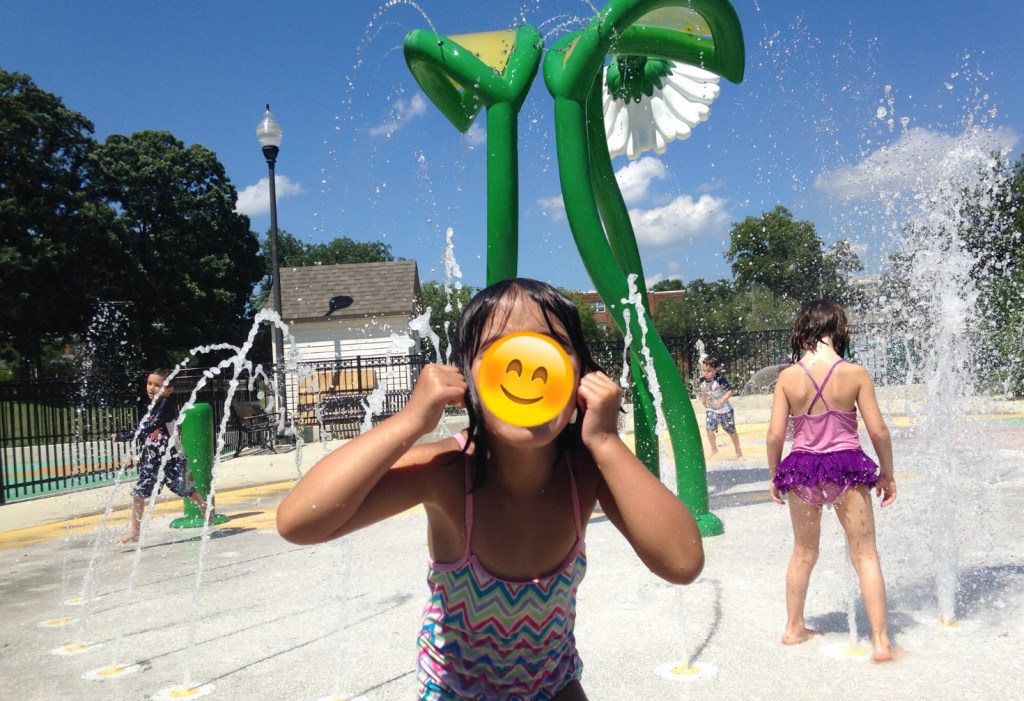
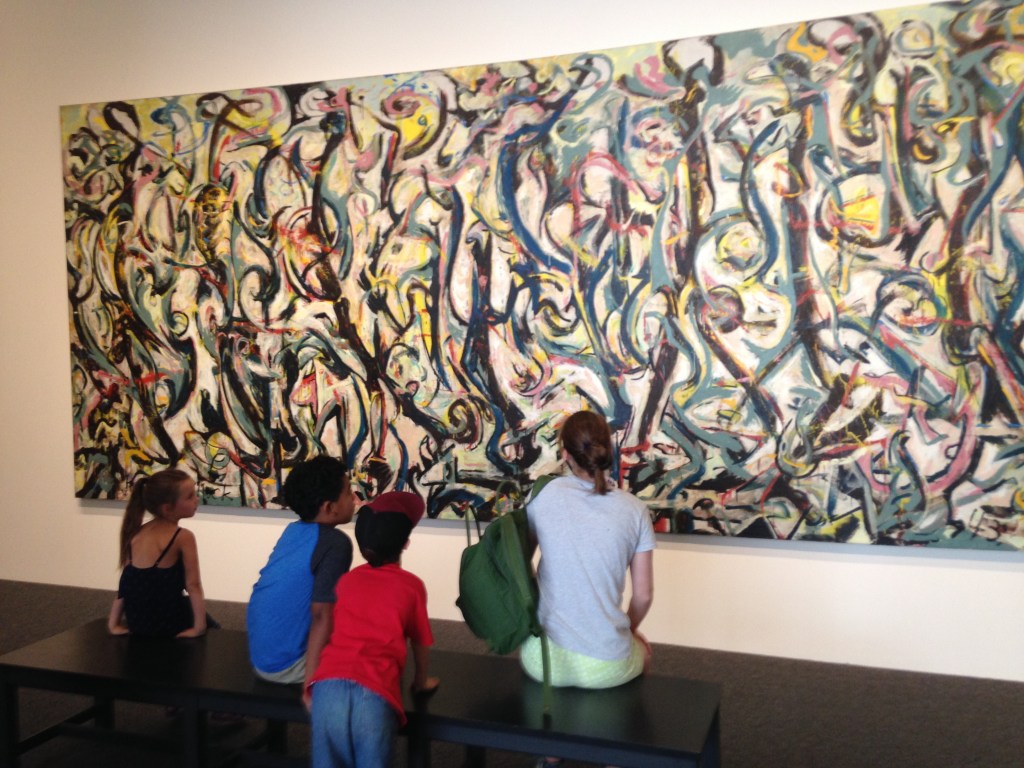
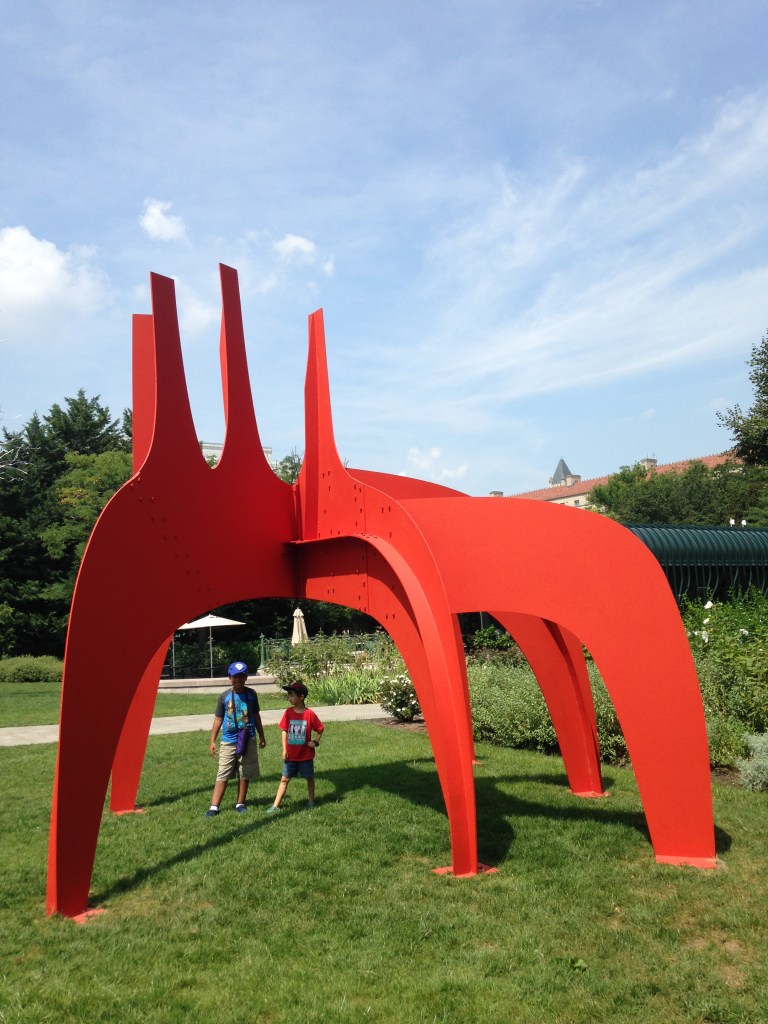
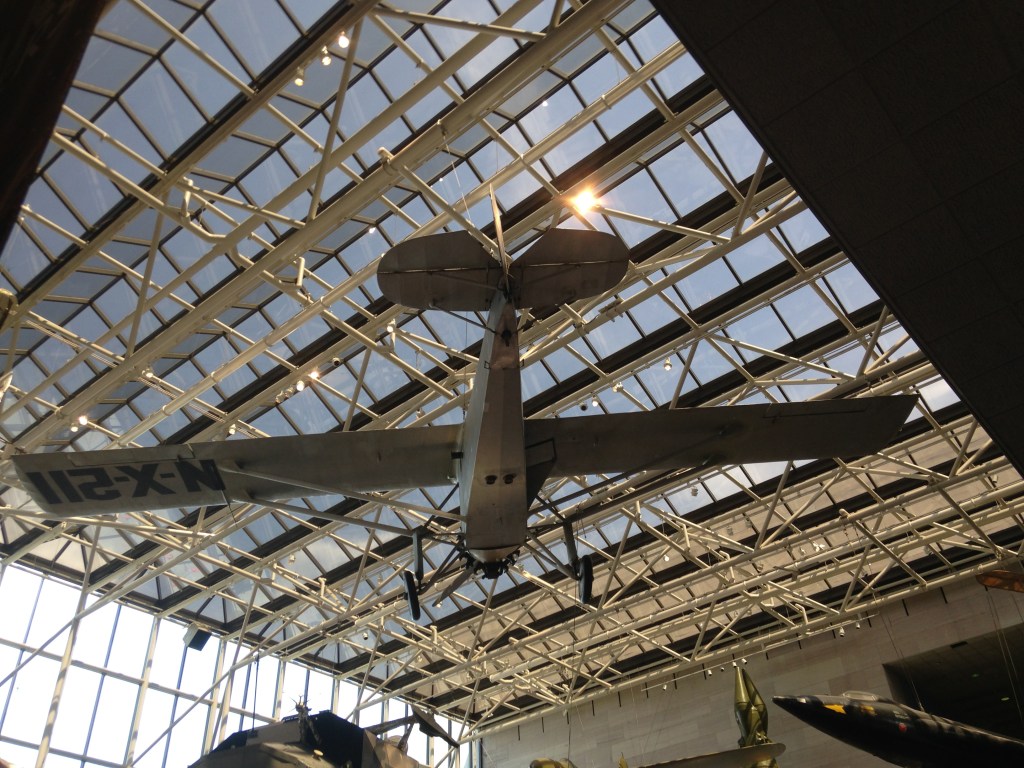
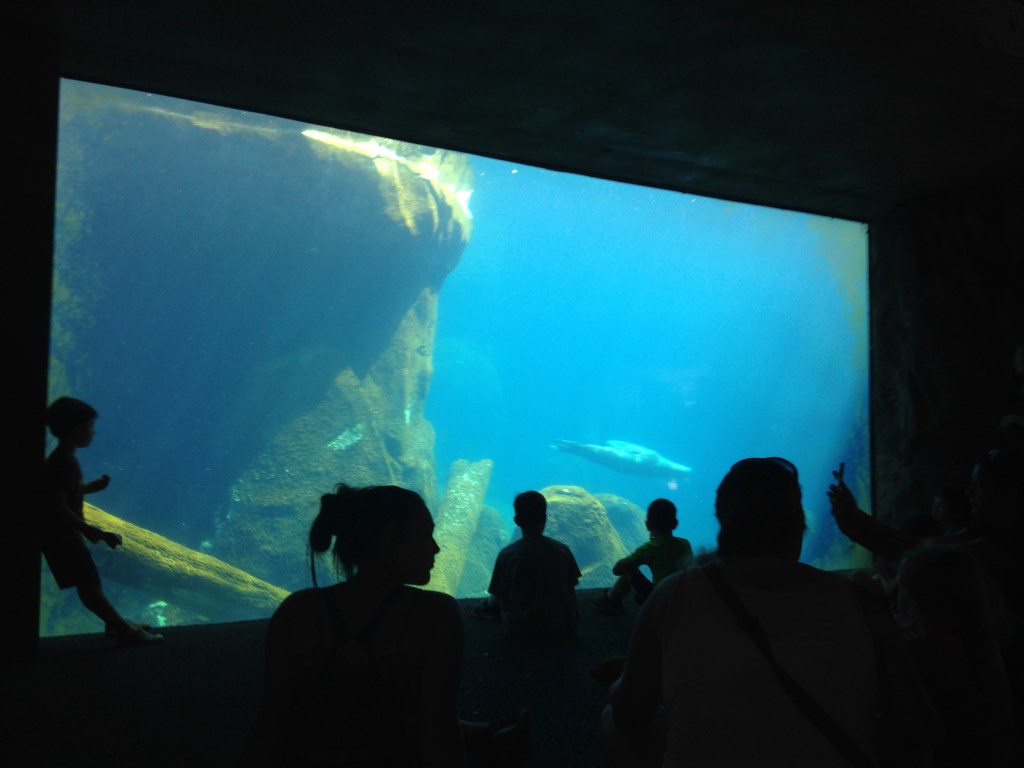
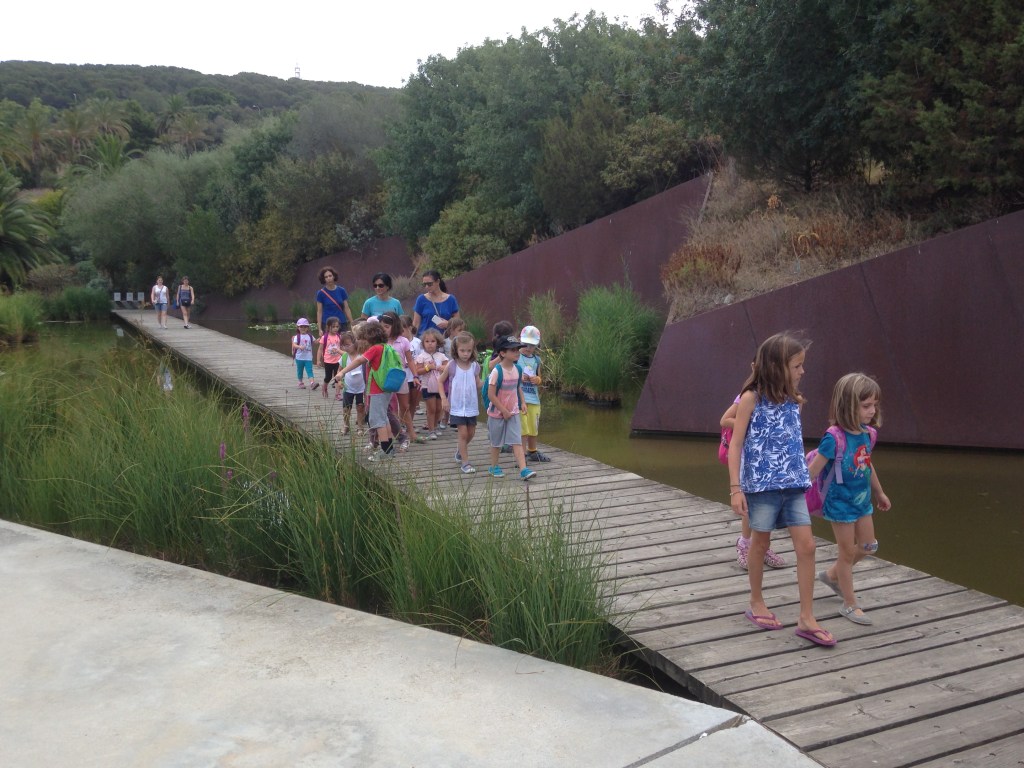
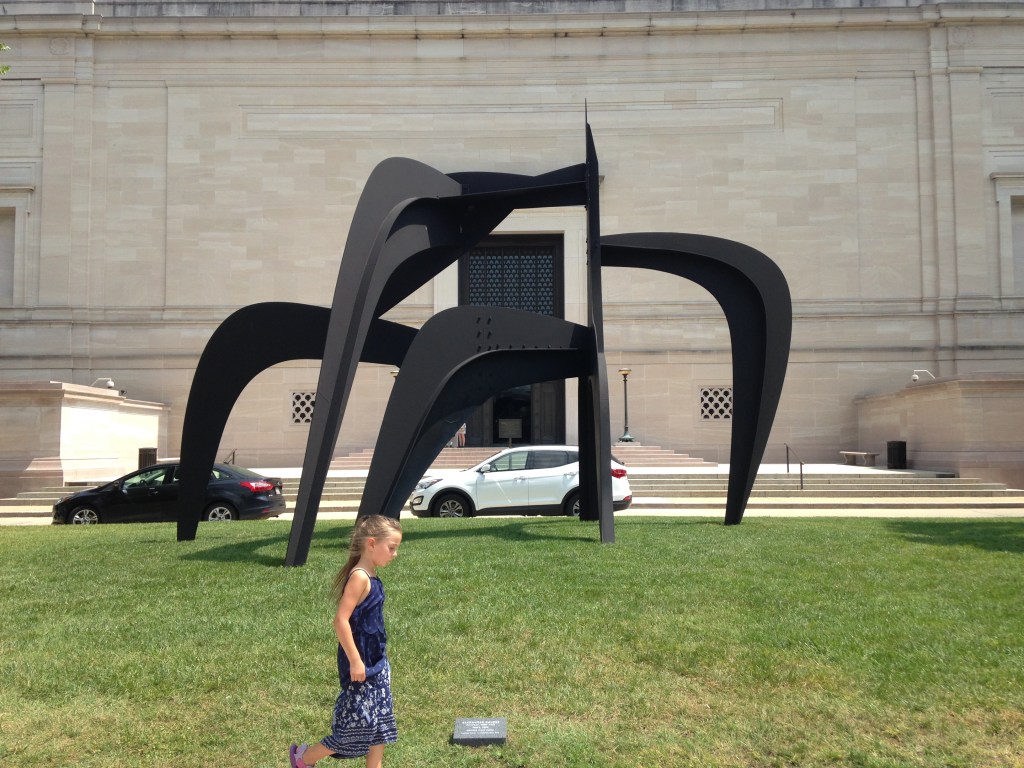
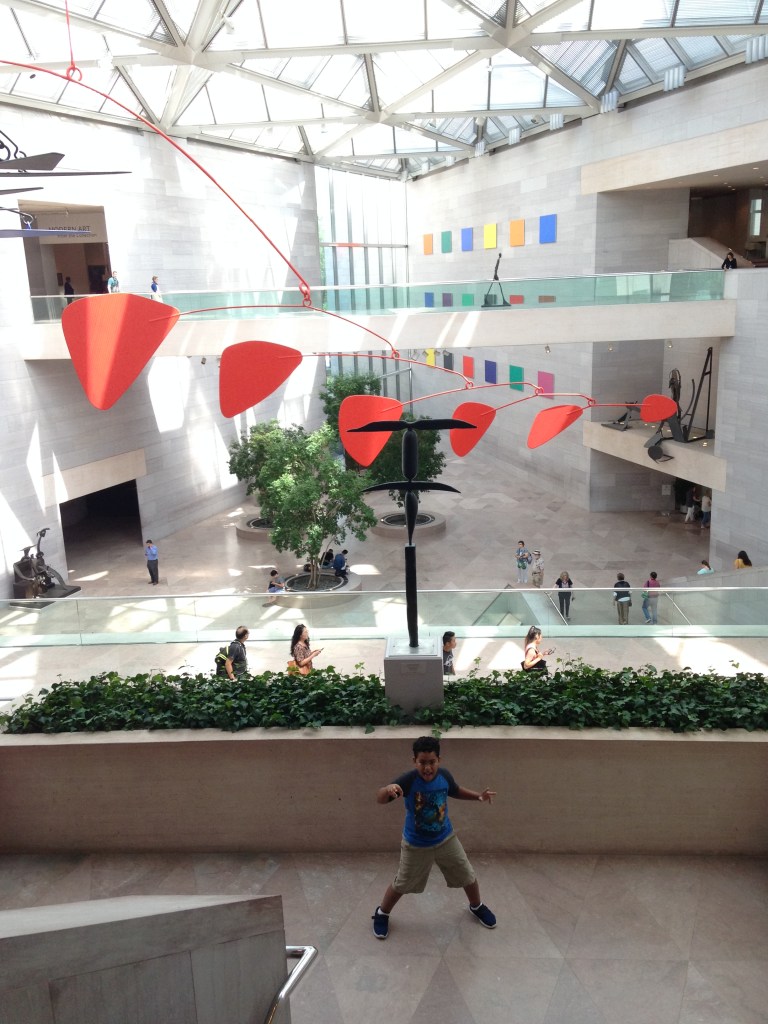
The following photos, videos, and examples belong to different editions of the mentioned summer camps, held in Barcelona and Washington DC between 2015 and 2021.
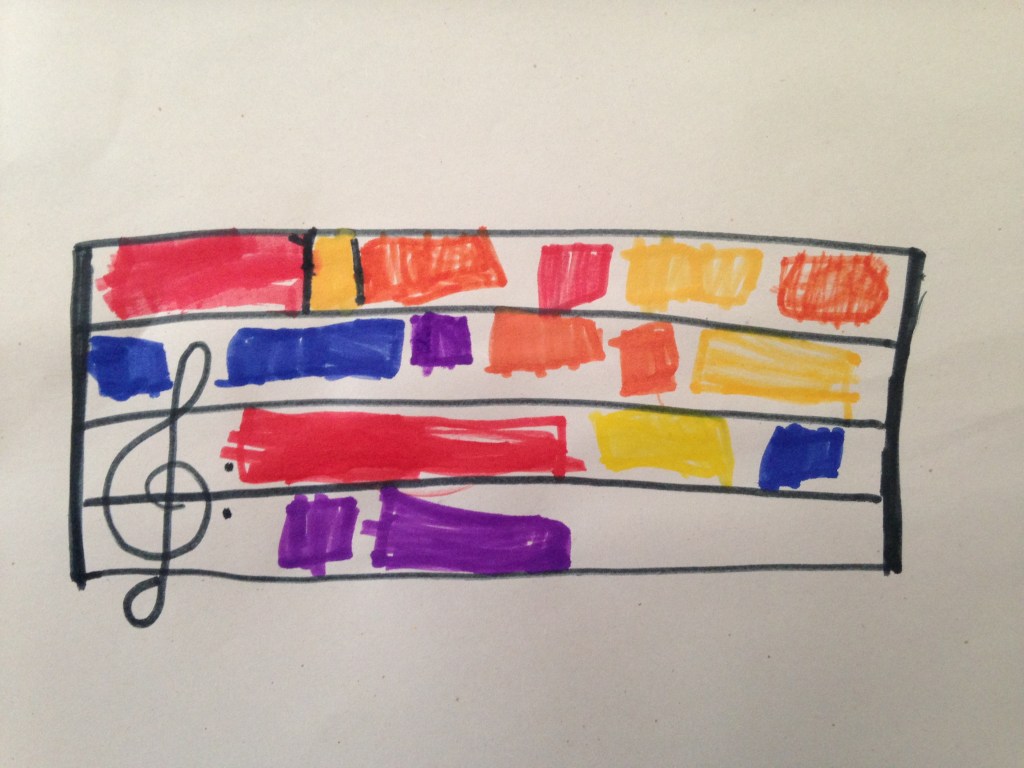
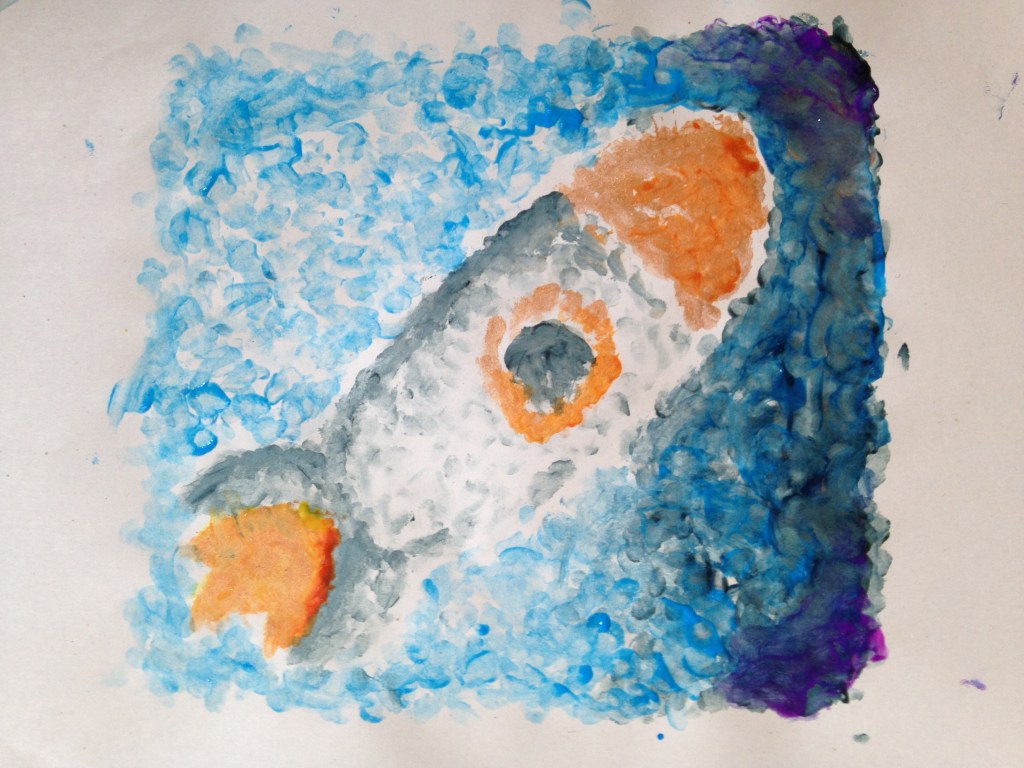

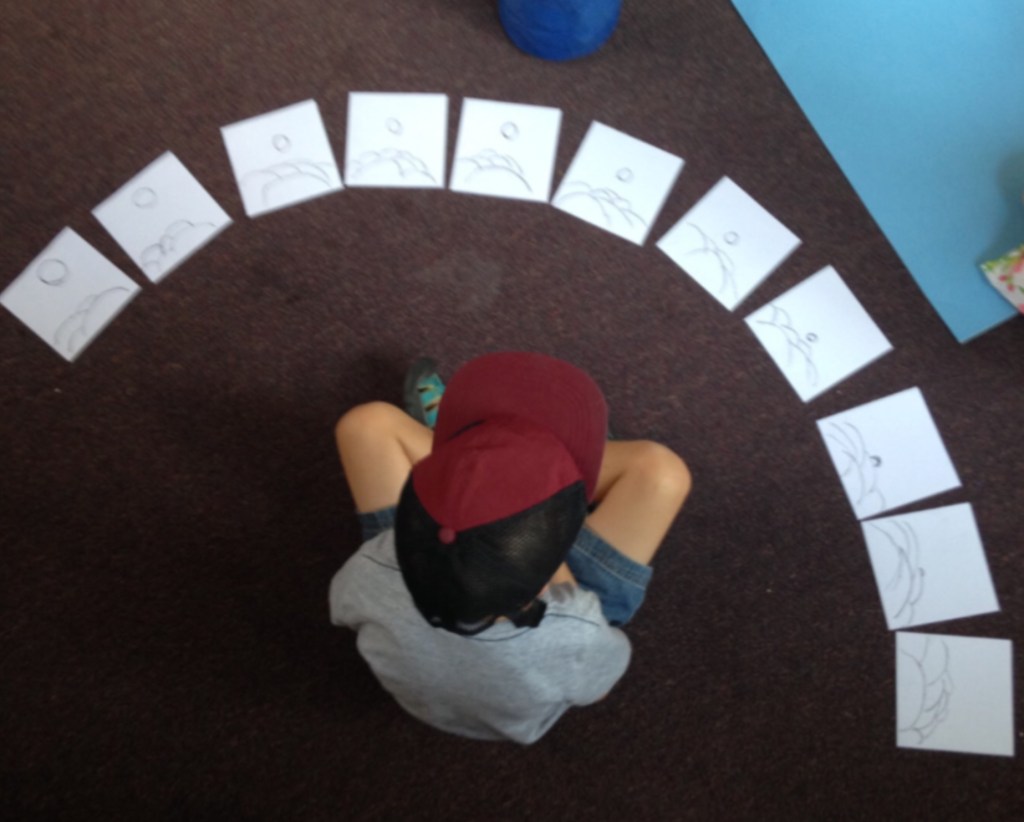
The visual arts and crafts we explored include drawing, painting, collage, model building, papier-mâché, origami, etc.


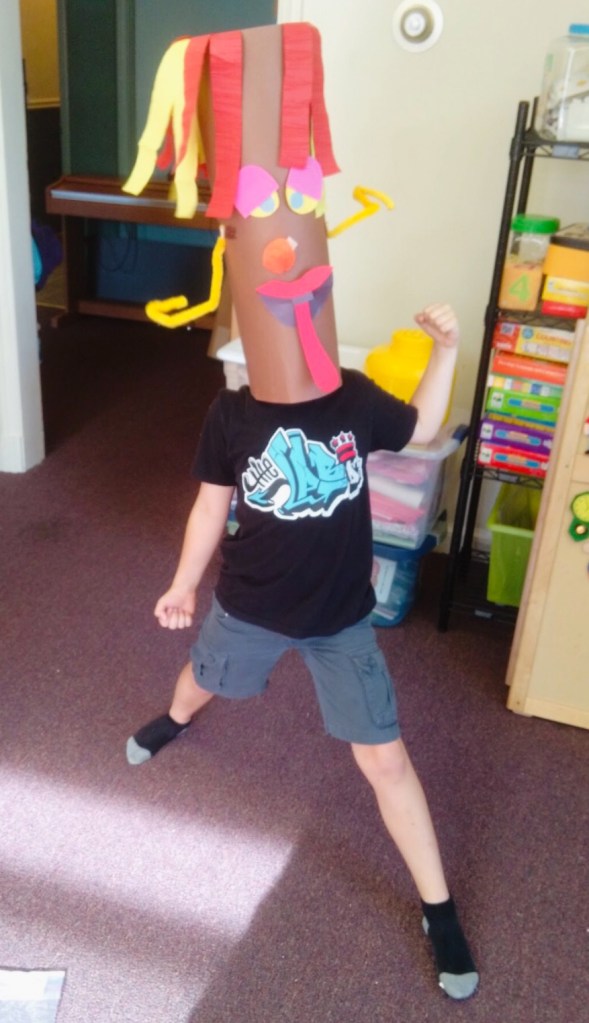
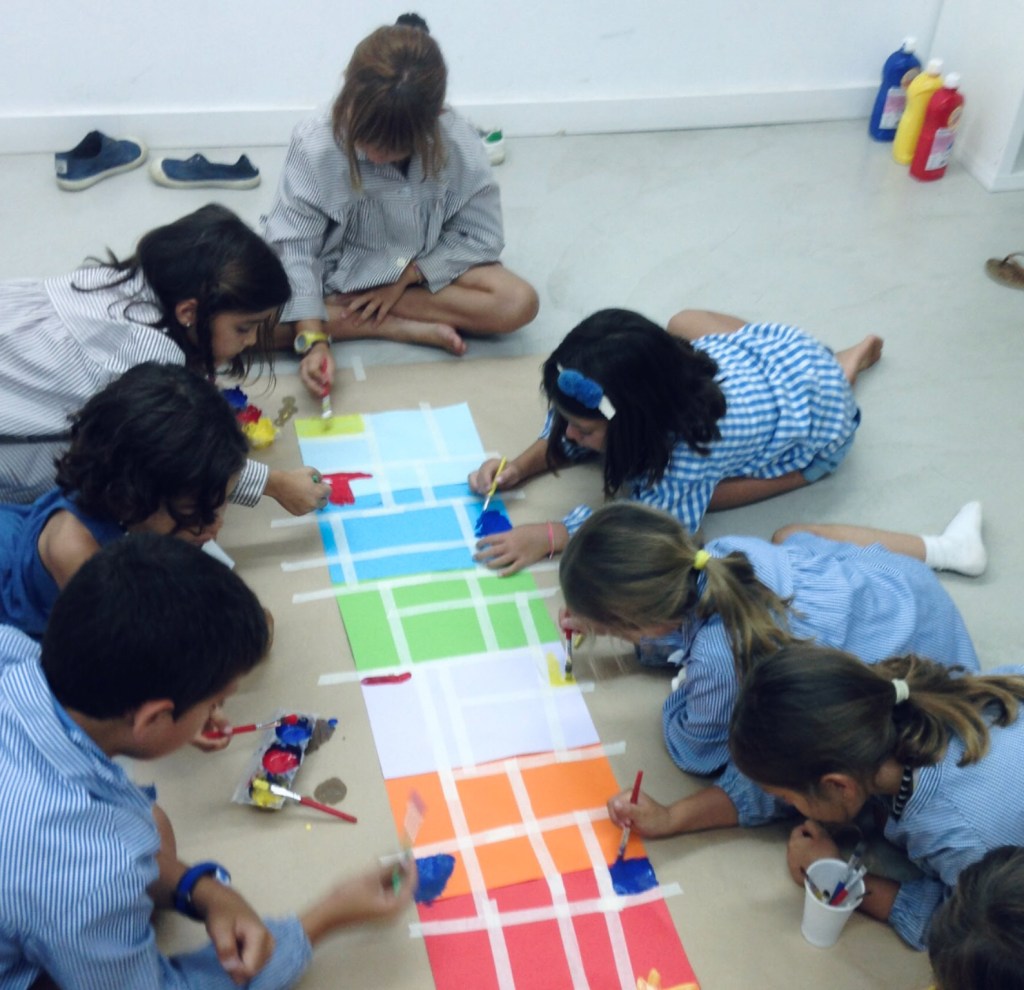
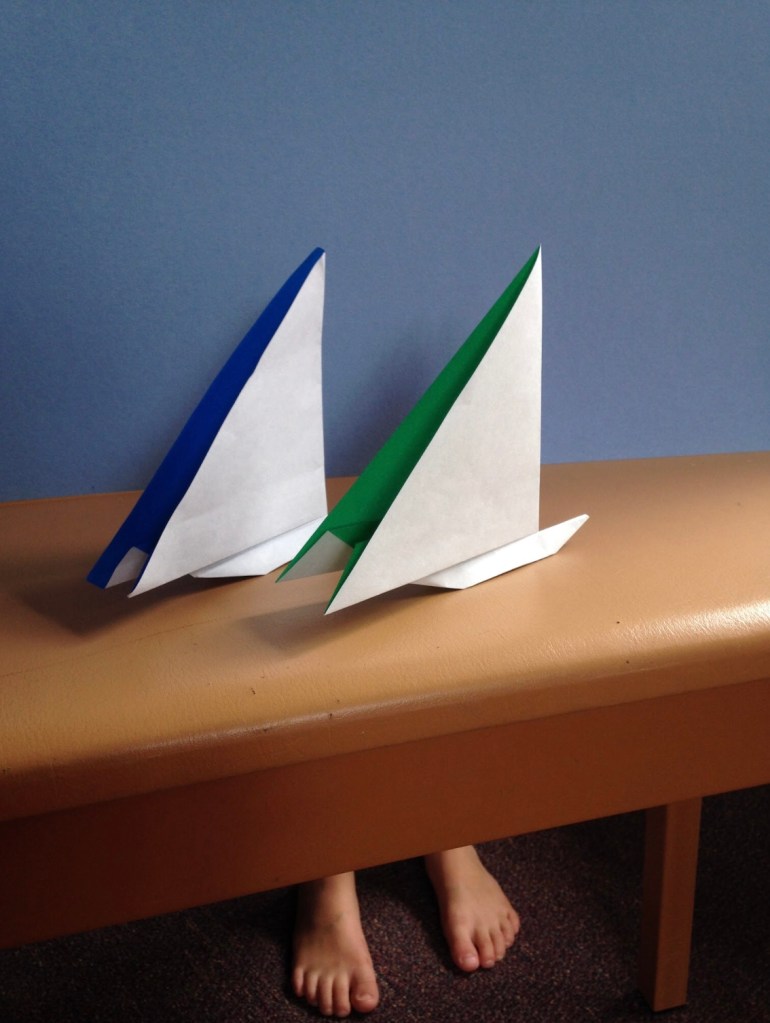
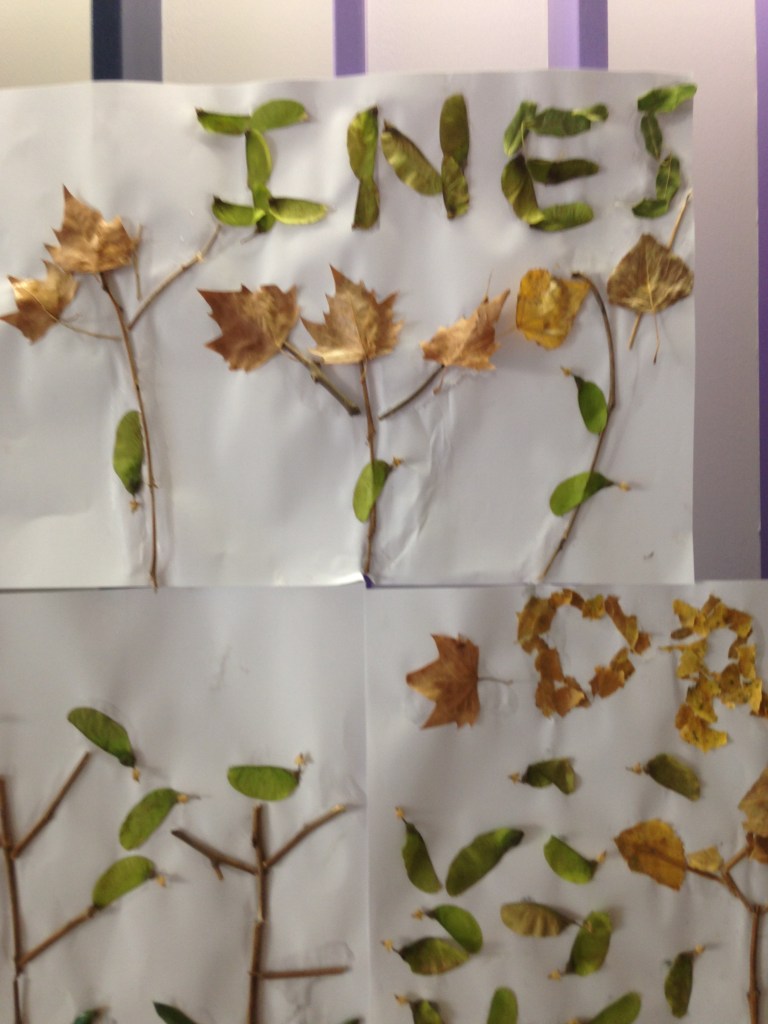

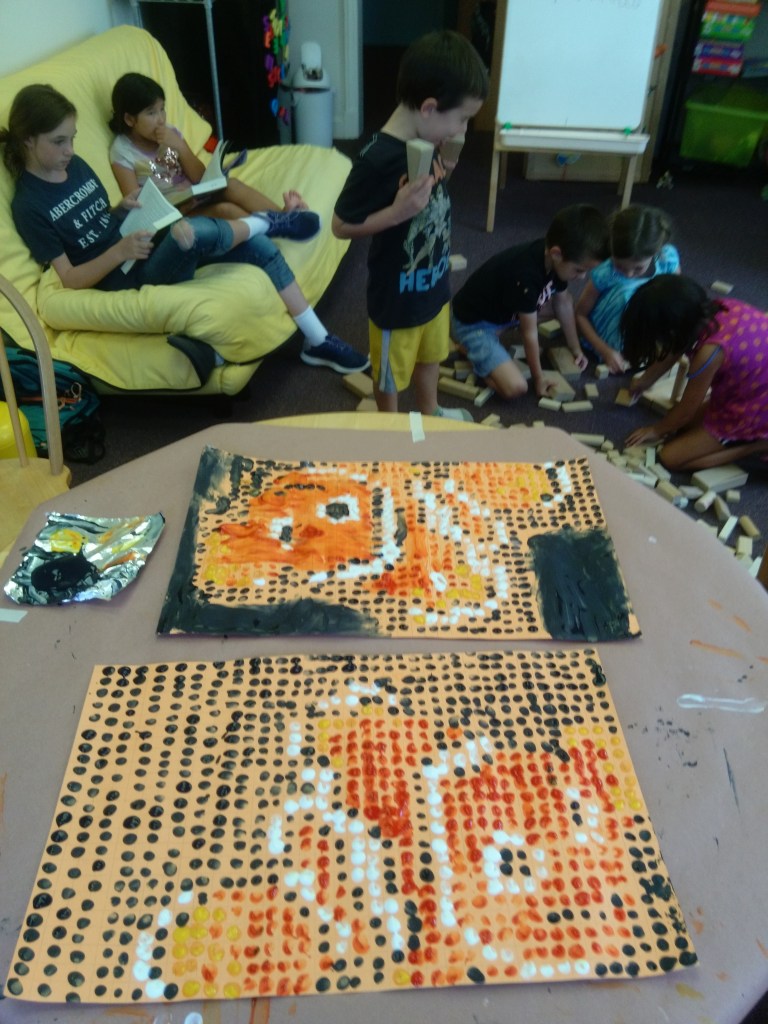
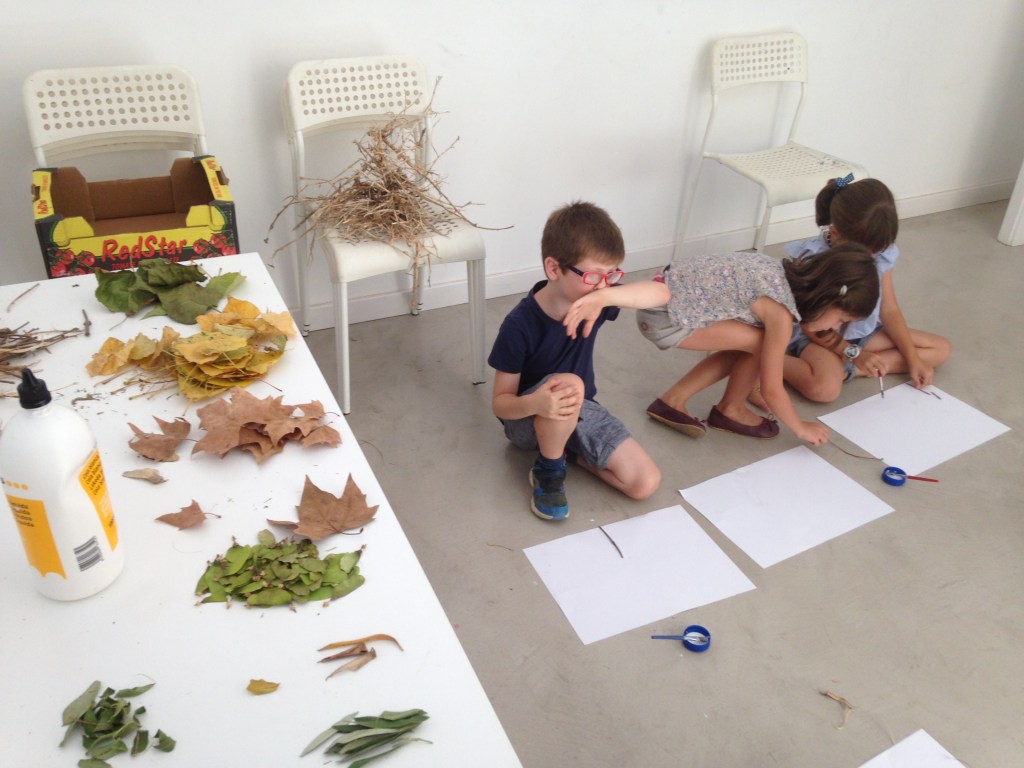
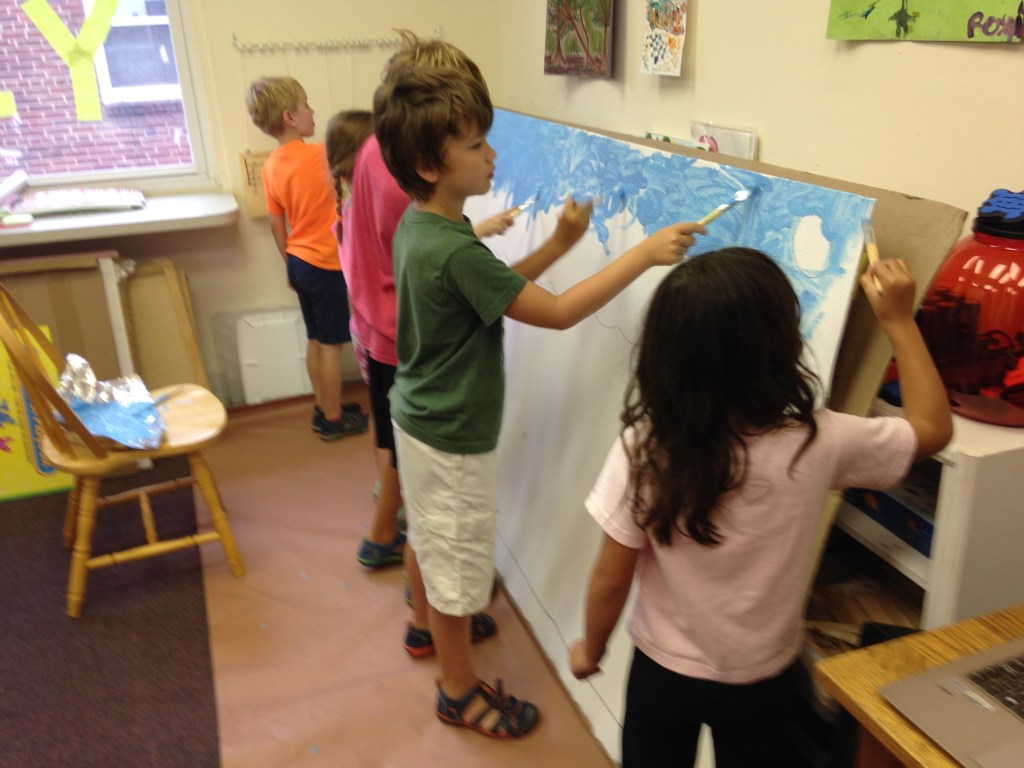
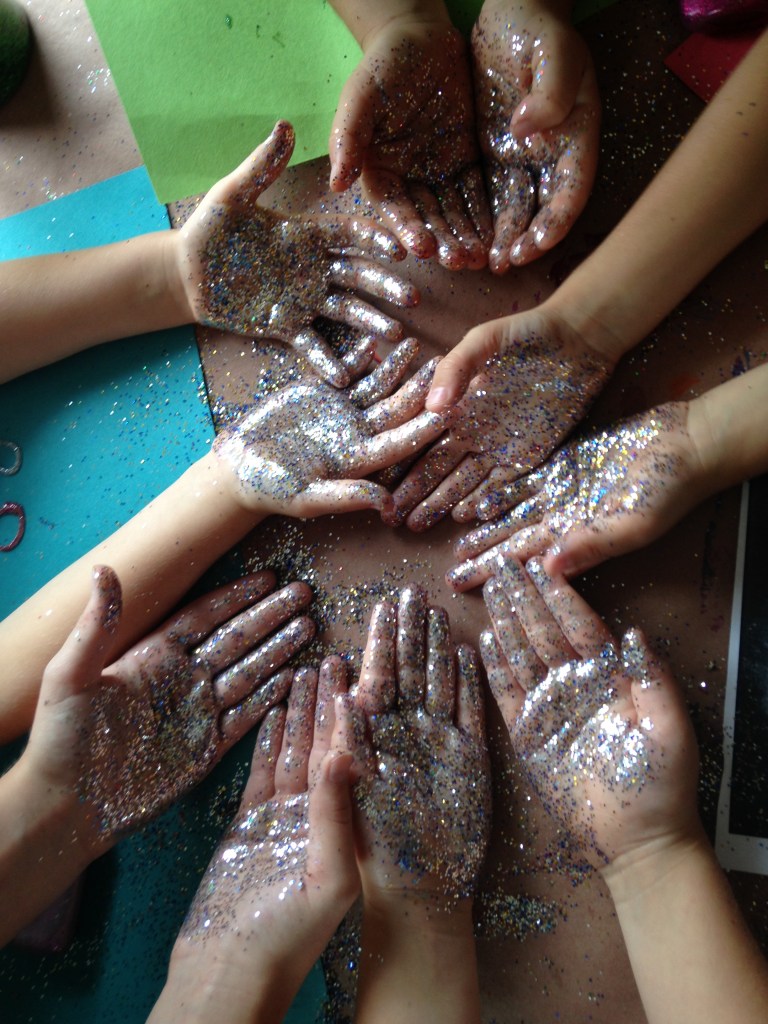
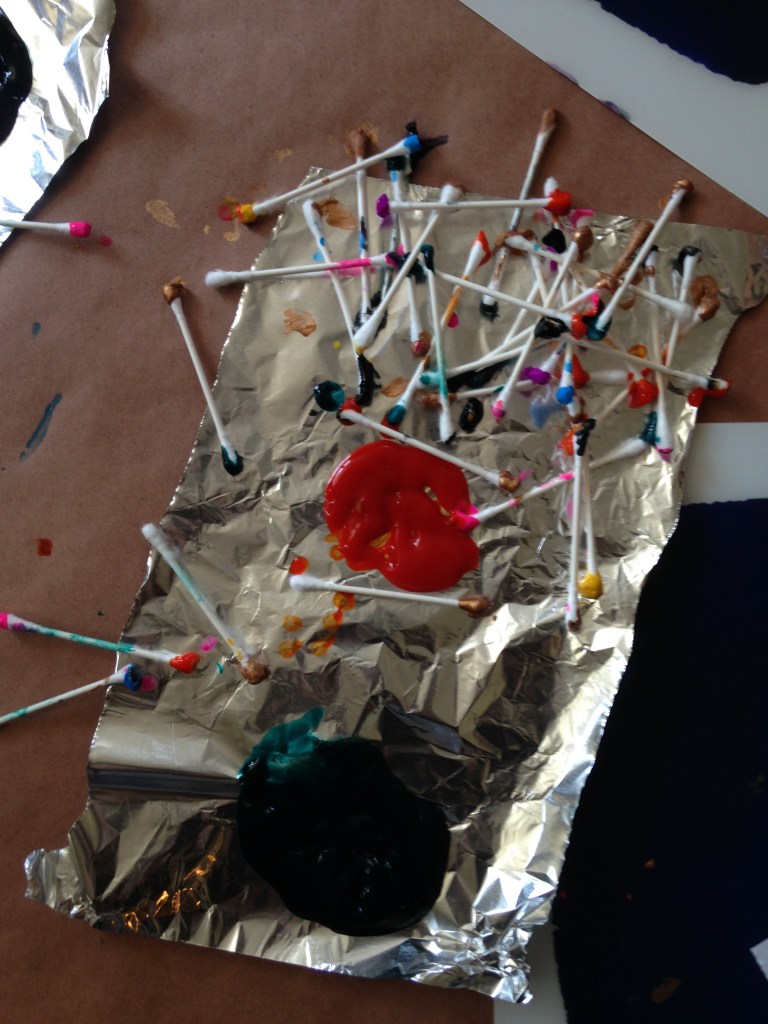
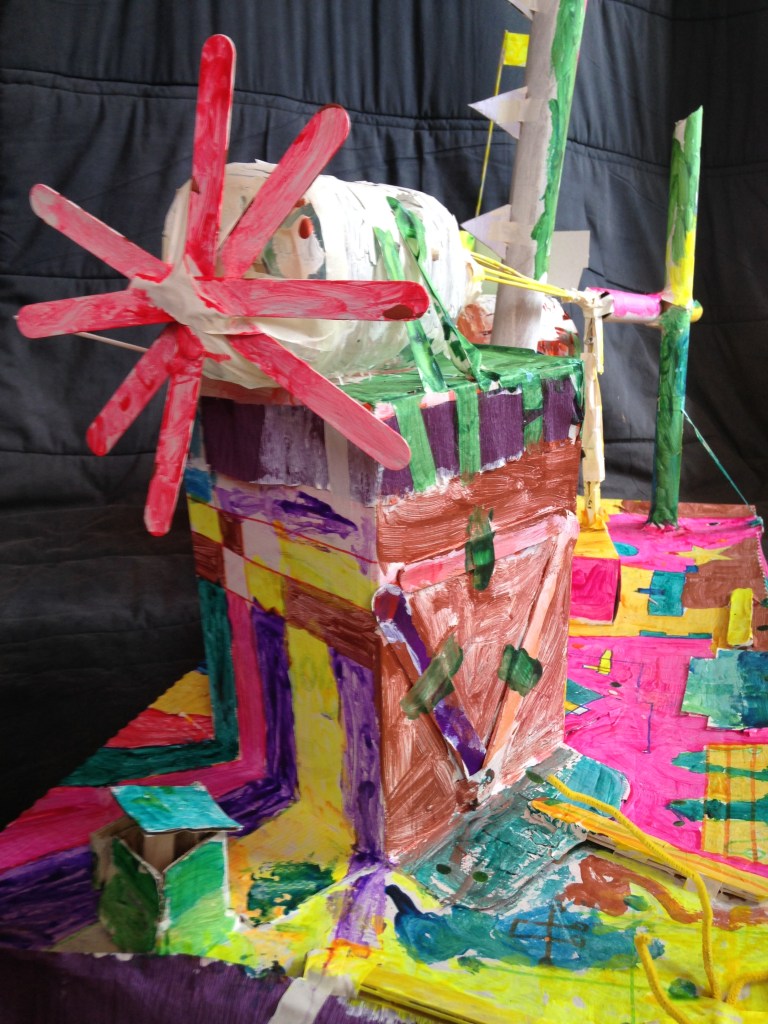
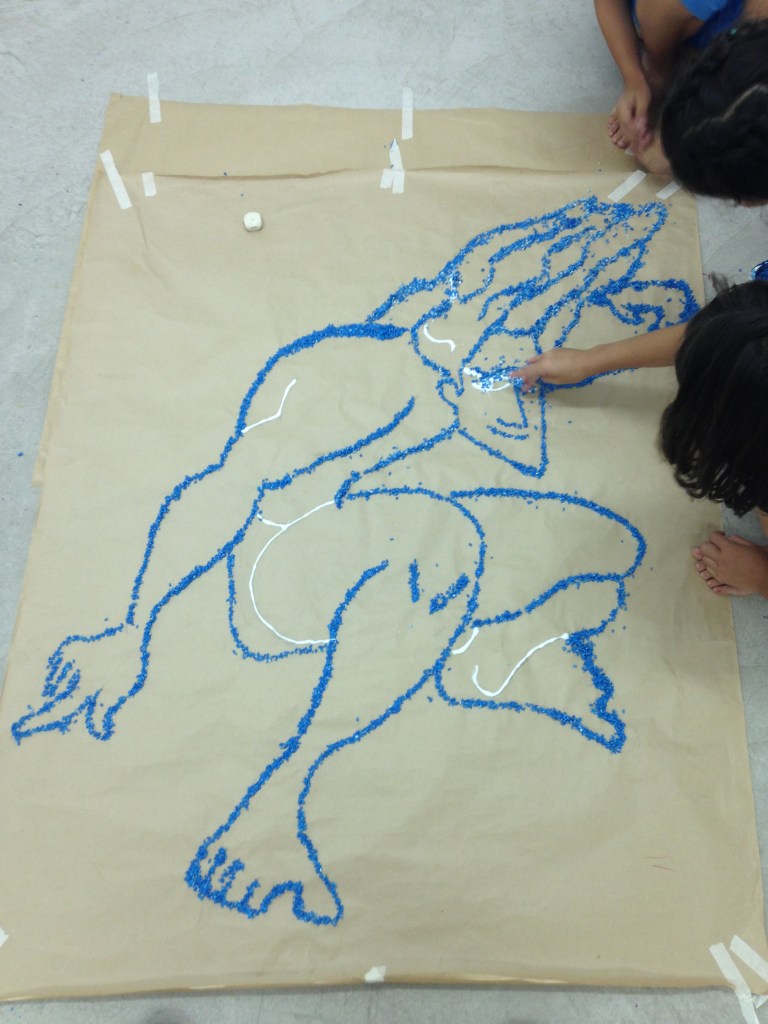
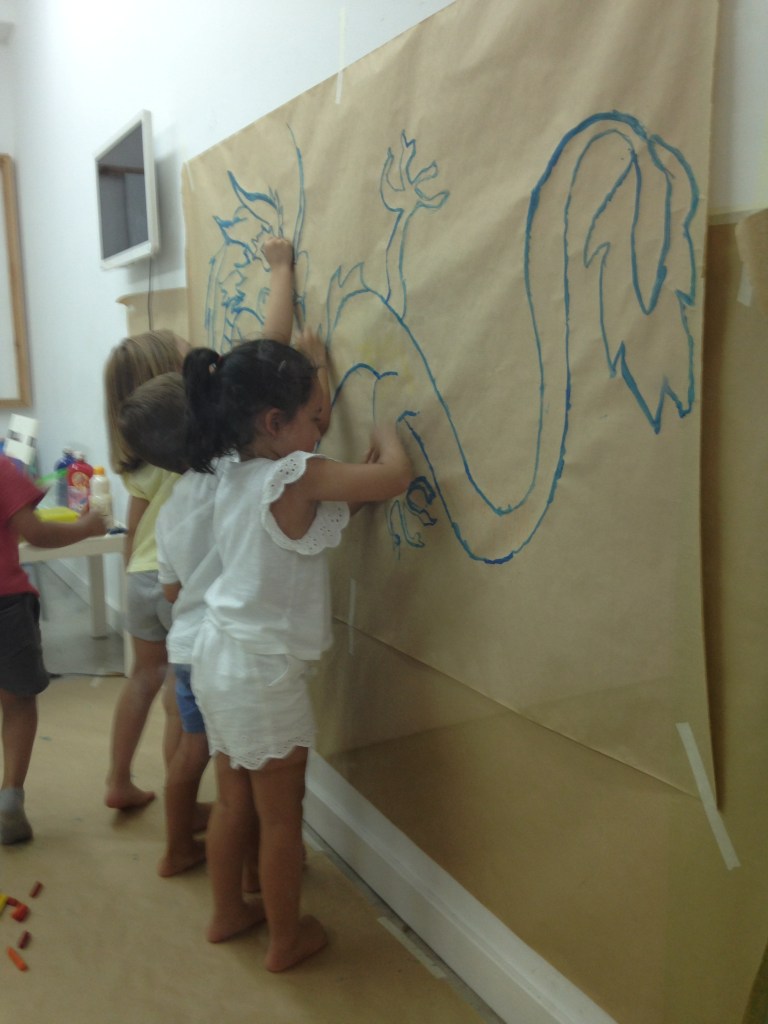
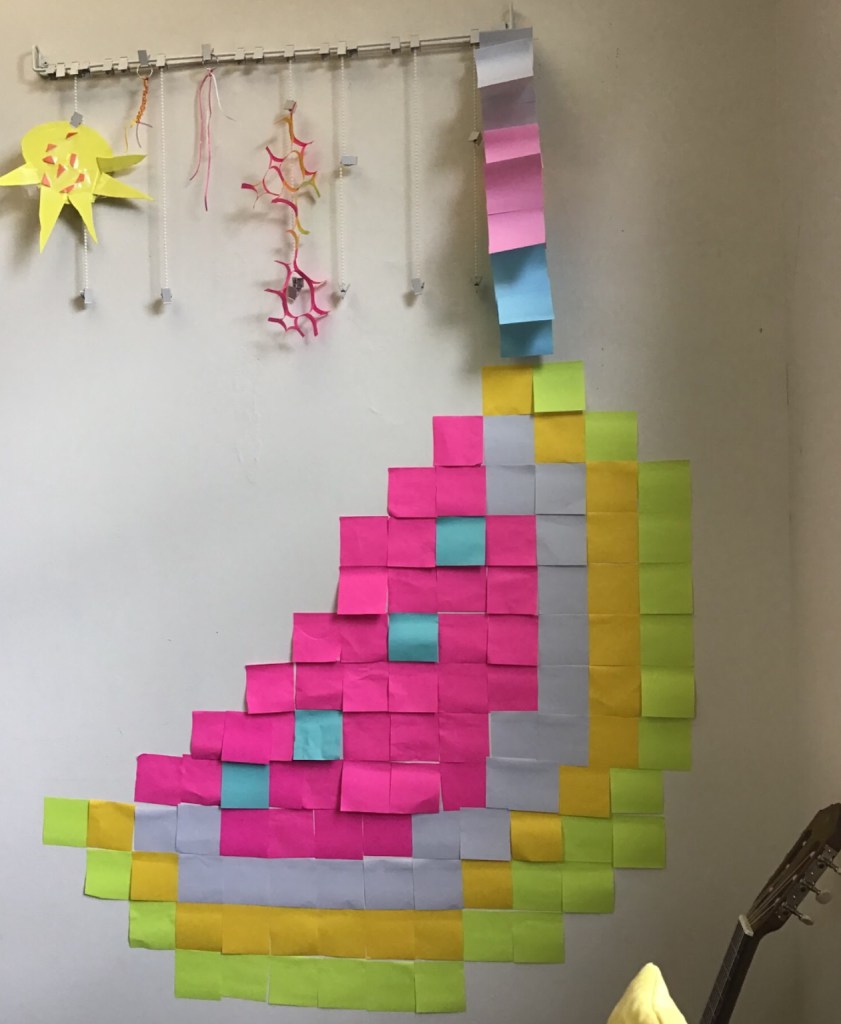

Student autonomy is highly valued. We create themed corners in the classroom (music, painting, reading, etc.) where all materials are readily available to the students. This facilitates the emergence of spontaneous creative work.
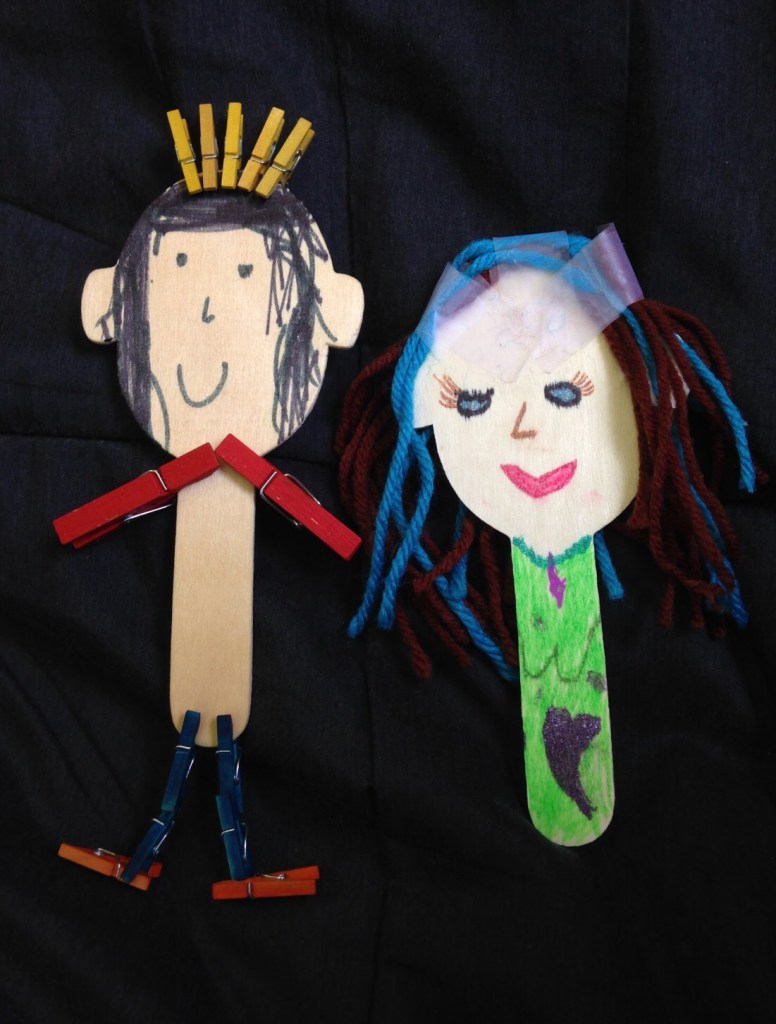
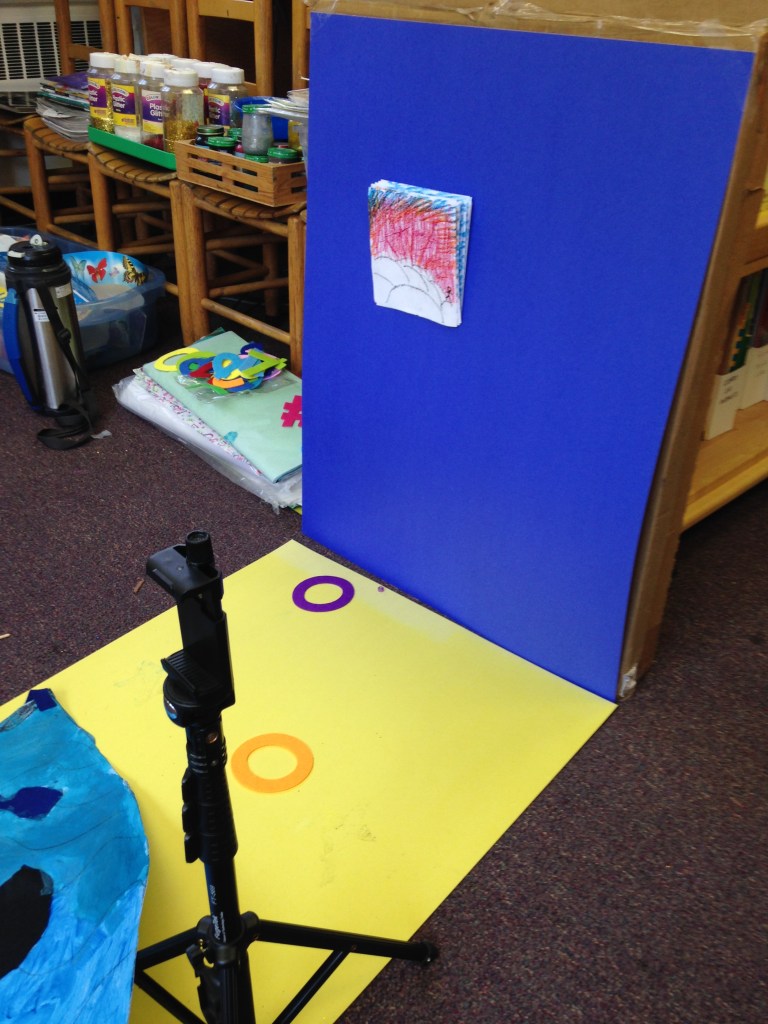

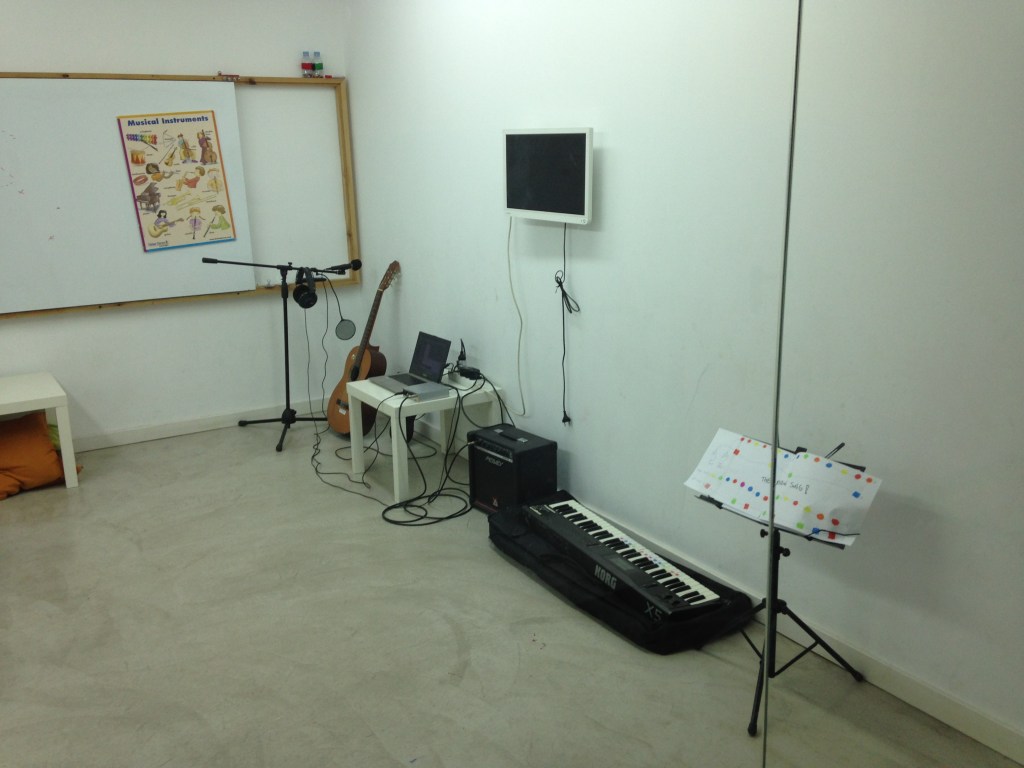
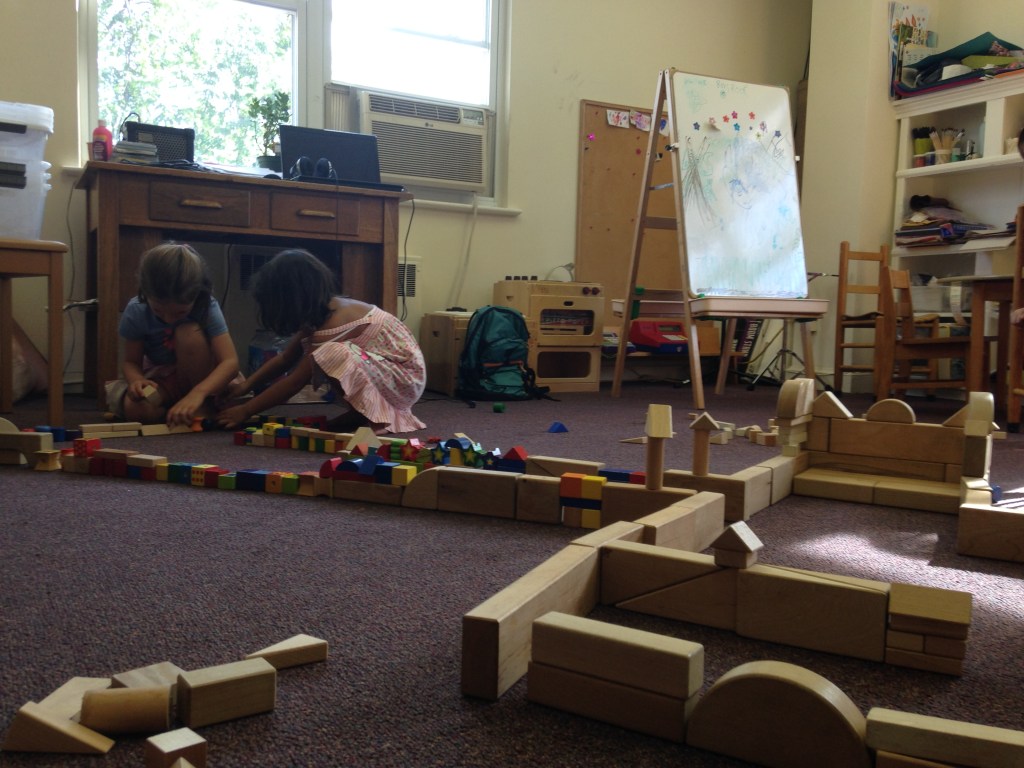
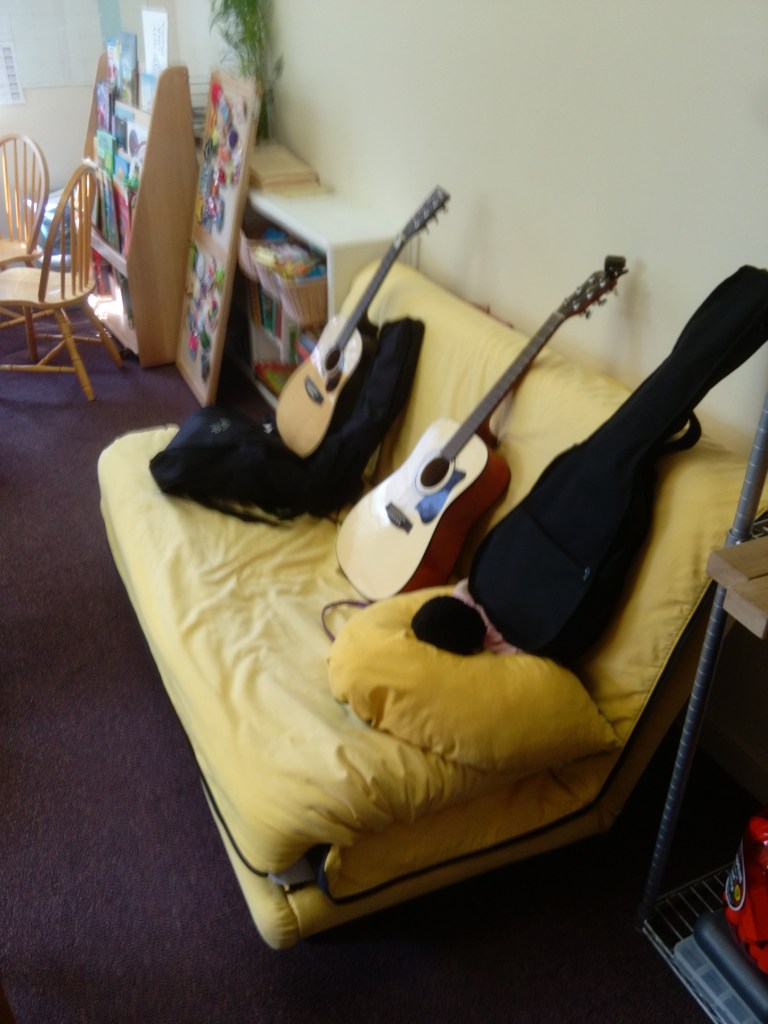
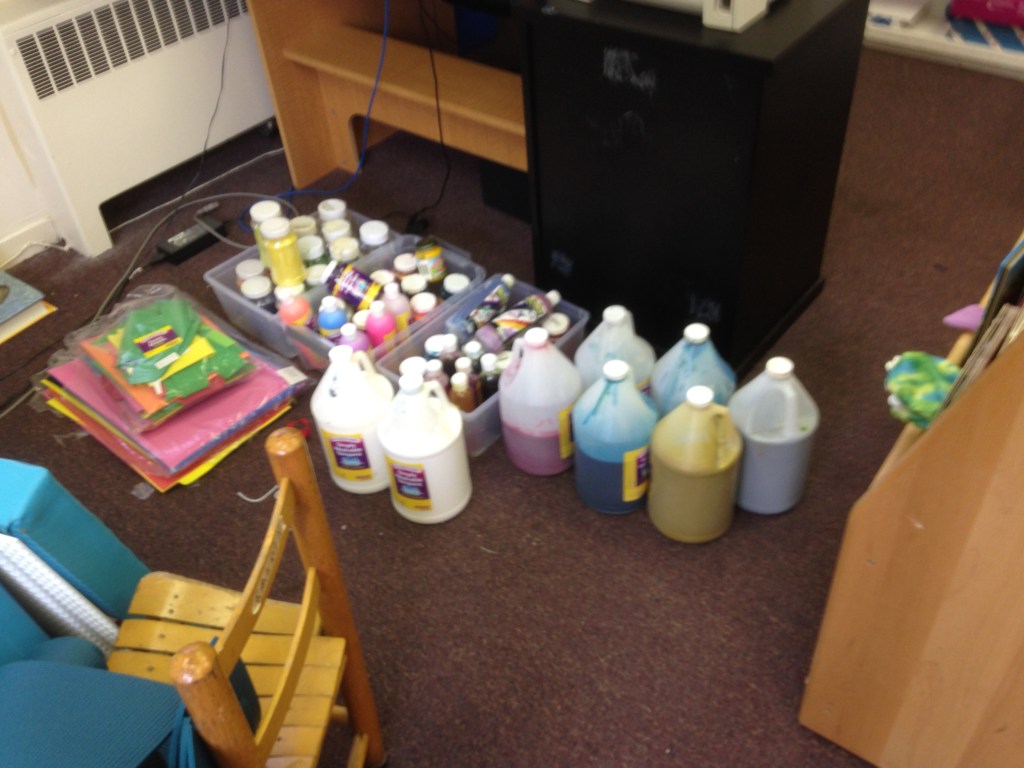
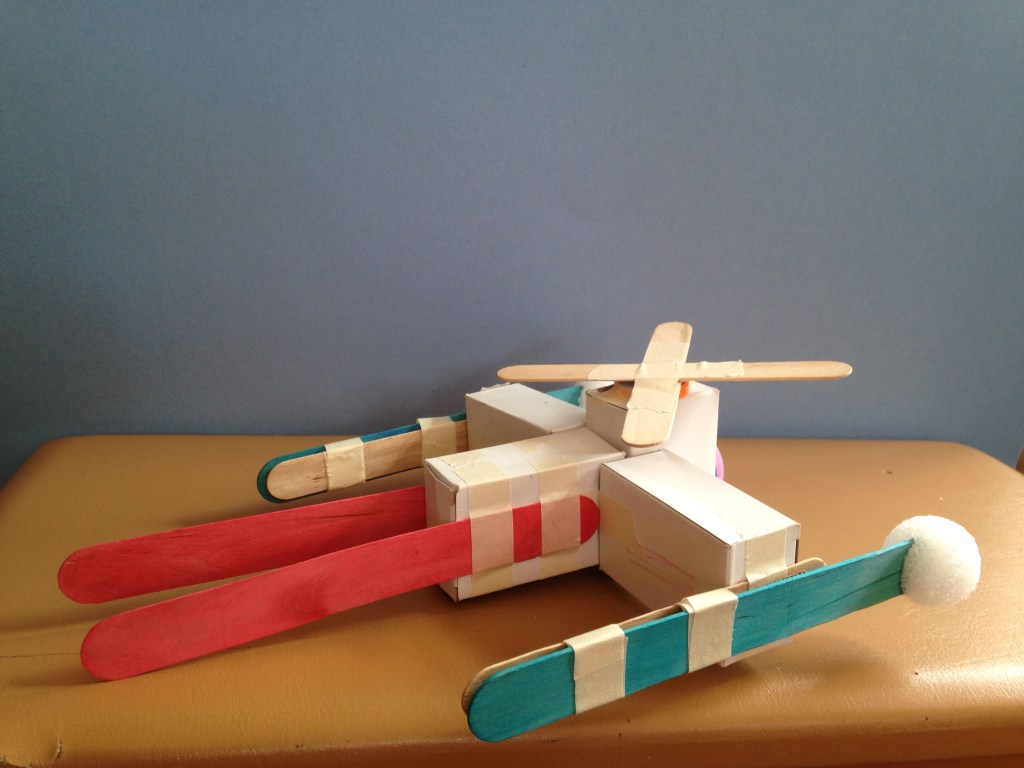
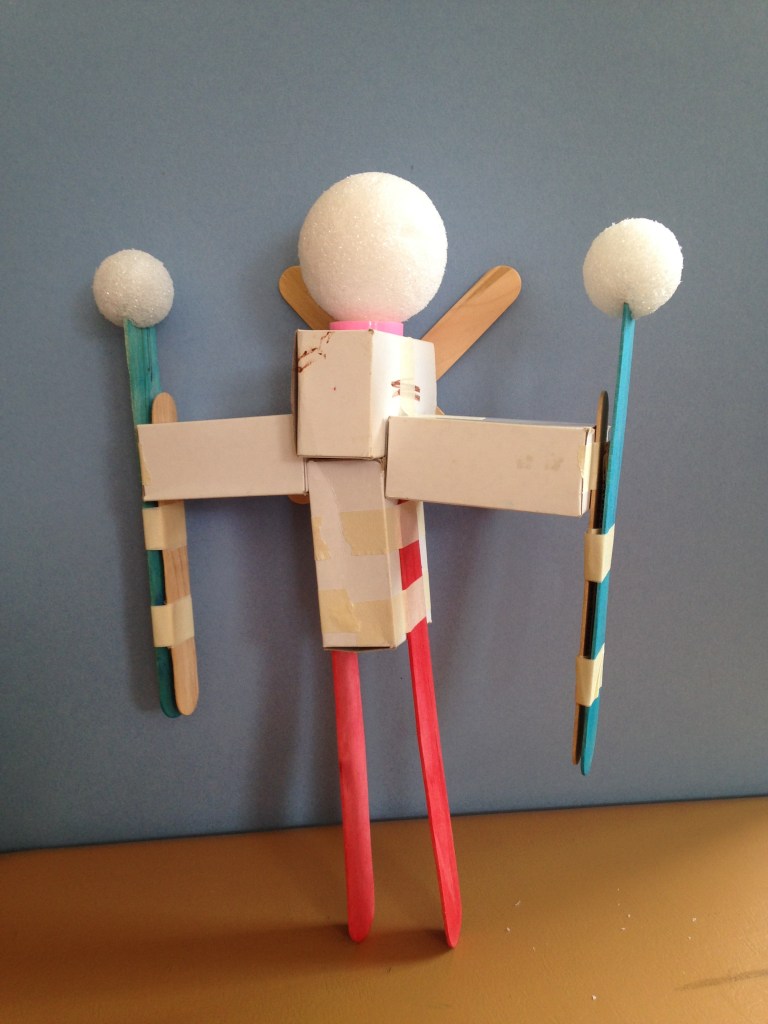
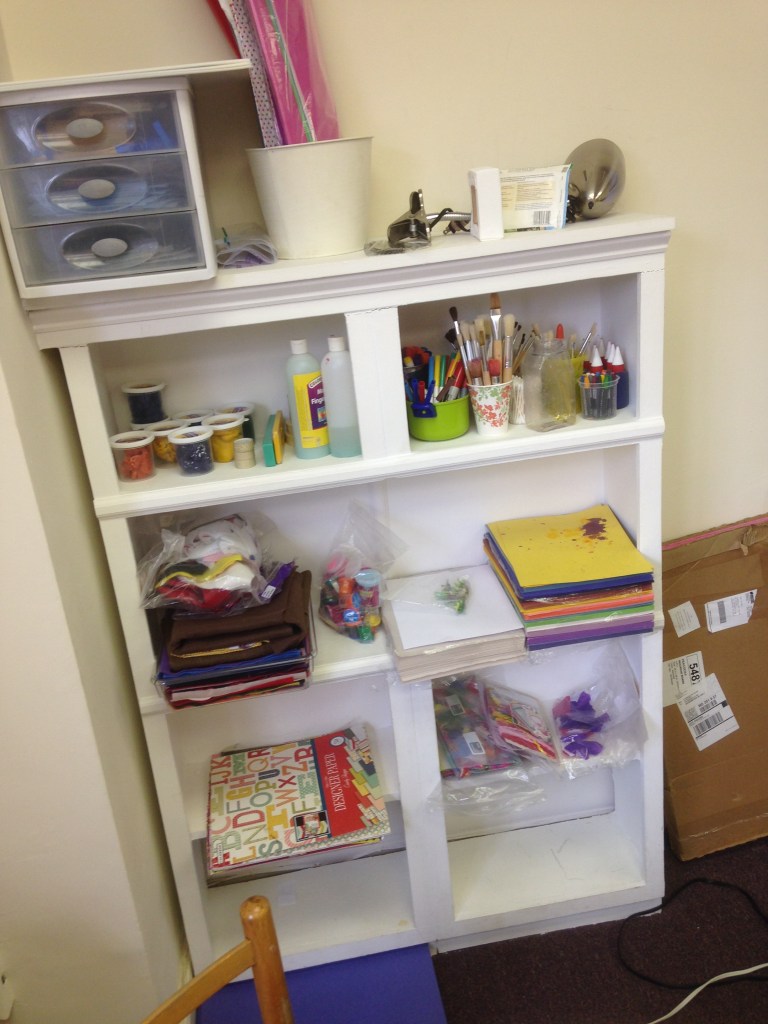
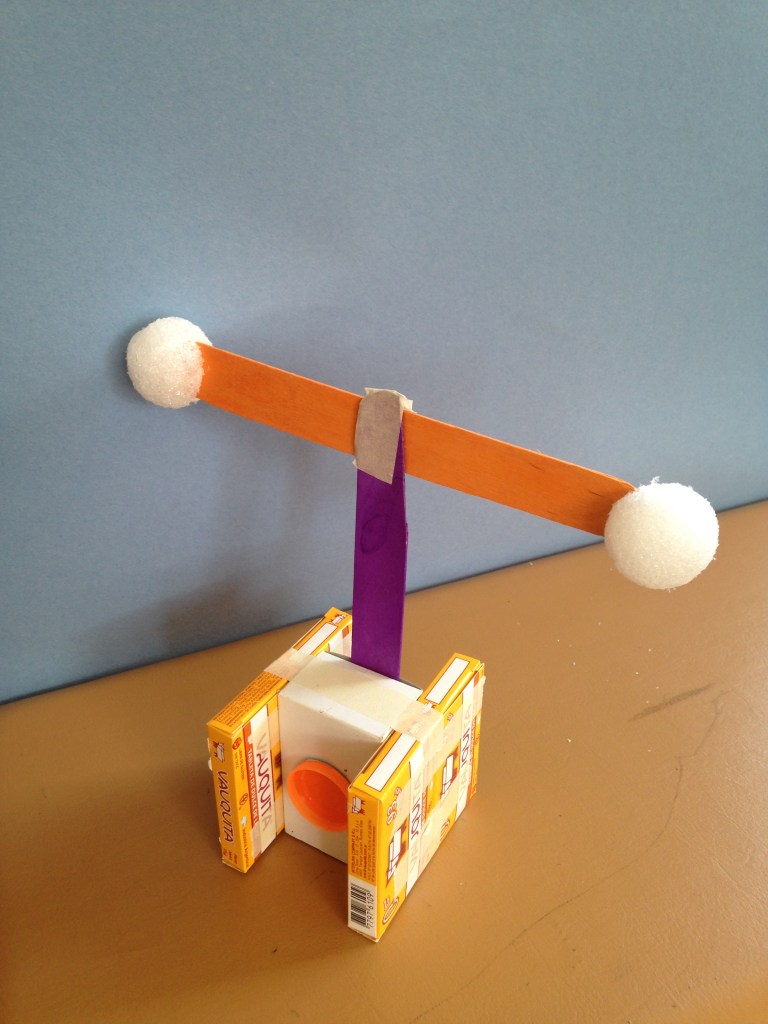
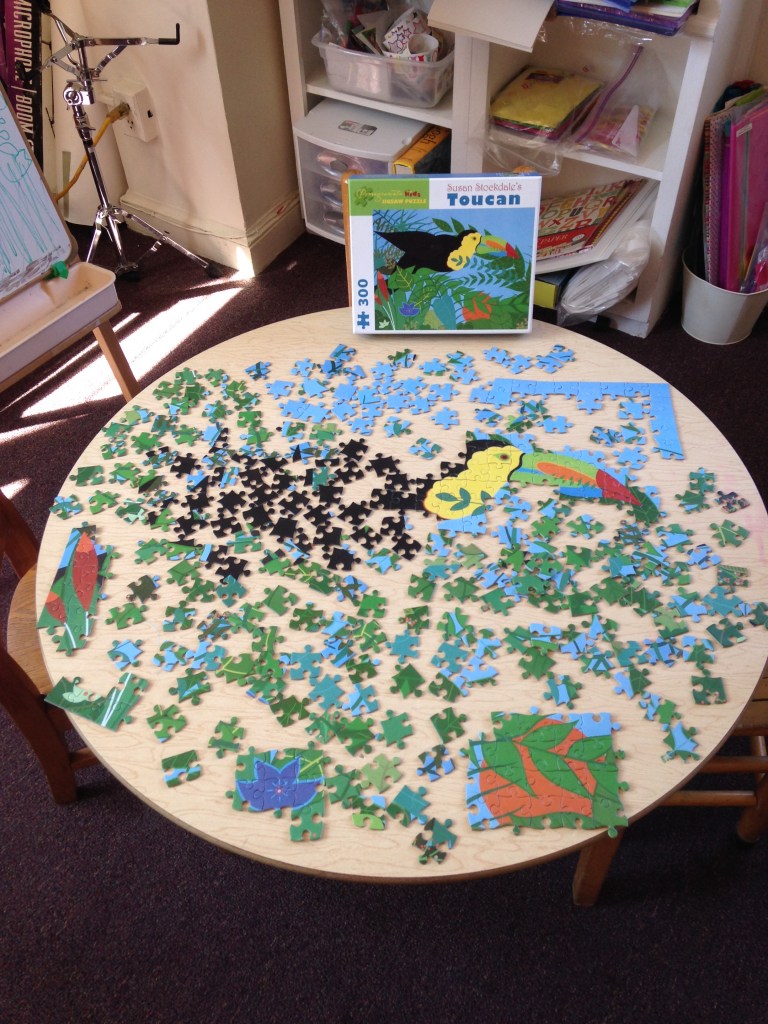
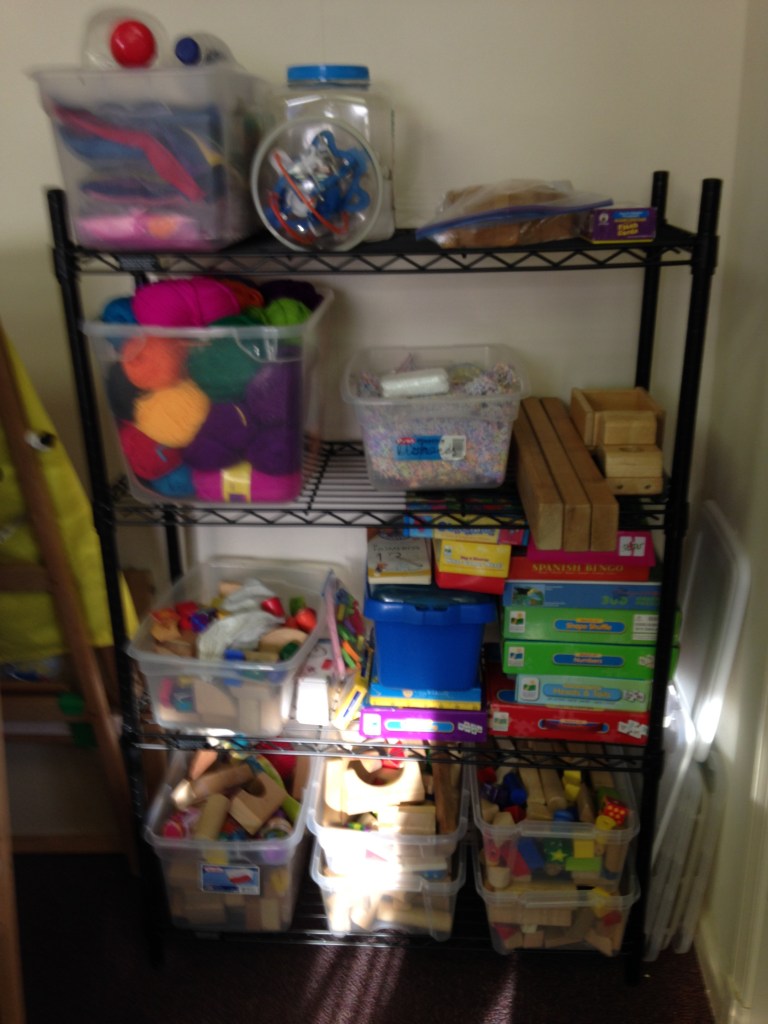
This opens up the possibility for much self-learning and teaching!
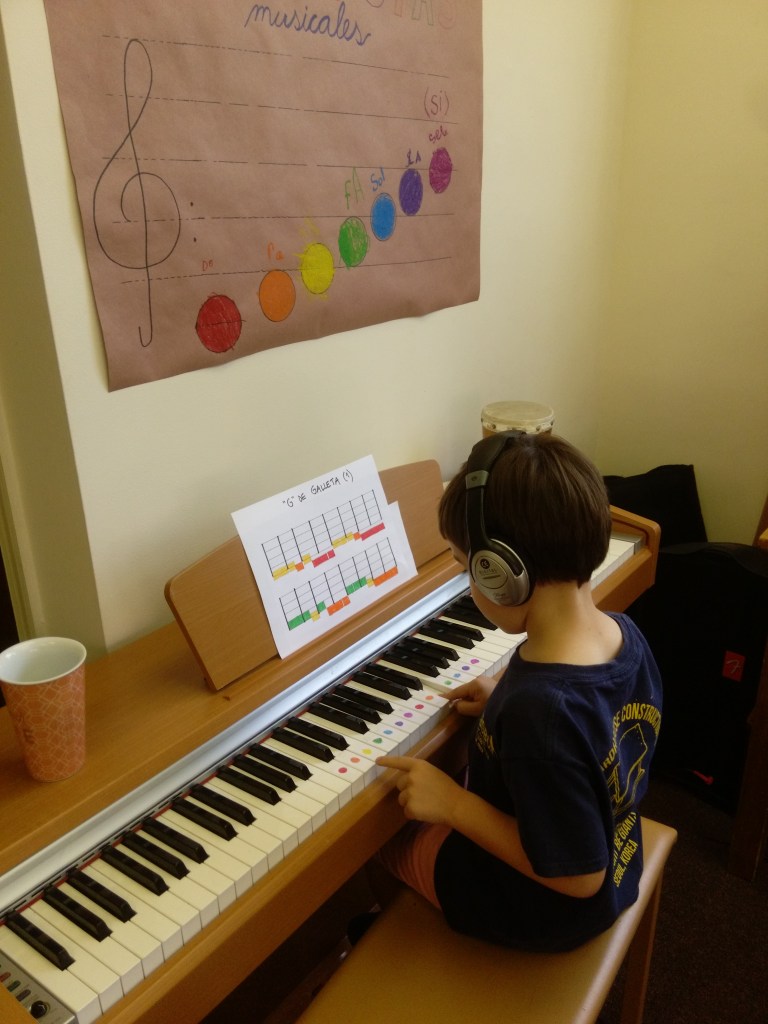
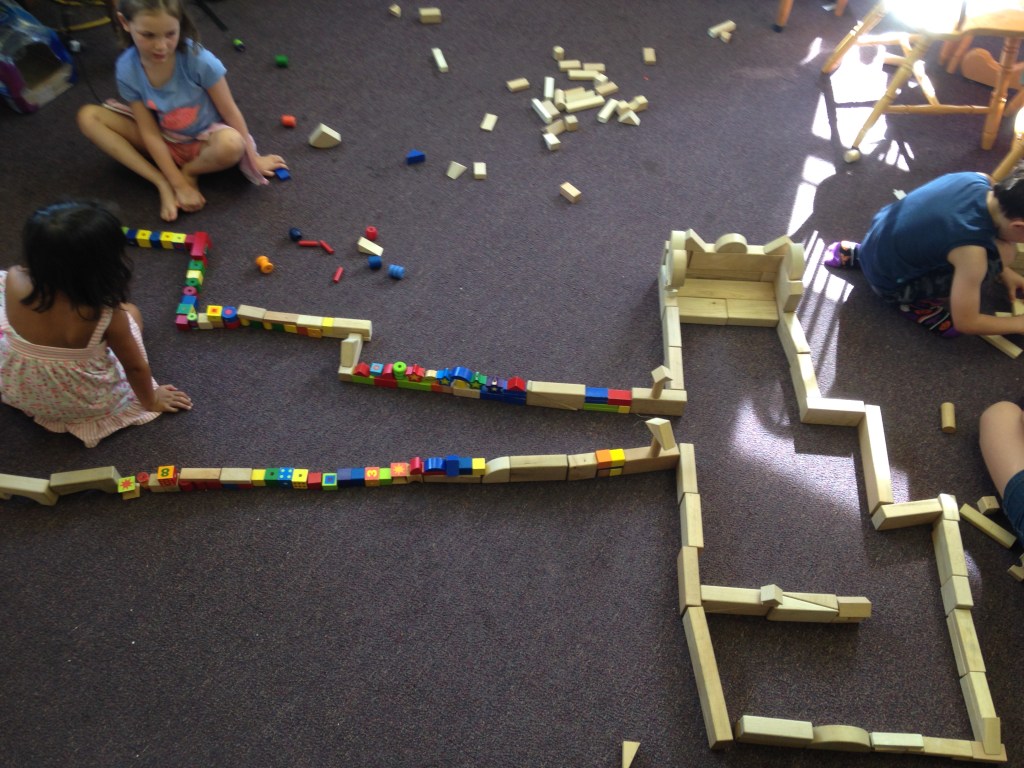
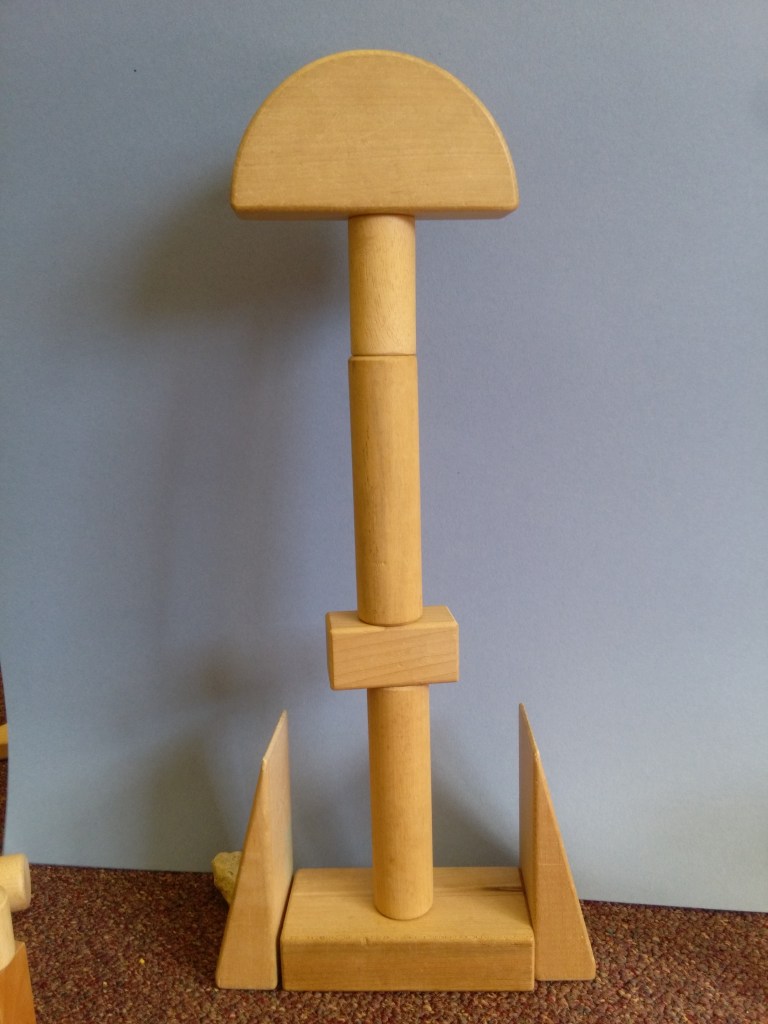
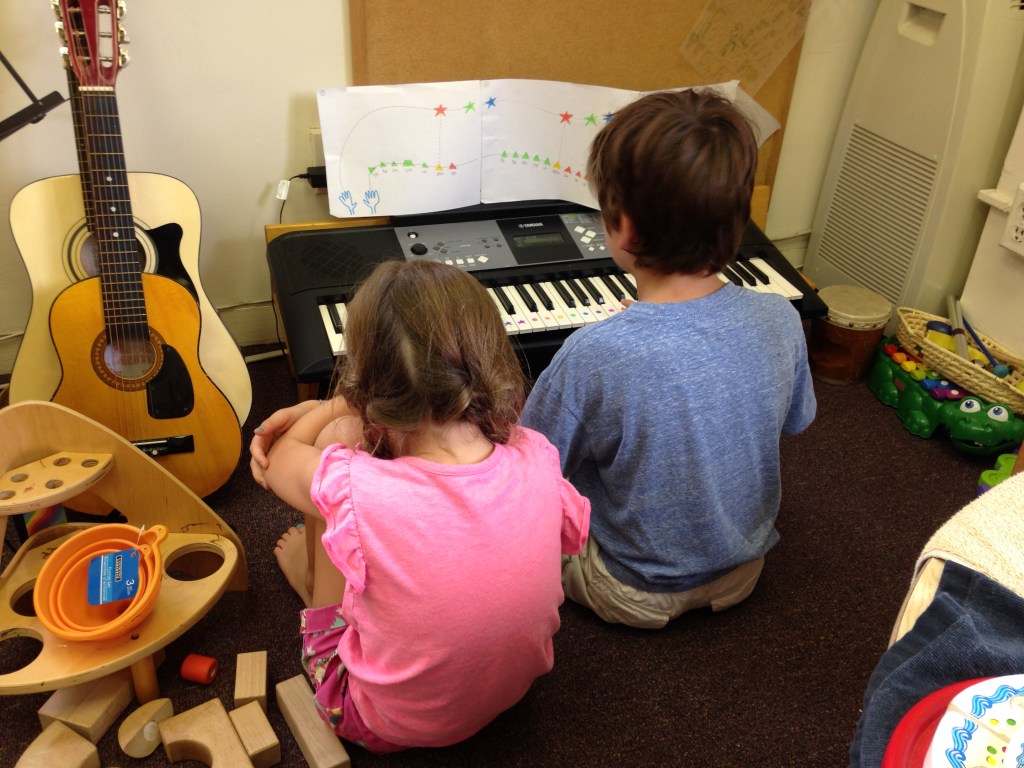
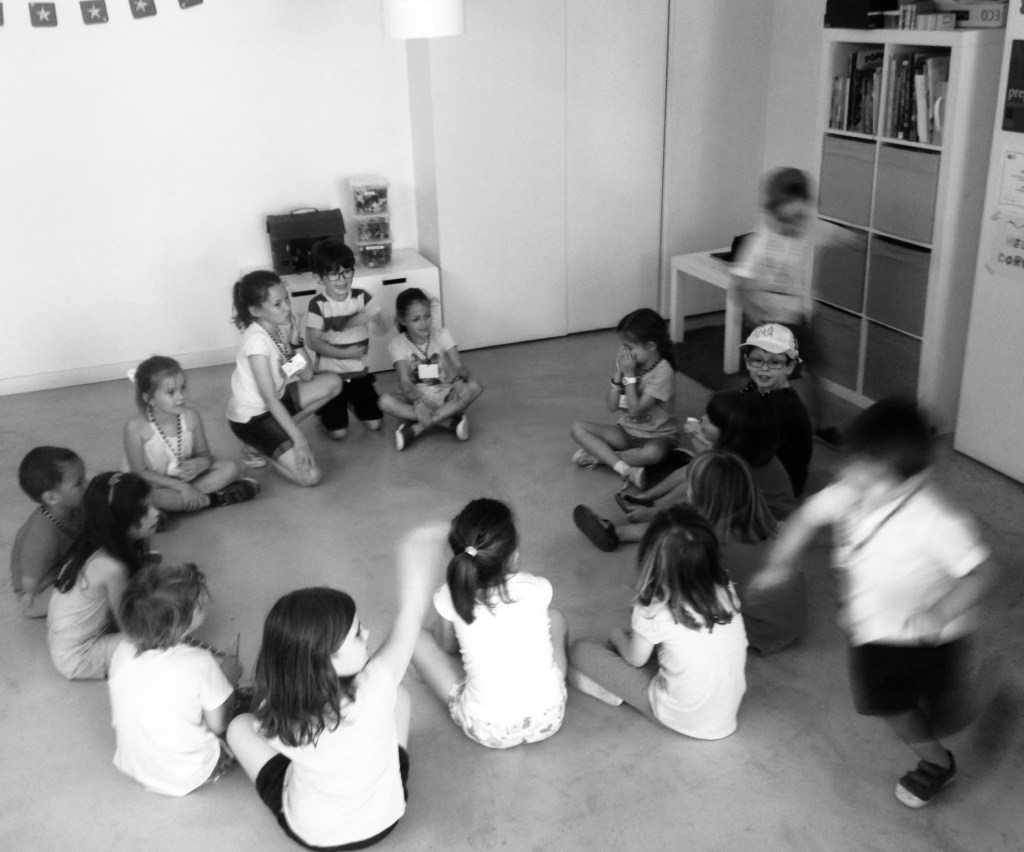
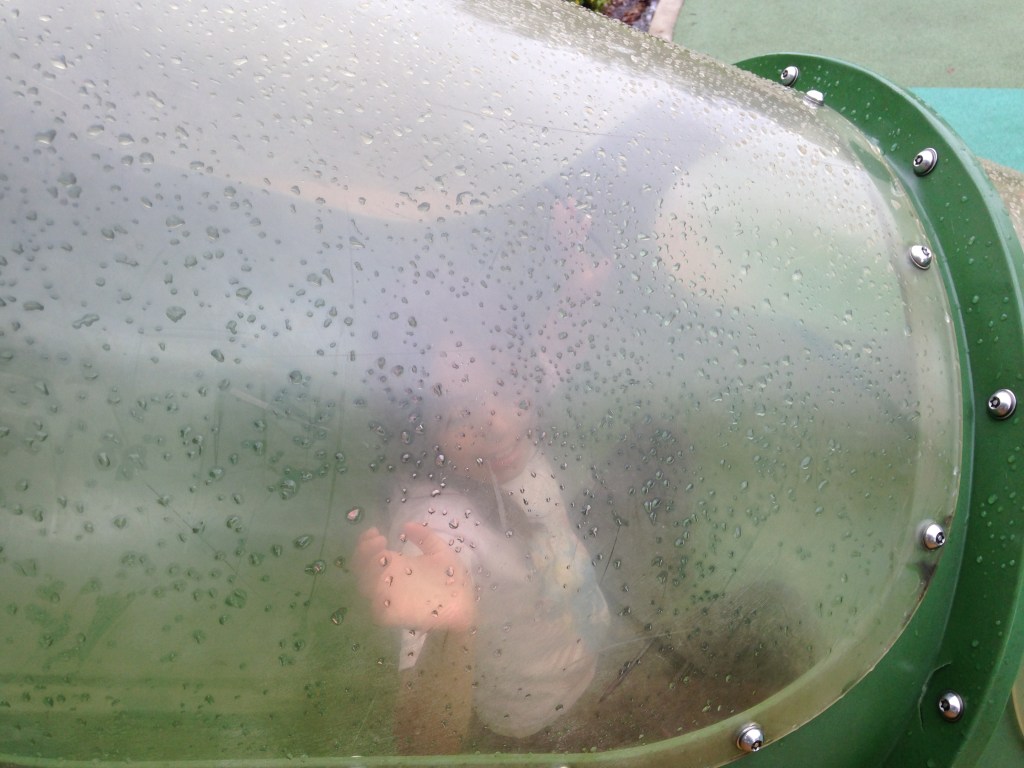
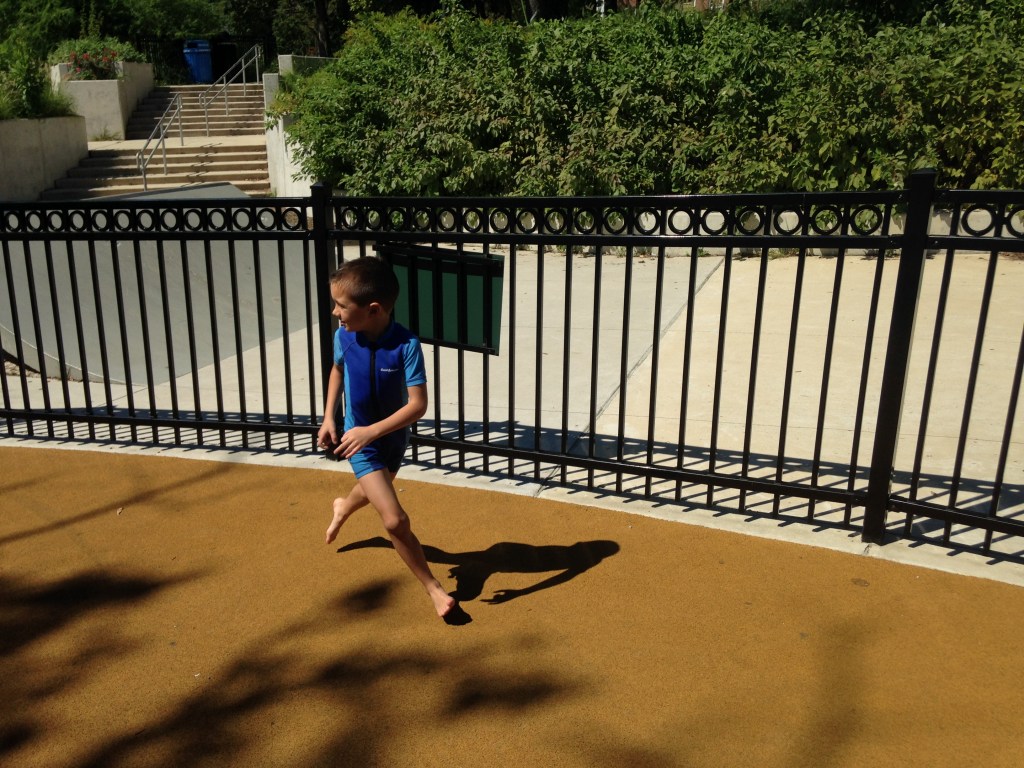
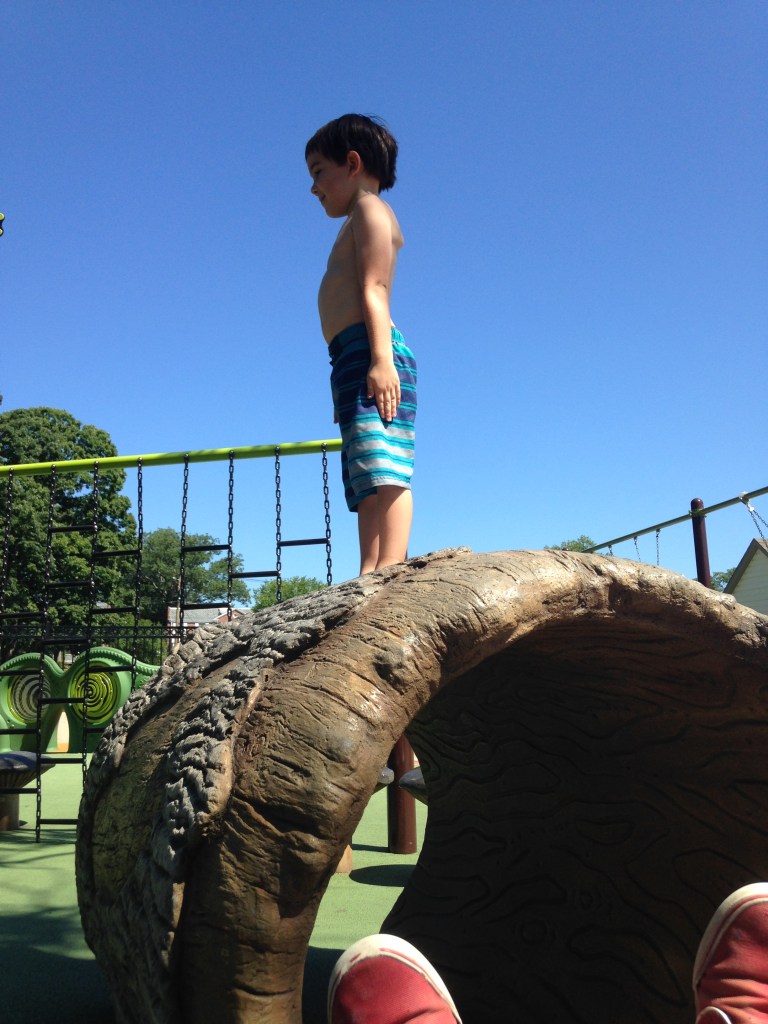
We also place importance on spending time outside, playing and connecting with nature as much as possible.
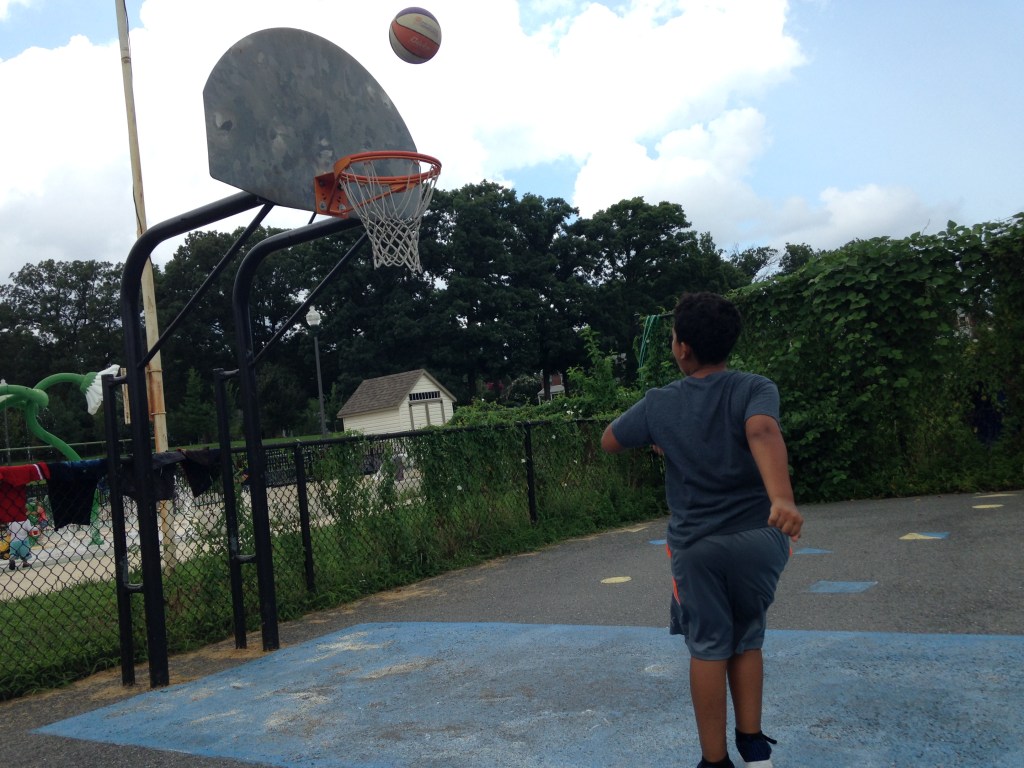
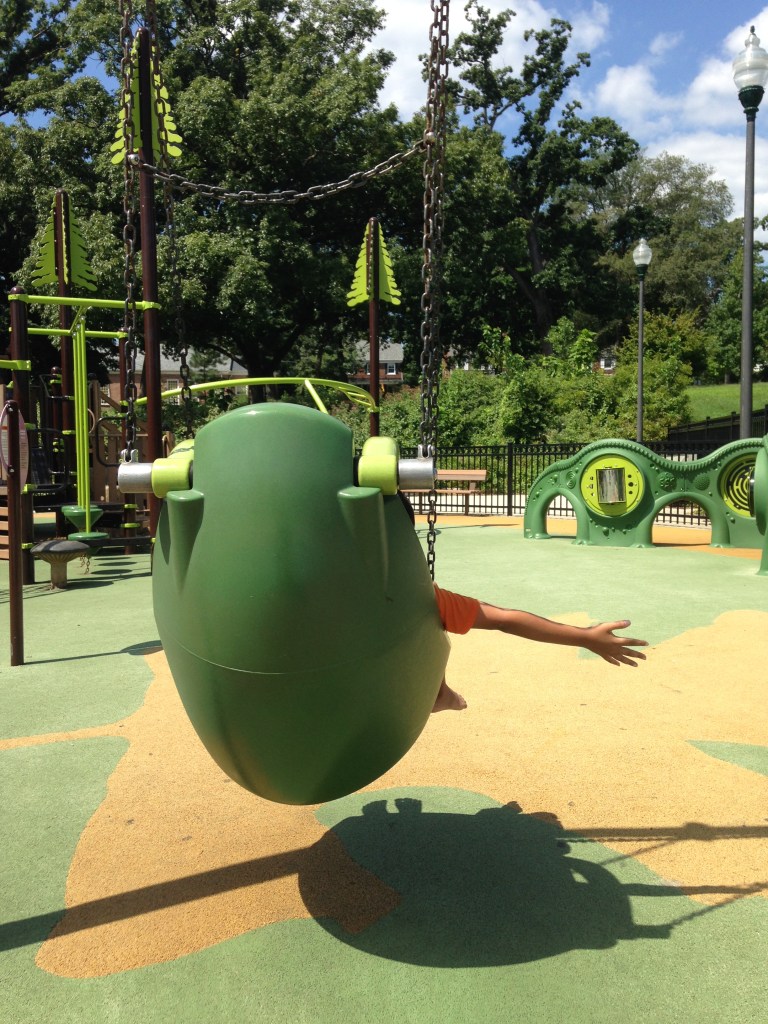
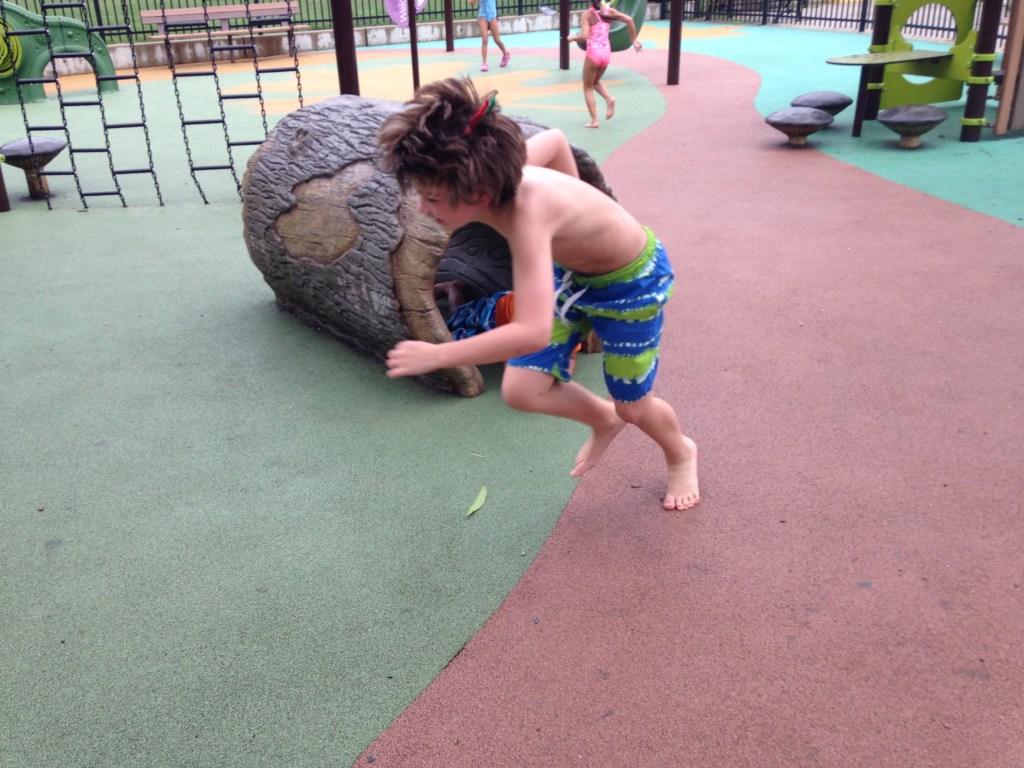
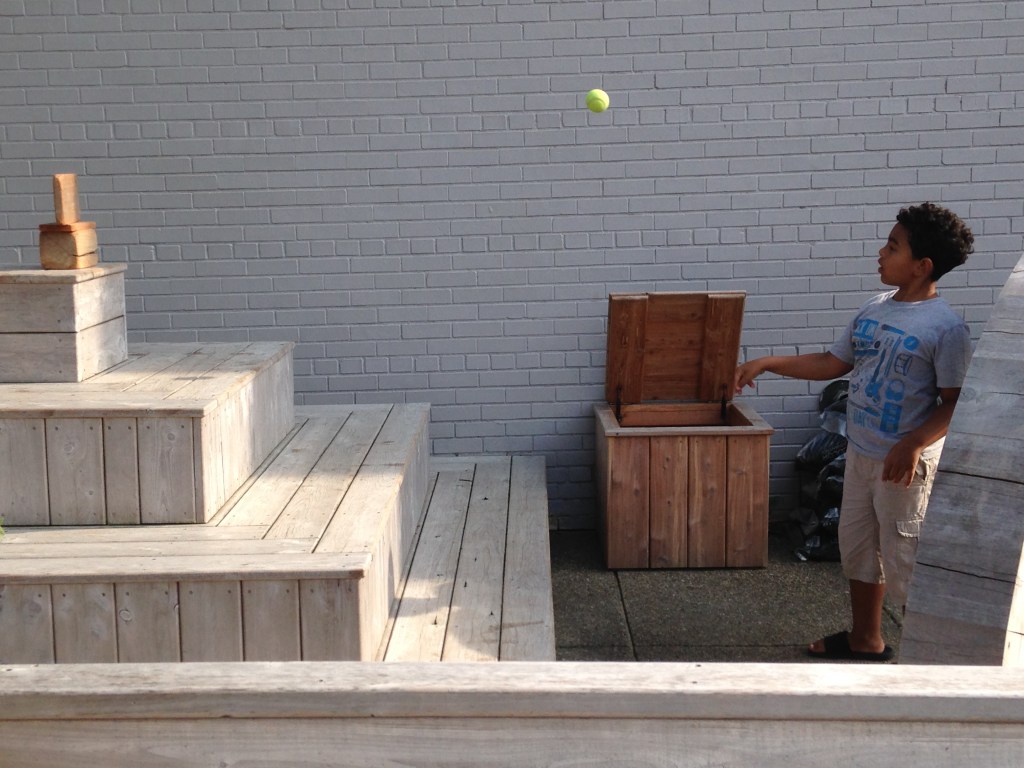

When we play music, we use different instruments, and students are taught the basics of reading and writing music, so that we can even play together as a band.
We learn and rewrite the lyrics of our songs, and record our singing, to practice our second language.
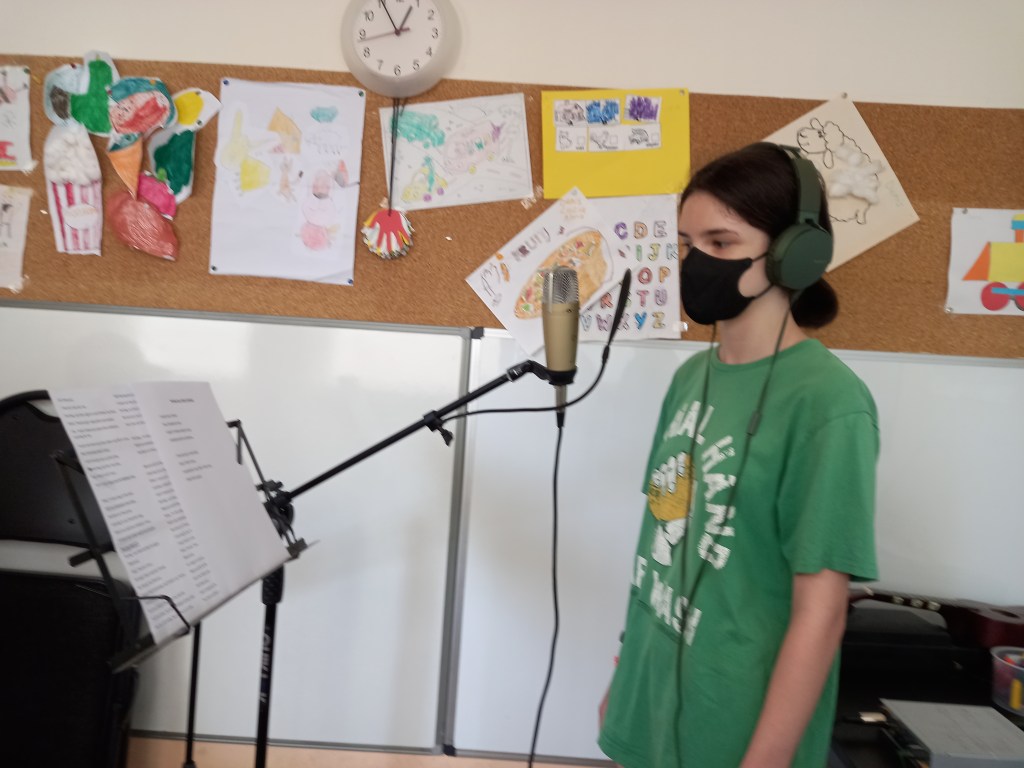
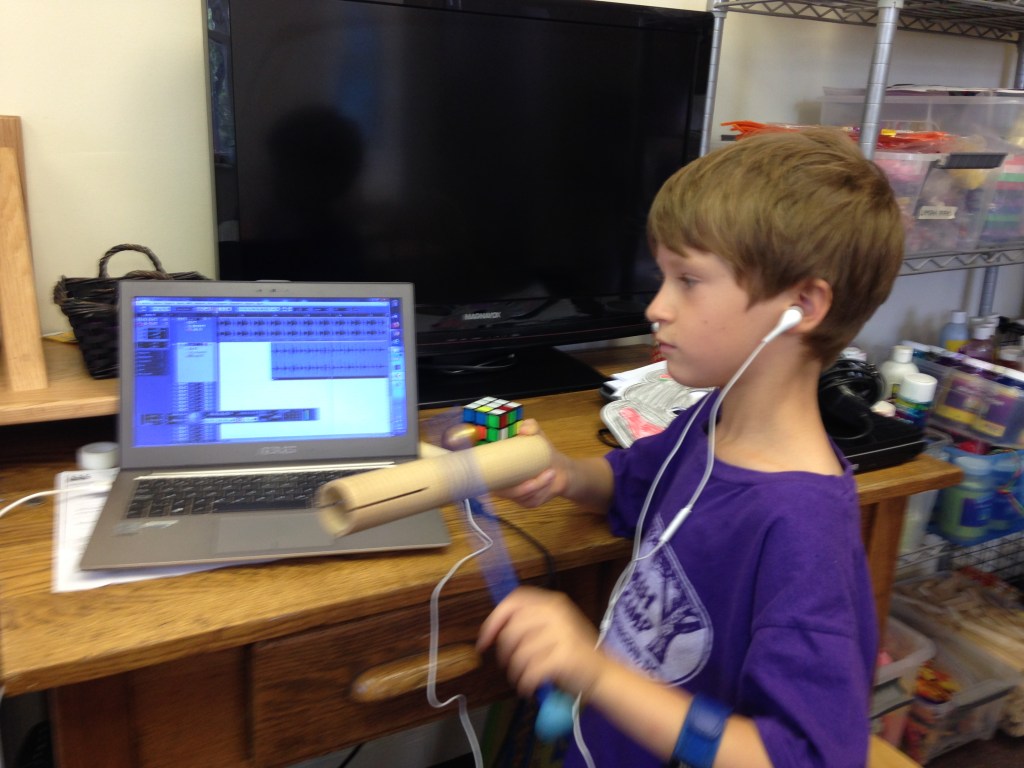
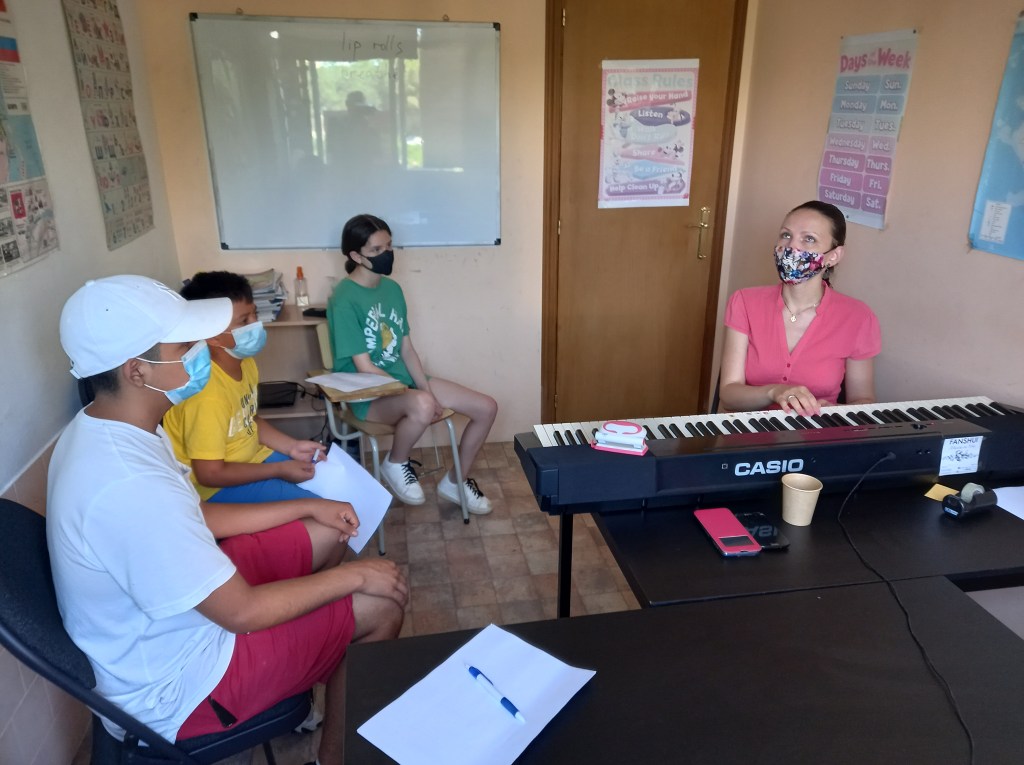
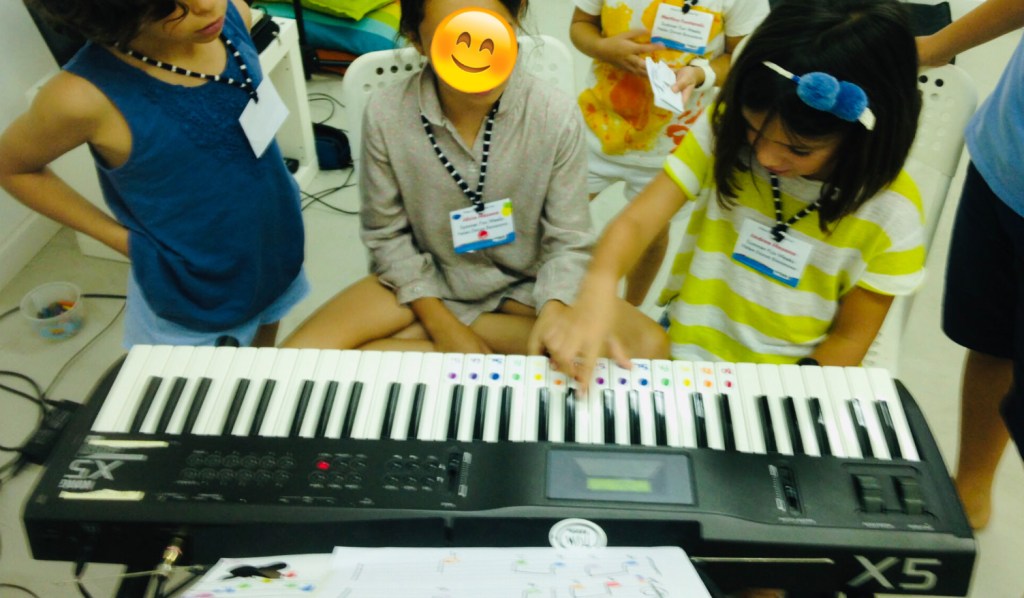
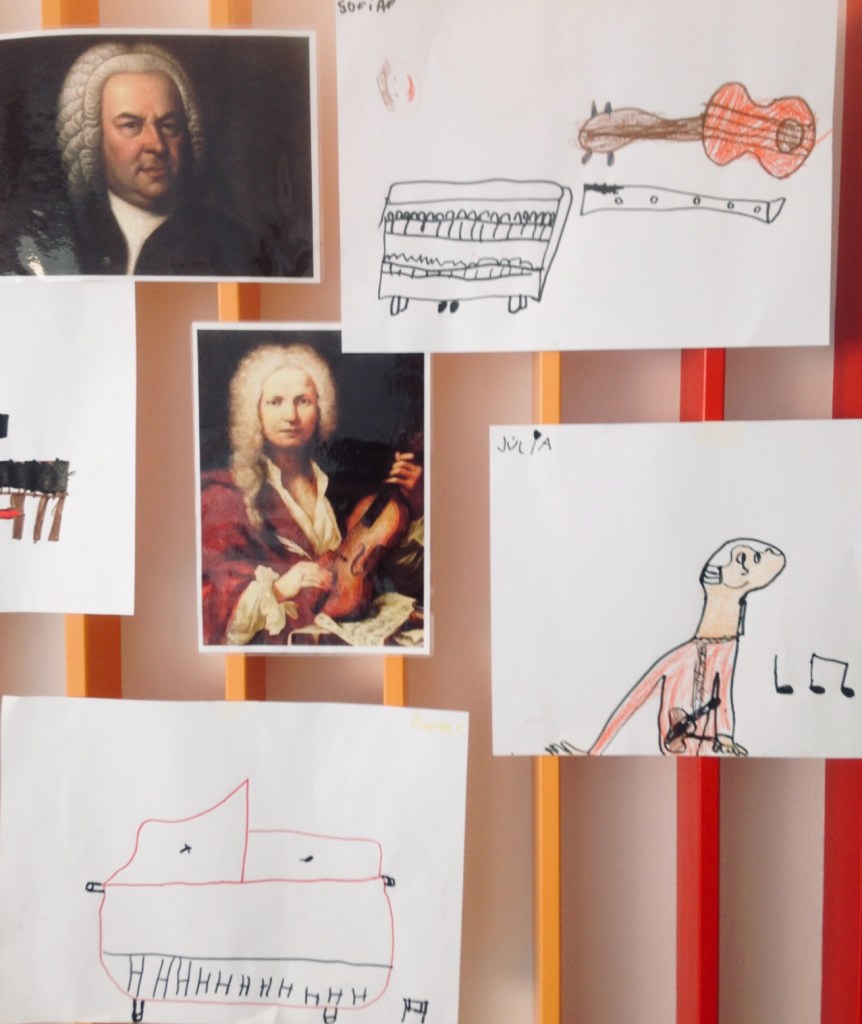
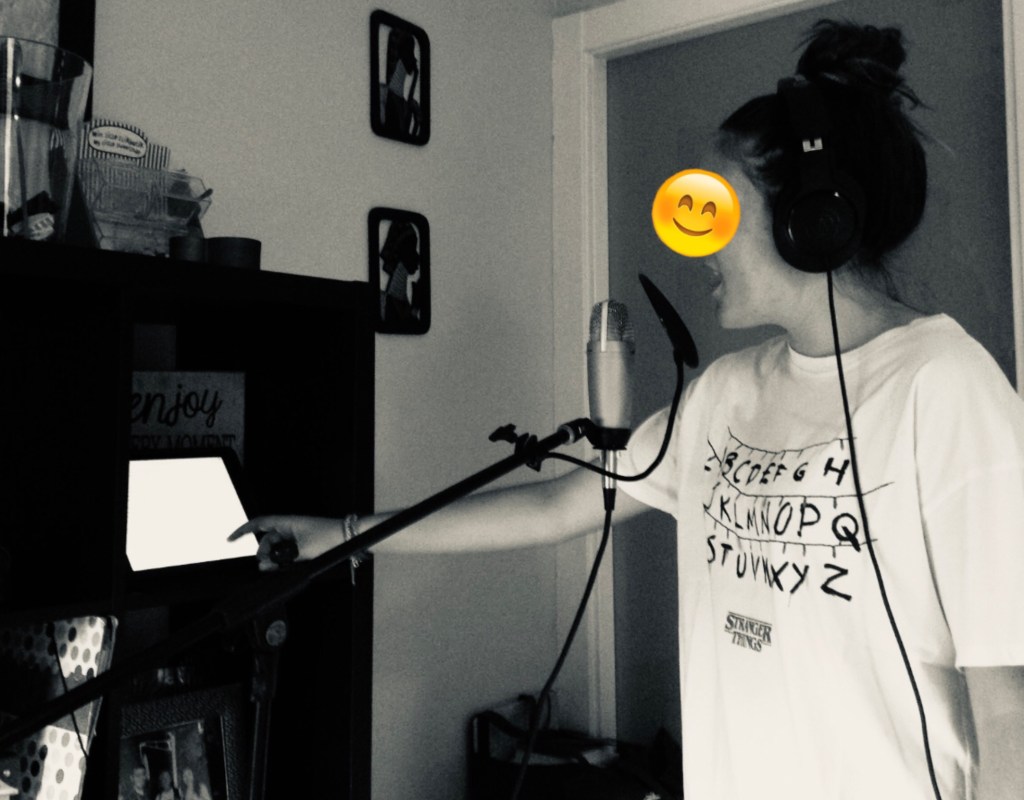

Here we have an example of a song recorded by a group of children from the United States. (Había un sapo, by the Uruguayan band Atención Atención)
A very popular technique that is explored is stop motion animation; through which we practice drawing, storytelling, music, etc. Here we have two examples:
We also visited places of cultural and natural significance.
CHOIR DIRECTION
I started directing senior choirs in 2010, after being the pianist for the Cor Groc at the Vall D’Ebron Civic Center, led by Guillem Baladía, for a year. The Coral Roses of Sant Feliu del Llobregat Choir gave me the opportunity to begin this journey. Since then, I have directed the Flor de Neu, Terrassa Centre and Ca Naurell Choirs, apart from the Roses Choir.
This activity is conducted with senior adults who have no musical knowledge. We perform relaxation, warm-up and vocal technique exercises. We sing in unison or in polyphonic arrangements many of which I write myself, canons, a cappella or accompanied by tracks or live instruments.
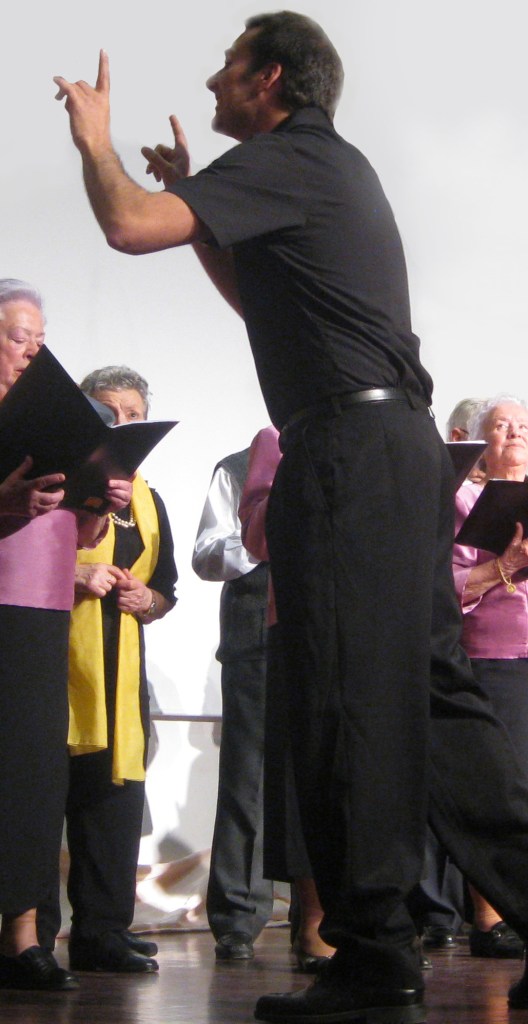
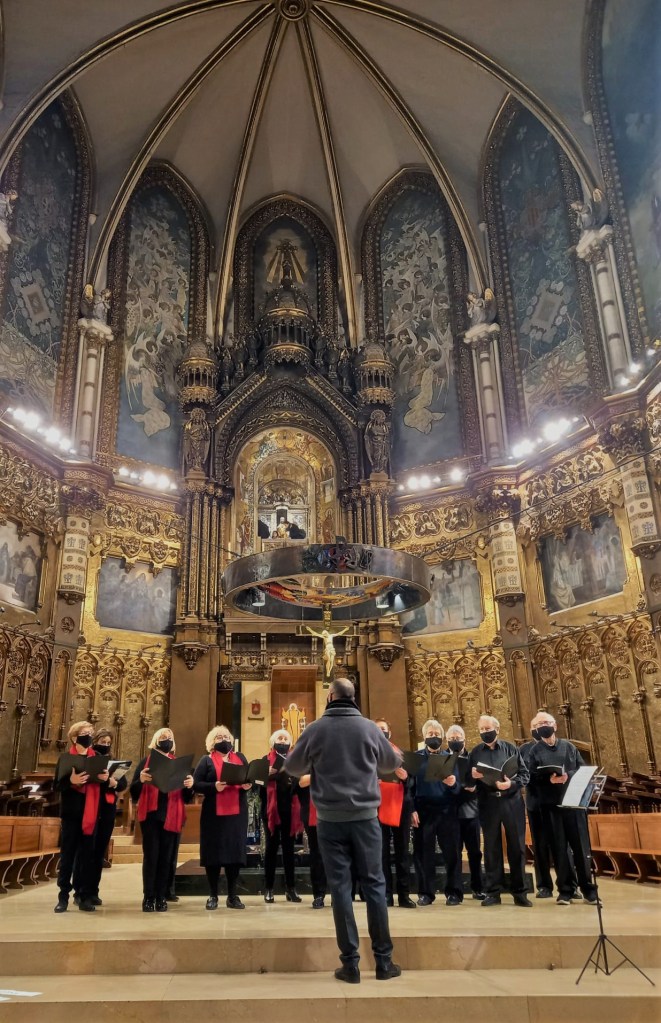

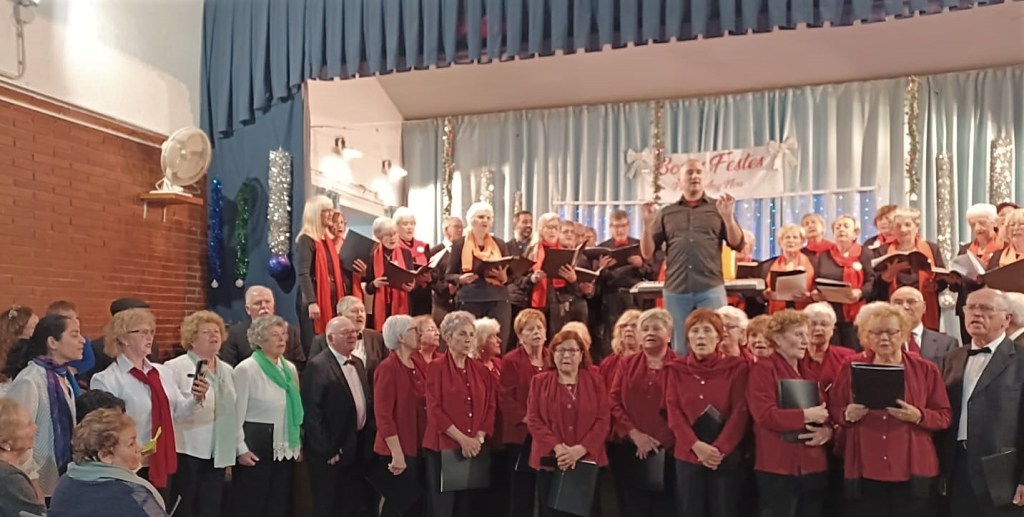
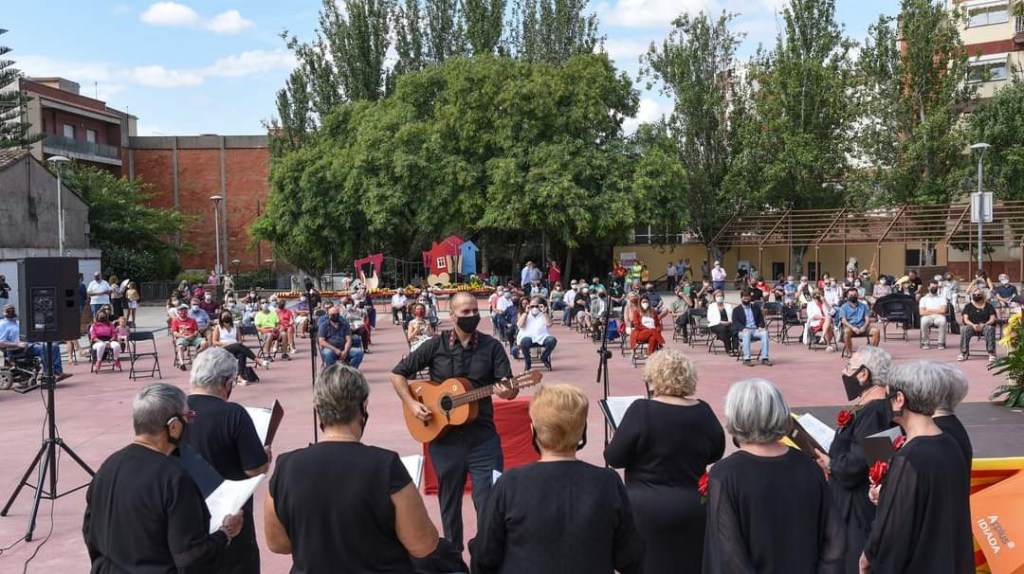
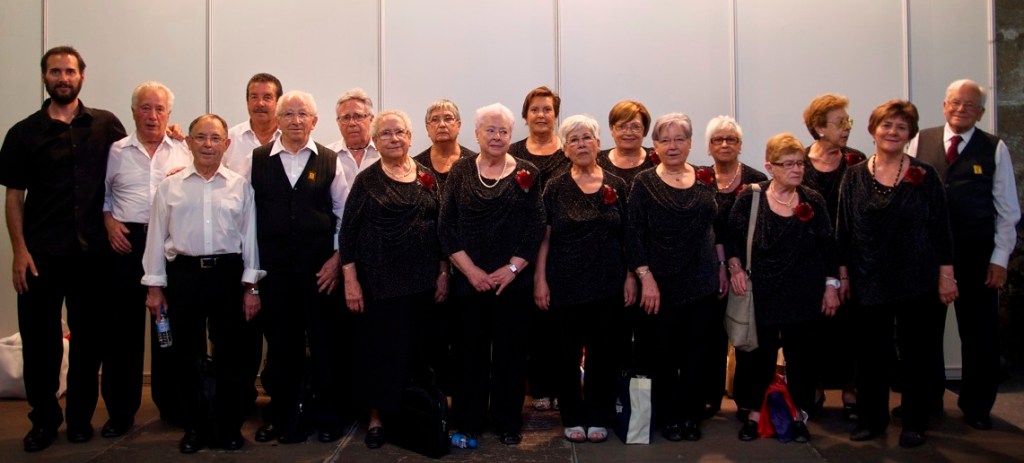
We sing a varied repertoire; from ancient songs written in Latin, to classics of Catalan popular music (sardanas, habaneras, marine waltzes) to Zarzuelas and modern popular music (the Beatles, Leonard Cohen, etc).
I write song arrangements that are both easy to sing and sound good. Here we have two examples, «Hallelujah» by Leonard Cohen and «Eres tú» by Mocedades:
In the rehearsals, we strive to maintain an environment that combines work with fun. It’s about seeking our maximum performance… but without going overboard. Learning the fundamentals of singing technique, working on pitch, memory, facing the challenges of choral singing, and participating in a group cultural activity, making friends, etc.
We perform about five times a year, in places such as the Basilica of Montserrat, in the Iberia Room, the Palau Felguera, in the Casal de Terrassa and that of Sant Feliu, as well as in cultural centers, senior residences, etc.
The following is a video of a joint performance by the choirs of Sant Feliu and Terrassa Centre, during the La Salut festivities in Sant Feliu del Llobregat, where we sing a version of the sardana Torroella Vila Vella, by Vicenç Bou:
Singing in a choir can be a wonderful experience. Here we have a short film shot by Sergi Lesa and Gerard Oliver, students from the film school of the University of Barcelona, in which they include the story of Montse, a chorister from Sant Feliu, who shares anecdotes and thoughts related to this activity:
MUSICAL INSTRUMENTS
I teach piano, guitar, ukulele, drums, and bass to people who want to learn without the rigidity and demands of a Conservatory, but with a certain order and methodology.
We play various musical styles (jazz, pop, rock, punk, grunge, classical, folk, etc.). When choosing the repertoire, both the student’s and the teacher’s tastes are taken into account, ensuring that the music has the appropriate technical level.
We study harmony as questions arise, never as abstract and sterile theory. We work on the basic technique of each instrument by playing gradually more difficult songs, and also by doing specific exercises.
We practice music reading and writing using traditional and alternative systems. We also place importance on rhythm. Besides working with a metronome and rhythm boxes, we often play in duos (jamming); playing with others is much more fun!
We make low-fi recordings and productions to express our ideas and to understand the process of composition and music production.
We work on ear training by singing songs we like that have the correct technical level.
Every student is different in their tastes, needs, strengths, weaknesses, and purposes. That’s why we always explore different ways to ensure that enthusiasm is the driving force behind learning.
Below are explained some of the key elements of the classes.
Class Material (Youtube channel, Score library, music theory, video scores, etc)
DRAWING MUSIC
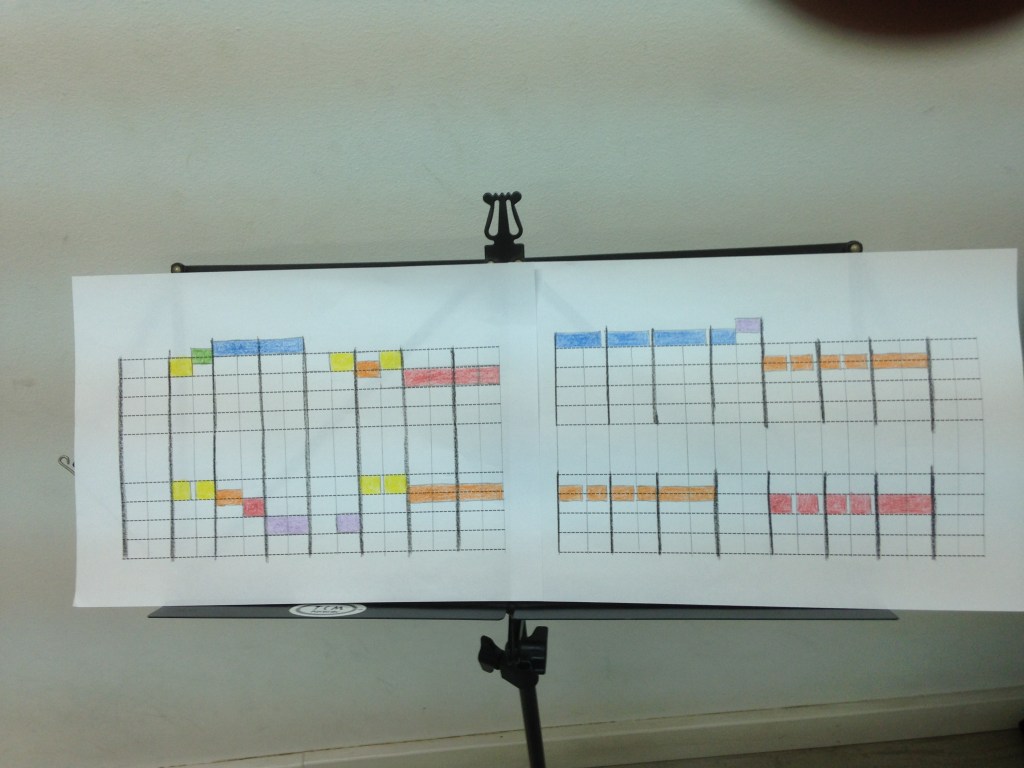
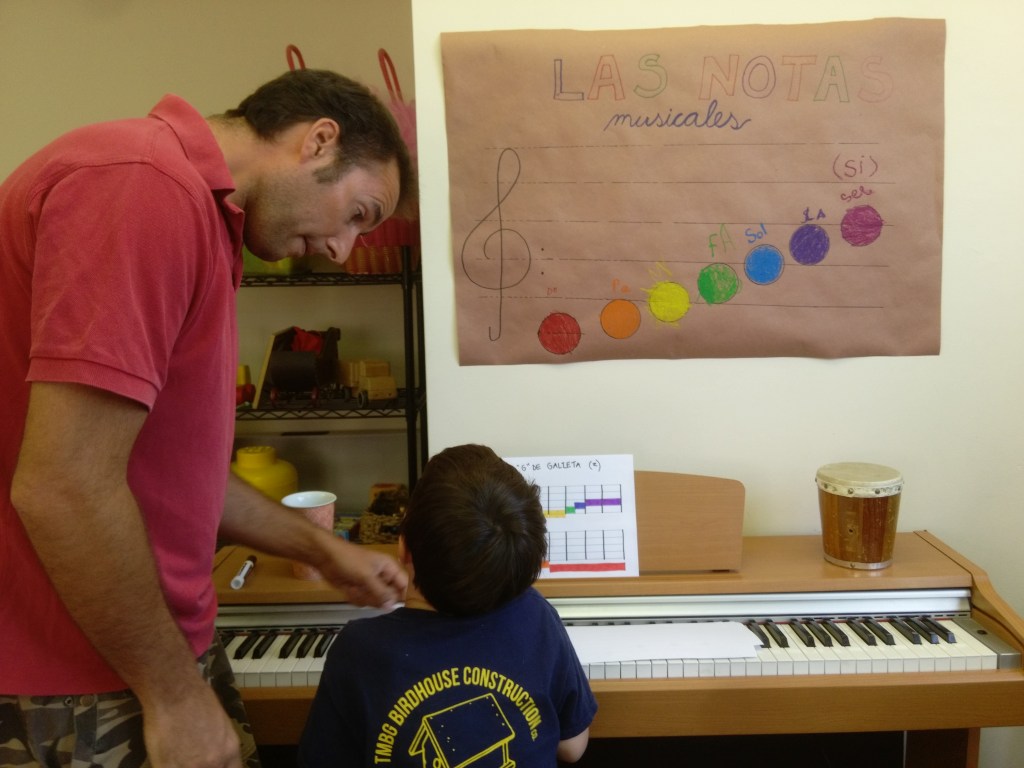
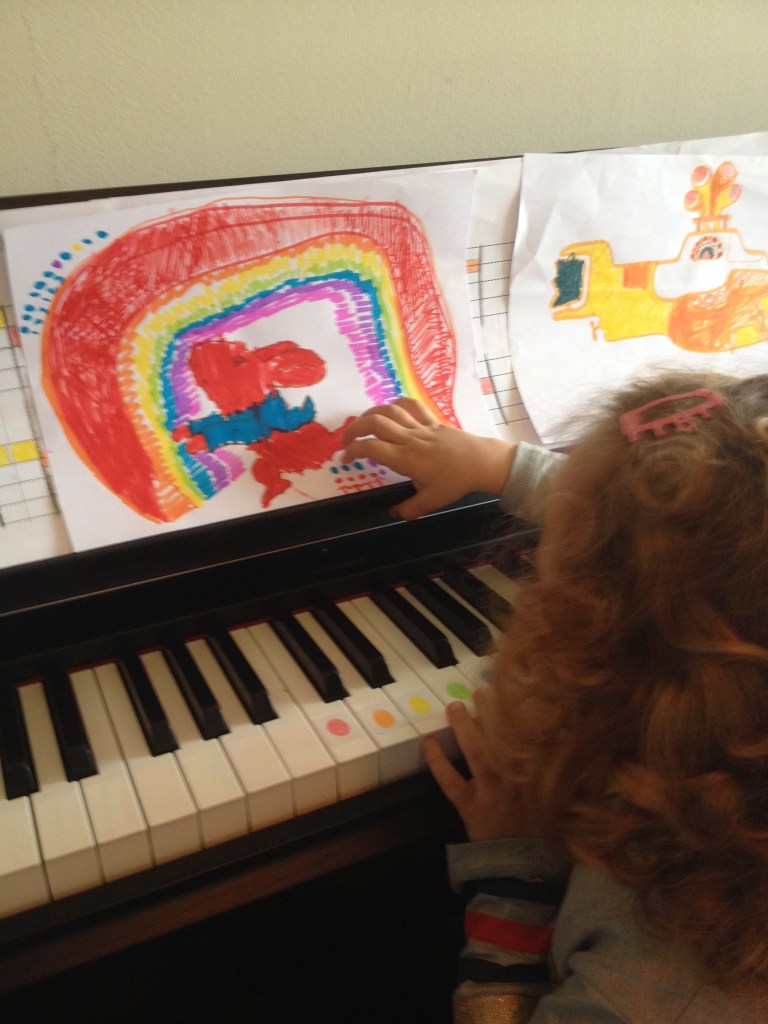
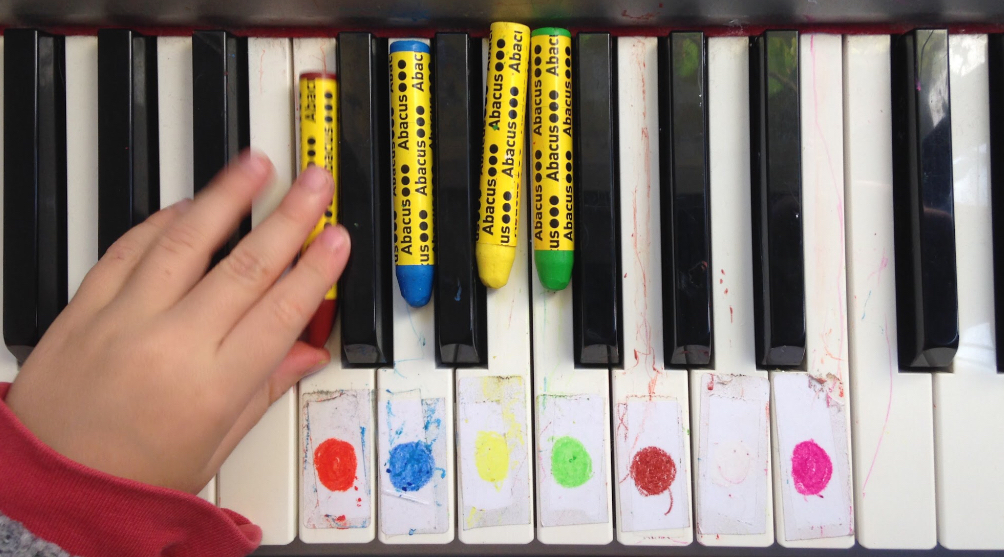
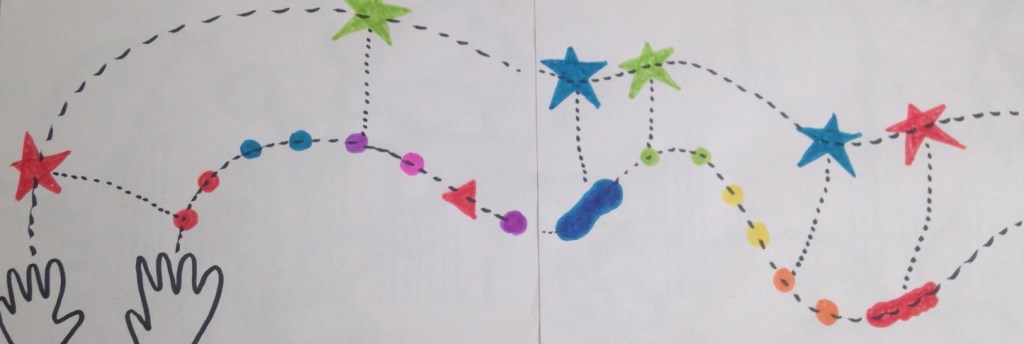
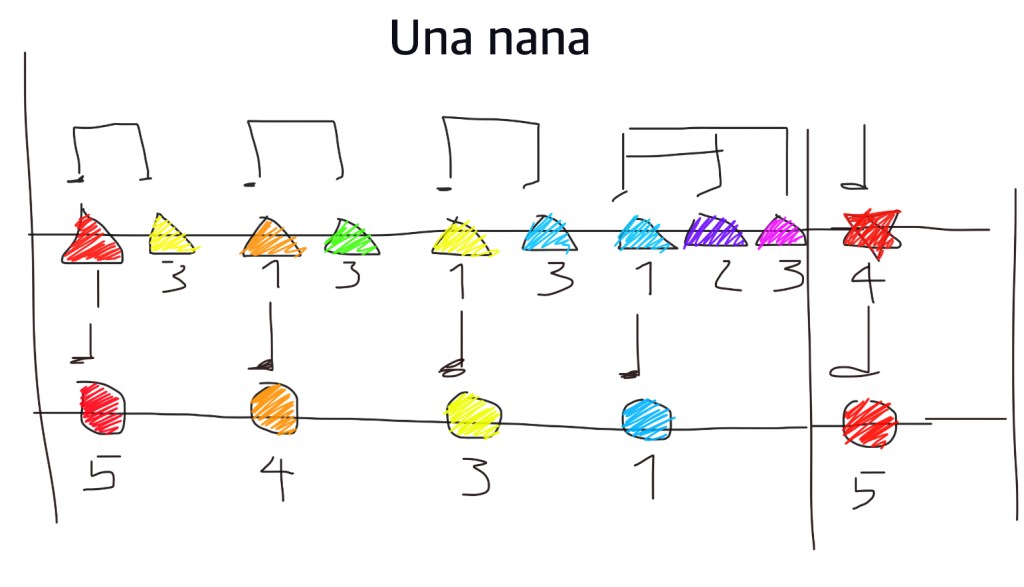
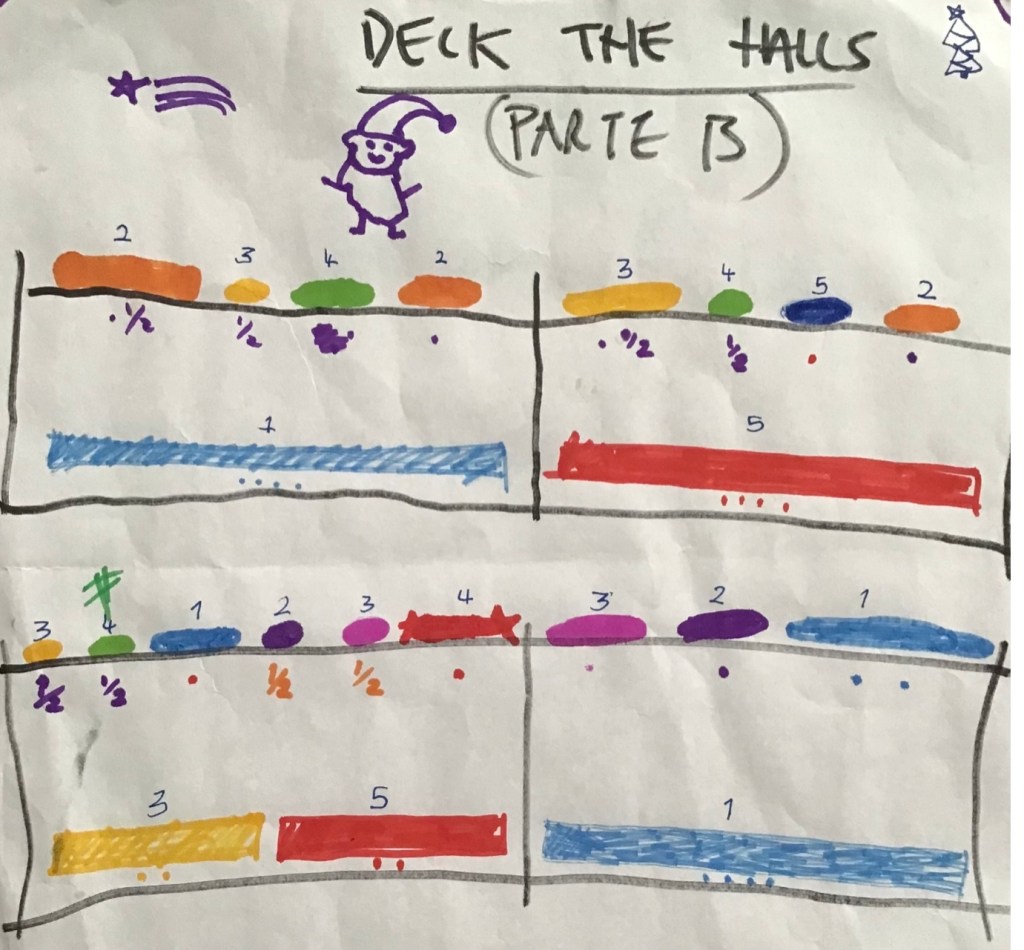
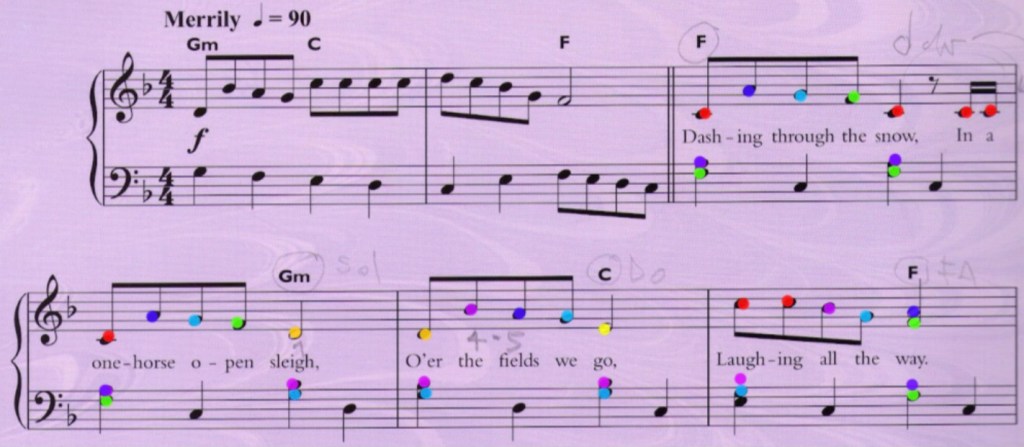
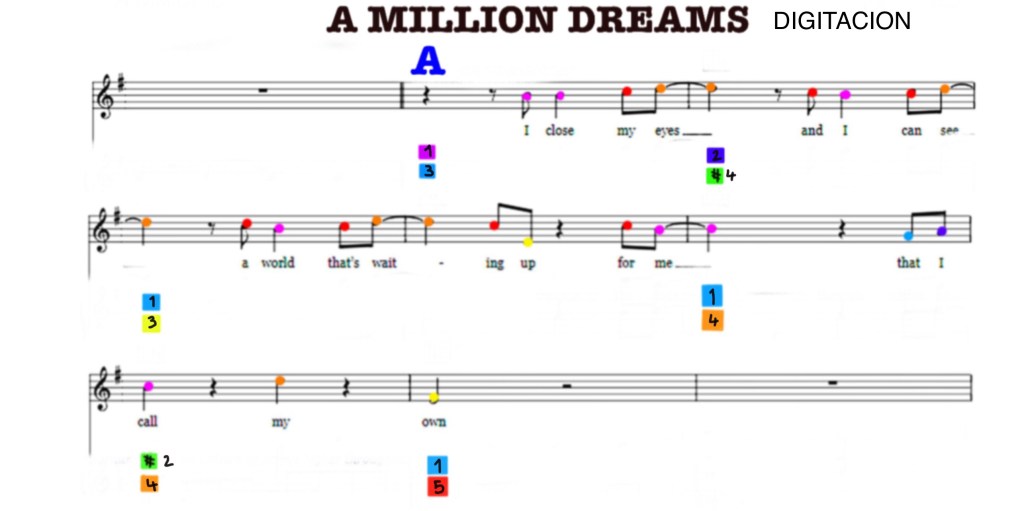
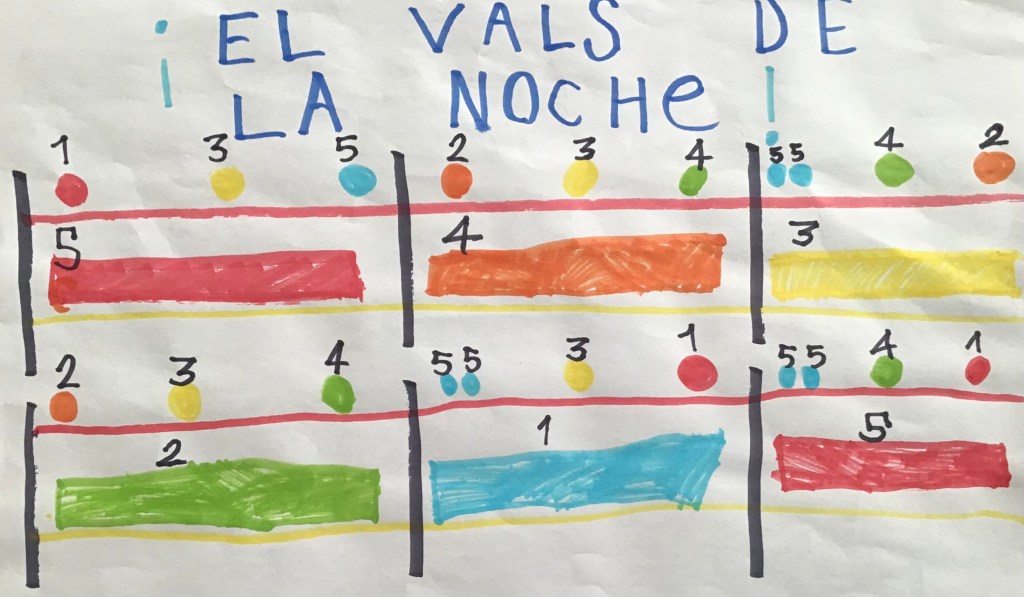
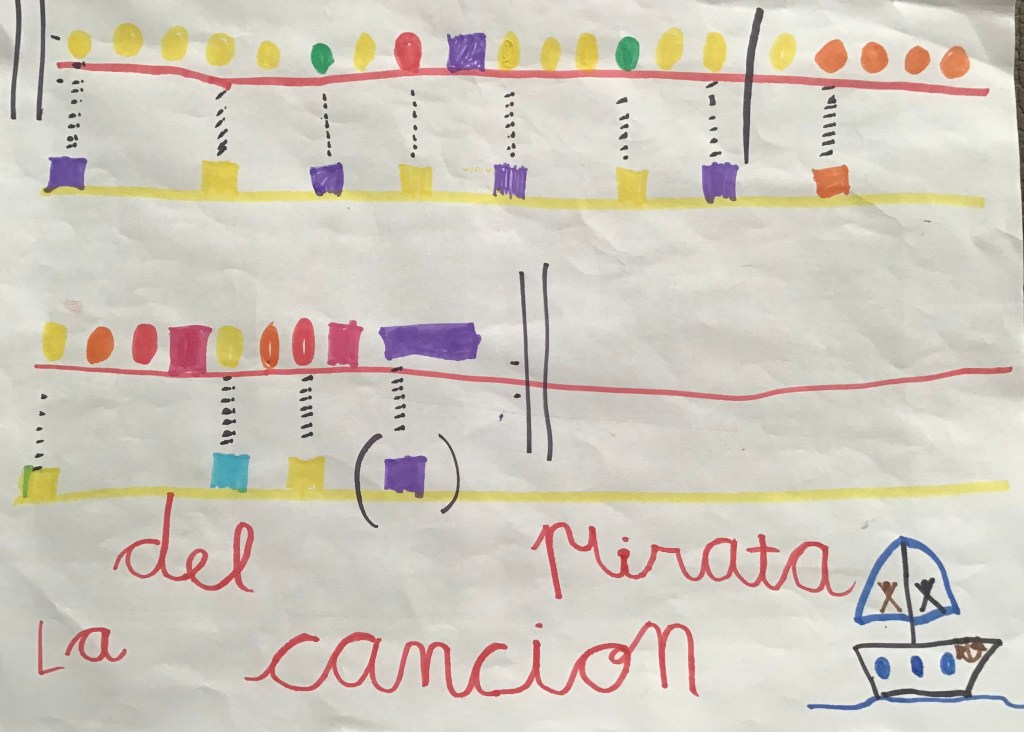
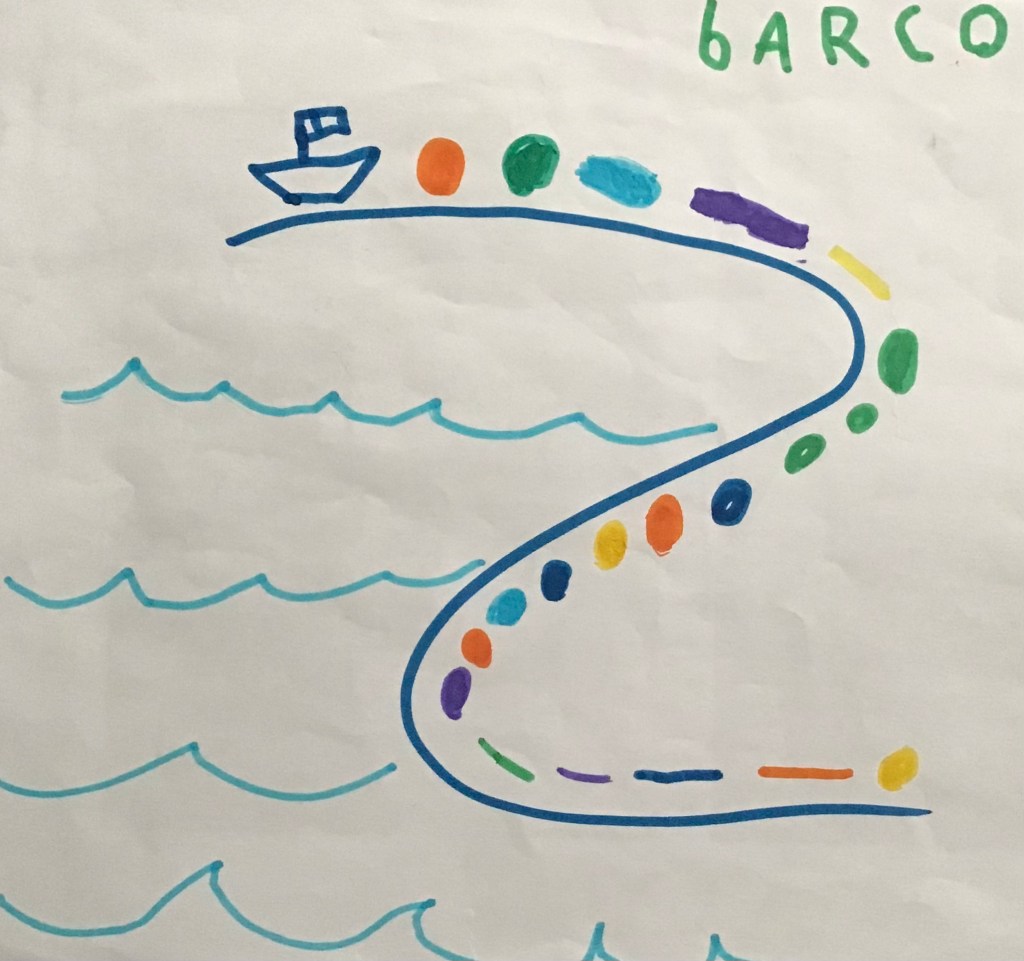
I’ve always been fascinated by the fact that a child never feels self-conscious when it comes to drawing, telling a story, dancing, or singing. Yet, when it comes to creating music, the difficulty of writing down ideas becomes an obstacle. I set out to create a musical writing system that was simple and intuitive. I named this project, which took many years to develop, «Drawing Music,» and thanks to it, many children were able to write their first melodies. In the end, I began using this system with teenagers and adults as a gradual and natural way to learn to read sheet music, and I also adapted it to ukulele and guitar.
Here we can see Nyah, a 3 year old piano student, reading a song:
Here we see examples of songs with different levels of formal definition. Some are adapted scores and others are original works by students.



BACK TO MUSICAL INSTRUMENTS MENU
COMBINED ARTS
I often enjoy encouraging students to explore their creative potential in different fields simultaneously. This approach allows us not only to learn various expressive tools but also to work towards specific goals. Typically, our projects span several months, during which we write stories, create videos, or produce artworks that we then enhance with music.
You can find an example here, created by a student who wrote a story based on characters she chose from a comic strip. She then created musical pieces to fit the moods of the story.
BACK TO MUSICAL INSTRUMENTS MENU
MOVABLE STUDIO
We frequently record and edit songs with varying sound quality levels. This gives us the opportunity to focus on the work, giving our all in each take until we are satisfied. Additionally, students have the chance to acquire skills in production, mixing, and more.
Here we see a video of Aina recording a piano part of the song «Stay» by Rihanna:
The following version of «Viva la Vida» by Coldplay is performed by Guillermo, a 45 year old student of mine, who recorded it almost entirely in one take after rehearsing it for several months.
BACK TO MUSICAL INSTRUMENTS MENU
Co – creaTION
I typically take part in the student’s creative process, trying to assist and provide fluidity while respecting their ideas. Here we can listen to a song («I don’t know») co-written with Elsa, who sang and recorded the guitars.
BACK TO MUSICAL INSTRUMENTS MENU
SHARING WORKS
Sharing our work with friends, family, and other students is usually the goal of the creative process. Through my YouTube channel and the BcnCentro website, we create opportunities for students to share their work.
The following story was written and transformed into images and stop motions by Pol, an 8-year-old boy. The music was performed live and created with my iPad by Nuno, another student of a similar age, adapting to Pol’s video.
BACK TO MUSICAL INSTRUMENTS MENU
CLASS MATERIAL
Over time, I have created many teaching materials; this includes video sheet music, solo transcriptions, backing tracks, video explanations, theory and technique materials, and hundreds of scores adapted to different levels.
I have uploaded hundreds of videos to my Youtube Channel.
Here, you have an example of a video Score I created.
BACK TO MUSICAL INSTRUMENTS MENU
CONVERSATION CLUBS
These were 1.5 hour-long group activities typically held in cafés and bars around Barcelona. Their most important feature was that you never knew how many people would show up, what level they would be at, etc. This made planning impossible, and you had to improvise. Finding the right balance between allowing people to speak uninterrupted and pointing out their mistakes, choosing interesting and compelling conversation topics, and having fun were the main objectives of these groups. I took much of this experience into my other language classes.
ENGLISH FOR MUSIC STUDENTS
The people at Microfusa asked me and the other English teachers to create a two year long English course so that their students could sit for the IELTS exam, and to continue their studies in the UK. It all had to be original material, and be mostly about music. Each class had to last for three hours, given weekly in a total of 54 classes, divided in 6 modules of 9 classes each; at the end of each module there´d be a final exam.
Each of the 54 classes had a grammar lesson, and then either a Reading Comprehension or a Listening Comprehension exercise, plus various writing and speaking activities. Each of these sections had exercises that were either corrected automatically (we used a Moodle platform) or by the teachers.
The course level started in a B1, and gradually rose to a B2 Level. The style of the course was based off of the English File books (there was a topic to each lesson, so as to work specific vocabulary, and this topic run through all the class sections) and the IELTS exam.
Later versions of the course included AI technologies, and a more interactive format, taken from the Duolingo Exam style.
SPANISH FOR MUSIC STUDENTS
The people at Microfusa asked me to create a two year long Spanish course so that their international students could learn Spanish as a second language, ang get a sense of the Latin Music scene, the second largest musical market after the English one. It all had to be original material, and be mostly about music. Each class had to last for three hours, given weekly in a total of 54 classes, divided in 6 modules of 9 classes each; at the end of each module there´d be a final exam.
Each of the 54 classes had a grammar lesson, and then either a Reading Comprehension or a Listening Comprehension exercise, plus various writing and speaking activities. Each of these sections had exercises that were either corrected automatically (we used a Moodle platform) or by the teachers.
The course was taught in a multi level format, which adapted to the students. The style of the course was based off of the DELE books (there was a topic to each lesson, so as to work specific vocabulary, and this topic run through all the class sections).
Later versions of the course included AI technologies, better graphics, and a more interactive format, taken from the Duolingo Exam style.
BCNCENTRO

I have used Active Pedagogy to articulate my experiences in Architecture and Music, my research on the Unity of the Arts and Personal Development, and some experiences living in Buenos Aires and Barcelona.
Over time, I developed some conceptual axes that guided and continue to guide my work in education over the years:
The creative process
Creating is to clash against all kinds of limits, but it is also to find ideas and solutions within these limits.
Self-expression
Everyone has a voice that wishes to be expressed and deserves to be heard.
The acquisition of specific skills
Through hard work and conscious effort, we manage to incorporate useful tools; this is a form of personal, professional, artistic, etc., progress.
The unity of the arts
All artistic expressions have a common foundation, linked to the essence of who we are.
active pedagogy
My starting point in the world of education was Active Pedagogy, which I learned about in 2009 by reading the books Educate to Be and Stages of Development by Rebecca Wild, watching the documentary Pestalozzi, Active Education and attending the conference «Bases of a New Paradigm for Education,» which took place at the Institute for the Science of Education at the Autonomous University of Barcelona, held in October 2010, reproduced in this link (starting at minute 52:40).
Beyond taking a (incomplete) course at the CAIEV and making observations at the Escola dels Encants, I applied these ideas by working in different environments and projects.
This pedagogy helped me become aware of issues such as boundaries in asymmetric relationships (adult – non-adult, teacher – student, etc.), autonomous learning, holistic development, the identification of authentic and substitutive needs, the relationship between the emotional and the cognitive, the importance of creating an environment adapted to the needs of each individual, and the significance of presence as an attitude in the classroom.
All these topics helped me revise and organize my journey as a student in my primary, secondary, and university levels, as much of what I experienced as a student emerged, in one way or another, in my role as a teacher or facilitator.
The application of active education ideas is not always easy, as not all students (and their parents) are accustomed to a non-directive approach. While all these ideas served as a starting point for me, I usually have to adapt them to each situation.
THE UNITY OF THE ARTS
The doctoral thesis «Architecture is Frozen Music» by Doctor Architect Gastón Clerc González explores the evolution of the relationship between music and architecture, through the analyses of concrete works and also through the analyses of the objective/subjective archetype of beauty, as understood across centuries and traditions.
In my opinion, this work is greatly influenced by esoteric, religious and spiritual issues, apart from philosophical ones. This is not a mistake by the author, but rather a natural occurrence, as the relationship between beauty, the soul, and God was evident to past cultures.
I read it greatly influenced by Ayn Rand’s atheism, which emphazises the volitional nature of human thought, diminishing the character of revelation in the creation of beauty.
Also, my interest in the history of architecture, during my time at University, played an important role in shaping my ideas on the topic.
My desire to explore the unity of he arts has led me and my students to combine different artistic disciplines in our classes and workshops. I call this Combined Arts.
The development of technology (portable computers and tablets, external soundcards, better software, etc) in the latter years, and the advancement of the concepts of multimedia, mixed media, etc, have also been a great help, as today there are many ways to create, share, and combine all kinds of artistic creations (drawings, stop motions, videos, music, etc.).
PERSONAL DEVELOPMENT
Expressing a voice
During high school, the contact with different artistic expressions had a lot of meanings: making friends, practicing autonomuous and directed learning, having fun, expressing energy, reflecting about the world. After leaving high school, it was mostly about finding my voice, and my place in the world. I intuitively learnt to address the typical anxieties of this stage of life by conceptualizing them, which required a gradual expansion my vocabulary. I did this mostly through reading, but also through a renewed interest in art, film and music.
In a sense, reading led to writing. The habit of finding the right words to address my emotions, thoughts and ideas has stayed with me to this day. I also started enjoying the benefits of self expression and creativity through music and painting, apart from architecture.
Another useful tool in this period was Gestalt therapy, which I discovered through the works of Jorge Bucay and others. According to this perspective, more important than finding meaning in existence is living it with intensity and sincerity.
Other references which have been important at the time could be Jostein Gaarder’s The World of Sophie, which I think praises the attitude of a person who is curious about the world, Paulo Cohelo’s The Alchemist, in my mind an introduction to Jung´s collective subconscious, Richard Linkalter’s Waking life, a kaleidoscopic trip through many perspectives on living, and other works.
Figuring out and expressing an authentic voice, being curious about life, and not being too intellectual while at the same time trying to understand, have all been attitudes present in the classes through the years.
Centering and presence
In my early thirties, a series of personal circumstances led me to develop an interest in the spiritual world. I spent some years studying old traditions as well as modern ones, and developing my general ideas about the topic. This left its mark on many of my works, as well as on my intuitive ability, creativity, cultural knowledge, etc. Generally speaking, this interest led me to know many awesome fountains of wisdom and beauty.
But the most important thing is that this led me to study and clarify the concept of presence (or centering), which is a very important part of Active Pedagogy.
Developing a more centered attitude is, in my opinion, the forming of a gradually better relationship with my inner dialogue, getting to know the patterns of my trains of thought, my emotions and my impulses, through passive observation and reflection. This allows for a more calm, grounded and alert attitude in class.
When working in non directive environments, this is especially useful, because it allows you to detect the authentic needs of the students, and thus allowing for the work to flow better, and also to have a more calm yet firm attitude when setting boundaries. This last topic is also very important in Active Education.
RELEVANT EXPERIENCES
Here is a list of important experiences, which have left a mark and have come back to me, in one form or another, during the last 15 years in my classes.
Bi lingual education
I grew up in Argentina, a Spanish-speaking country with a mix of Spanish and Italian influences, along with English, German, Jewish, and others. From ages 4 to 18, I attended a bilingual school where we learned in both Spanish and English. This experience, along with my mother’s English background, gave me a basic understanding and appreciation of both cultures, with Spanish being my father’s heritage. This appreciation has been helpful over the years in teaching languages.
Creative experiences in high school
From the age of 12, both inside and outside of school, I joined various theatre groups, published drawings, comic strips, and graphic designs in the school magazine, played in music bands, etc.
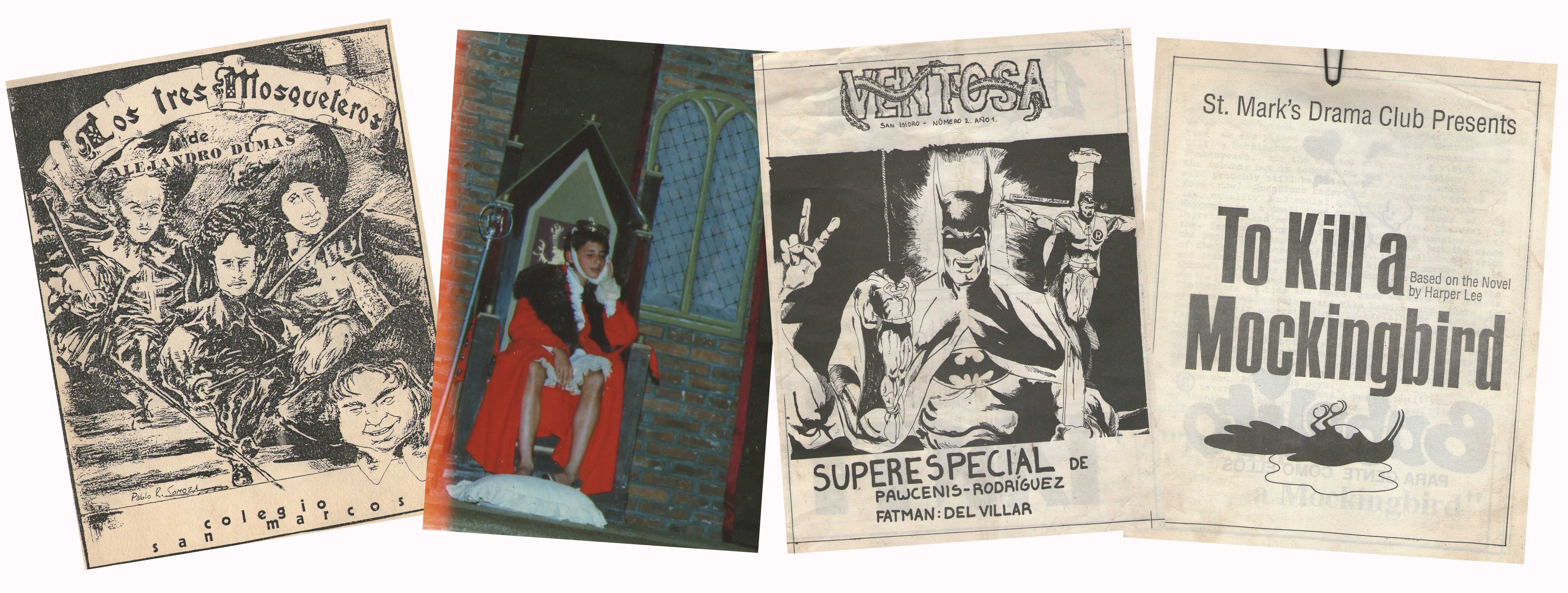
In these groups, my friends and I discovered and learned new skills, sometimes from the teachers and sometimes from each other. In this way, my classmates and I came into contact with books, movies, artists, etc., and worked together to achieve goals.
Even though we were early teenagers, adults treated us as intelligent beings, capable of discussing topics of art, current events, or life. But we were also co-responsible for our tasks, so our successes depended on us.
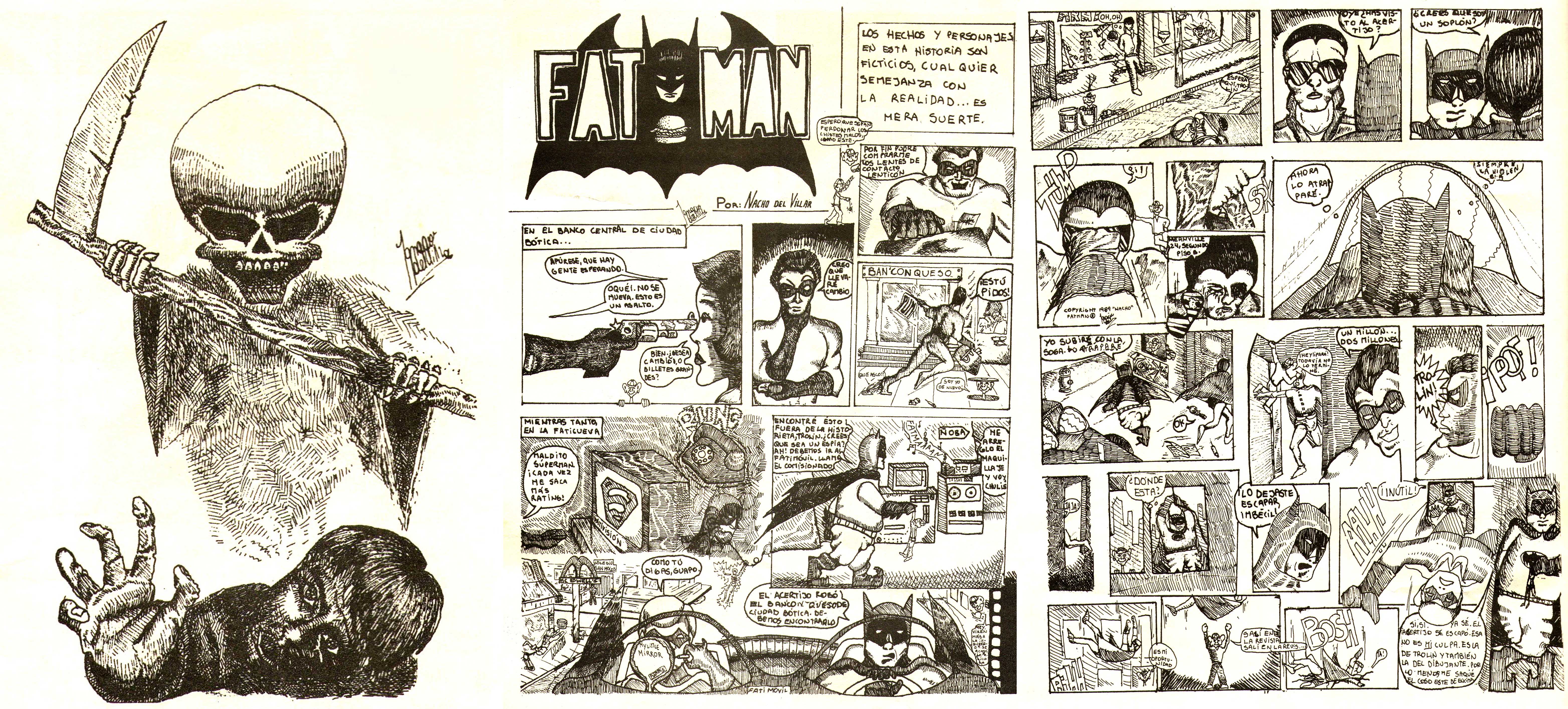
Sharing this sense of joyful learning process has been super important in my classes, especially with children.
Piano classes
In my teens I took piano classes for four years with Alejandro Weber, a teacher with whom you didn’t have to play, but rather with whom you could play. With him sometimes you just talked about music. He showed me classical pieces, bossa nova, tango, jazz from The Real Book, etc. I shaped my latter classes combining his and my Aula teachers styles.
Architecture school
During architecture school, the main objective was learning the design process: working gradually to perfect an initial idea, enriching it little by little with technical, cultural, and other knowledge. Getting used to receiving criticisms, learning to incorporate other people’s views to improve your visions, thus learning to collaborate and co-create.
Apart from this, my University was an environment opposed to that of my high school, where everybody knew your name. FADU was attended by thousands of anonymous students. Among the professors were some of the best architects in the country, who taught for free so as to support public education in Argentina, and its unrestricted admission policy meant, in a country with big socio economic differences, studying alongside people from very different social classes.
On top of its demanding academic level, the school had many bureaucratic problems, the building was half-finished and lacked many amenities, and thus many students in time fell by the wayside. There was also a heavy political atmosphere, the result of a history of university students facing opression, poverty and corruption. Hence, going to FADU taught you, apart from architecture, lots of self reliance skills and meant a deeper contact with the reality of my country.
I have tried to promote a creative problem solving approach in my classes, and also an attitude of responsibility, of owning your mistakes and your achievements, especially in College classes.
First jobs
Up to about my fourth year of college, I had understood college education as something related to identity, passions, etc. Around that time I started working, and quickly understood that in the world of work you are valued by your out put, plain and simple. This helped me understand education meant also consciously facing challenges in order to acquire specific tools for survival in the real world.
«Let’s get in trouble,» I suggest many times to students.
Architecture is thinking, and so are we.
When we studied the history of architecture in university, it involved looking at history not only in terms of the architecture but also from the point of view of other arts such as painting, literature, etc. The aim was to try to understand how each culture conceived the world, and from there, comprehend its architecture. So, different cultures have continuously reformulated the same themes (living, working, trading, worshiping, etc), each in their own unique way, because each culture was conceiving life in a unique way. This formed a basis of general culture that was part of many of my classes, particularly my history of music courses at Microfusa.
My last history of architecture exam was an open book exam, and the teacher asked us to write one question, and then answer it. My question was «What is architecture?» and my answer was «Architecture is thinking.» I used a picture of a design of a space city NASA created in the 70s and made a summary of the history of architecture, from the times of the Sumerians to the present.
This idea that the act of thinking is one of the few things that has remained unchanged for humans throughout time and space resurfaced almost ten years later when I was studying the relationship between music and architecture, so this intuition has been something quite constant for me. In my classes, I love picking my student’s brains, and also sharing my ideas with them, in tipically open ended conversations.
Crossing the pond
During my university graduation ceremony, the Dean of the school gave a speech and when he finished he asked the people present if anyone wanted to say anything. In the middle of the packed room, an old man raised his hand, walked up to the stand and said something like: «today my granddaughter is graduating as an architect and I feel so proud. I came to this country as a European immigrant, I was just a boy and here I was able to find my way as a construction worker. This country has given me the chance to build a family, and I feel sad to see so many young people leave.»
At that time I was already dreaming of traveling to the USA and Europe, and deep down I suspected I would be gone for a long time, maybe forever. I took this man’s words with me for years; I felt bad for leaving my country. Until I realized that just like that man, just like millions before me, just as all my ancestors, I too had crossed an ocean to go after my dreams.
Travelling across the USA
When I finished college I saved up for almost a year and spent three months visiting buildings, cities, rock and roll landmarks and universities all over the USA. As I cris crossed the country on trains I started wondering about the relationship between music and architecture. However, the coolest thing about the trip was the people I met. In my country it was common to receive odd, worried looks when you told people you loved music, architecture and writing. But in the US people my age didn’t treat you like that; to them this seemed normal. They in turn shared with you their crazy dreams. This gave me hope in the future, and encouraged me to keep going.
Living in Barcelona
I got to Barcelona in January of 2007. Around that time, the famous architect Lord Norman Foster had singled out this city, alongside San Francisco and Sydney, as the three best cities in the world to live in.
I took a job in an architecture studio similar to the ones I had worked at in Buenos Aires. The dynamics within the studio were very similar to the Argentine ones, but outside everything was different.
The deadlines were much less urgent and the context was much more predictable. The subway worked, there were no blockades, political crises or economic emergencies. The city was beautiful, clean, and safe. This somehow creeped in the work: you had time to think of better solutions, and the quality was much better.
Outside the studio, there were many opportunities to enjoy life, and many people I met back then did just that: they traveled, read, knew about wine and food, played music, engaged in theatre groups, etc. This was my impression of the youth in Barcelona at the time, very similar to those in the U.S. The difference being that the level of urban violence in Barcelona was much lower than that of the US.
Apart from this, in Europe I encountered Ibero-America. At the Conservatory I was studying in, half of the students were Latin Americans, and there I was able to make friends with people from Mexico, Peru, Paraguay, Chile, etc. This made you understand Spain’s value as a meeting point for Spanish speakers. Furthermore, Barcelona is a city inhabited by people from all over the world, which allowed me to establish relationships with them as well.
The Barcelona I experienced in 2007 and 2008 seemed like an ideal place to live, a confirmation of the expectations all South Americans have about Europe. I chose that city to name my BcnCentro project as a reference to its urbanity, beauty, safety, prosperity, inclusivity, etc.
Studying at Aula
After my experience playing with The Magicals, I felt like I had hit a ceiling, so studying seemed like the natural next step. Sitting in a small, empty rehearsal space, I remembered conversations with my piano teacher and myself as a kid dreaming of what it would be like to study music in Europe, and there I was.
I absorbed every lesson like a sponge and played piano for as many hours as I could. I also played in as many school combos and went to as many gigs as possible.
After leaving school I kept on studying harmony, writing my own synthesis and creating class materials that acted as introductry texts on the subject. I also kept working on my ear trainig, especially through my work as a choir director. I used my bands Metatron and the Mutants and Fan Shui to perfect my composing, arranging and production skills, and performing with countless acts has kept my playing chops fresh. My work as a teacher has meant in many ways a continuation of this desire for constant learning in music.
The world in crisis
By 2009 Barcelona had gone from «one of the best three cities in the world» to 70% unemployment for architects. Yes, that’s 70%. A few years after 2009 this crisis had spread through Europe, and the Indignados movement grew and grew. This circumstance prompted me to study the structure of global power, and its history, which was a deeply de moralizing thing. I could easily understand that corruption is not a problem exclusive to the so called third world, as I had thought before.
In 2012, I lived for a few weeks with a group of friends who were considering, like many people during the time of the indignados crisis, leaving the world behind and starting alternative societies in the best Captain Fantastic style. Many people live like this, and I respect that; meeting them has been very interesting.
But for me, this is an illusion. It is a systemic problem. You cannot create an alternative world. We only have one world, as far as I can understand, and the challenge is to live healthily in it. This conviction has meant that I focus on my work, on my need to reinvent myself professionally, and on my desire to make a positive contribution.
Something simple we can do ourselves
So, what to do in such circumstances? The answer came after a bit, around mid 2013, in the form of a poster of some workshops Chilean psychiatrist and Gestalt guru Claudio Naranjo was giving in town: «Let’s do something simple we can do ourselves». In a sense, even though the BcnCentro idea came to me around 2012, this is when it was really born.
Over time, I have developed a position, perhaps rooted in my years after high school. Education as awareness, as comprehension and as understanding has a great power, is very healing and clarifies paths of action.
 contact info