I have published texts which discuss themes of modern music, music history, current affairs, architecture and art, which are used as study materials at the Microfusa School. I have also published interviews to architects, politicians and other figures of the construction world in the Architector magazine.
LIST OF SAMPLES
Published in the Microfusa Online Campus (click to read)
The Fathers of Modern Architecture, 265 words
Pointers on Someone´s life, 318 words
Andy Warhol and Music, 379 words
Merry Christmas, and a funky New Year! 602 words
Christopher Columbus, alien, 899 words
M for aMbition – the McDonald’s – Madonna connection, 2488 words
Which is a better album, The Dark Side or The Wall? 2793 words
BACK TO MAIN MENU
Published in Architector Magazine (originally in Spanish, click to read translations)
Extract of interview with Werner Faymann, at the time director and provincial chairman of the Viennese Tenants’ counselling. He later became Chancellor of Austria, between 2008 and 2016.
Extract of the interview with José Palmiotti, Member of the House of Representatives for the city of Buenos Aires, Argentina.

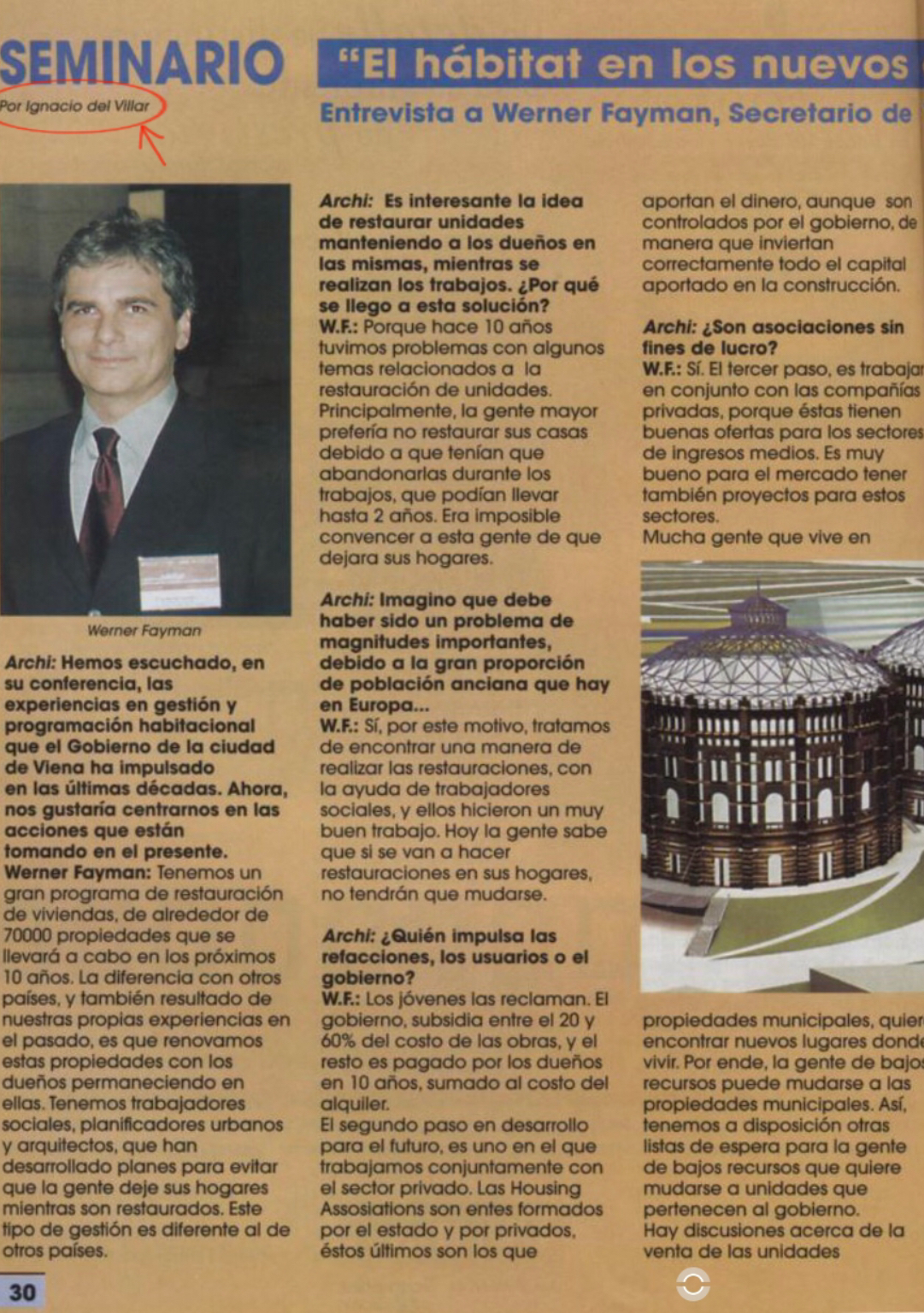


INTERVIEW WITH WERNER FAYMANN
Architector: In his conference we heard the experiences in housing management and programming that the Government of the city of Vienna has promoted in recent decades. Now we would like to focus on the actions you are taking in the present.
Werner Faymann: We have a large housing refurbishment program of around 70,000 properties taking place over the next 10 years. The difference with other countries and also a result of our own experiences in the past is that we renovate these properties with the owners remaining in them. We have social workers, urban planners and architects who have developed plans to prevent people from leaving their homes while they are being restored. This type of management is different from other countries.
A: This is interesting. The idea of restoring units while keeping the owners in them while the work is carried out. Why was this solution reached?
WF: Because 10 years ago we had problems with some issues related to the restoration of units. Mainly older people preferred not to restore their houses because they had to abandon them during the work, which could take up to 2 years. It was impossible to convince these people to leave their homes.
A: Who drives these projects, the users or the government?
WF: Young people demand them. The government subsidizes between 20 and 60% of the works and the rest is paid by the owners in 10 years, added to the cost of rent. The second step in development for the future is one in which we work together with the private sector. Housing associations are entities formed by the state and private entities. The latter are the ones who provide the money, although they are controlled by the Government so that they correctly invest all the capital contributed in the construction.
A: Are they non-profit associations?
WF: Yes. The third step is to work together with private companies because they have good offers for middle-income sectors. It is very good for the market to also have projects for these sectors. Many people living in council properties want to find new places to live. Therefore low-income people can move into municipal properties. So we have other waiting lists available for low-income people who want to move into government-owned units.
INTERVIEW WITH JOSE PALMIOTTI
The deputy for the autonomous city of Buenos Aires, José Palmiotti, began working for the city government in 1996, the year in which he was appointed by Dr. De La Rúa as communal delegate of the management and participation center number 3, which covers the neighborhoods of La Boca, Barracas, sectors of San Telmo and Constitución. The deputy performed this function until his appointment on May 7, 2000. Achitector spoke with the official about some projects.
An 87-year-old pending issue
The Riachuelo – Matanza committee is made up of 15 municipalities, the province, the nation and the city government, with a budget of 250 million.
The headquarters is located in La Boca and its function is to carry out the long-delayed cleanup of the Riachuelo. The first works of this entity will consist of the unloading of several ships that are stranded in La Vuelta de Rocha.
Tourist circuit around Rocha-caminito.
During the government of Doctor de la Rúa, the flood control work proposed by the Domínguez administration was modified; this work contemplated the construction of a 1.7 m high wall. In the new proposal, the level was lowered to 40 cm, the Rambla was made pedestrian on La Vuelta de Rocha and the Barraca Peña. This work received a prize in Spain, at an Ibero-American architecture biennial, for its landscape treatment. The floods ended and tourism development in the area was encouraged.
THE FATHERS OF MODERN ARCHITECTURE
We are all familiar nowadays with the sight of a city full of concrete skyscrapers, or large train stations that resemble industrial warehouses.
However, the birth of the so-called Modern Architecture is something we owe to a very small group of people. Among the first of them we can mention Adolf Loos, born in Austria in 1870. He is famous for coining the term “ornament is crime”. It is thanks to him that architects started creating an aesthetic of simple, unadorned forms, as opposed to the richly decorated façades of the past.
But the new architecture, later called International Style, had to be well built, apart from just being beautiful. Ludwig Mies Van der Rohe, a German architect, was incredibly successful at this. He was famous for his attention to detail and for the high quality of his designs, which were rapidly copied all over the world.
Le Corbusier, born in Switzerland in the 1880s, had an immense influence as well. If Loos defined the style and Mies convinced the public that Modern Architecture could be built to high standards, Le Corbusier attracted the attention of millions of young students around the world with his combative ideas. To this day, Le Corbusier remains one of the great theorists of the Modern Movement. Apart from co-designing hundreds of buildings, Le Corbusier published numerous books that had a tremendous influence in the world of design.
As we said before, Modern Architecture is the result of the work of many great architects, and by the 1950s it had already changed the face of the cities we live in.
CHRISTOPHER COLUMBUS, ALIEN
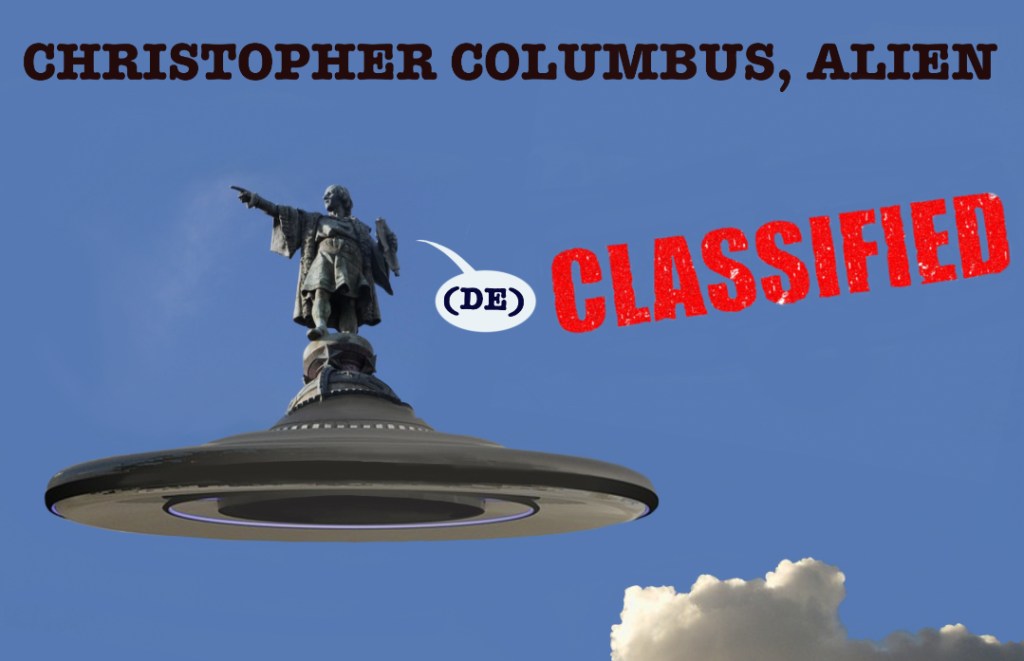
At the end of June of 2020 (this article was written at the beginning of June of 2020) the US Congress will receive a historical report from the Pentagon. This report will have to explain what the best- funded security agency in the world knows about UFOs, or UPAs, as they are called in military circles.
Packed into a $2.3 billion coronavirus-relief package bill passed in December 2020, there was a stipulation requiring the Department of Defense and the Office of the Director of National Intelligence to deliver an unclassified report on UFOs. The Congress gave the Pentagon six months to produce this information, and now this time is almost up.
As we might expect, all matters of National Security will be considered, so a lot of the juicy information will probably be scratched out. In spite of this, many mainstream media like the New Yorker magazine, the New York Times or even our La Vanguardia have commented on the event. The reason for this media hype is that this is the first time in history the Government of the USA admits openly that it can’t explain certain phenomena it detects.
Moreover, many Intelligence and military officials have recently admitted that UFO sightings are recorded on a daily basis all over the world. Even ex president Barack Obama has appeared on a talk show confirming this fact.
So it ‘s official. After 70 years of bad reporting and even worse movies (ok maybe Star Wars or Alien can be exceptions), it has been finally admitted. UFOs do exist.
But what exactly are UFOs?
Before we discuss this, let’s watch a brief CNBC clip which shows some video footage that has been released by the US Navy within the last decade:
Many of these videos have been accompanied by stories told to the public, not by astonished, mid-western farmers, but by trained US Navy officials. These leaked images, many say, have been the starting point of the Government’s change in policy concerning the open discussion of UFOs.
In the numerous stories circulating the web during the last six months, many hypotheses have been considered, and in my opinion it is perhaps good to brainstorm a bit.
Here is my list of possible explanations for UFOs:
– They are inventions of our Governments, to scare us and to take our rights away.
– They are aliens (or humans) from other times (didn’t Einstein say space and time were the same?)
– It’s the Russians or the Chinese. (That is, someone else, but not us)
– It’s a new secret high tech being released in a marketing strategy we’ll never forget.
– They are satanic beings from other dimensions
– They are benign beings from other dimensions
– They are actually aliens from other galaxies.
In any case, and weird theories apart, I often wonder why it is so hard for us humans, who have been detecting, fotographing, analysing, classifying and declassifying UFOs for almost 70 years, to discuss the topic in a straightforward manner.
All photographs seem blurred. All theories are debunked.
Well, this reporter’s idea is that basically, we can’t see UFOs clearly yet because we can’t conceive of them. Let’s consider the following example.
Imagine you are an aborigine from Central America, living peacefully around the end of the xvth Century. All you know are the ghosts of nature, the strength of your body and the miracles that abound your world.
For example, those tiny amounts of water that fall from heaven every time big black masses cover the sky. You don’t have precise words for temperature, humidity, atmospheric pressure or wind speed yet. The more vague words existing in your language to describe nature (words like sky, wind or rain) are evidence of the still basic conception you have of the universe.
One day, over the horizon towards the East you see three entities appear like nothing you’ve seen before. They are similar to the rafts you know and master well, but much larger, and much more complex.
These strange rafts contain things you will understand and name in a distant future. Things like sails, oars or pulleys. They carry inside many other wonders it will take your civilization centuries to comprehend. These mysteries include books, maps, compasses, pencils, cannons, Bibles and King’s edicts.
At first, you can’t believe your eyes.
Are they gods? Are they demons? Am I crazy? Is it our enemies secretly disguised as gods or demons?
And here we are. Just like our native americans that day, more than 500 years ago. We’ve been scratching our heads for 70 years trying to make sense of something which exceeds our mental capacities.
I personally have to struggle to imagine what kind of religion, art, philosophy, politics and of course, science, a civilization which is able to master the distances of the cosmos might have.
And what kind of sense of humor, diet or musical tastes are enjoyed by a being that can cruise the universe’s strange geography, with its pulsars, quasars, black holes and white dwarf stars?
I give up!
Maybe (quite surely) all the words listed above are laughable stone age mysticisms to a race that can surf eons of space time as safely as we can hop on an airplane to Australia.
In any case, it seems like humanity will take a major step forward in understanding what UFOs are, and what they are not, in a few weeks’ time. We’ll see how it goes.
POINTERS ON SOMEONE´S LIFE
He is the first (and perhaps the only) rock star to ever get a Nobel Prize. He is an incredibly prolific and versatile songwriter, who has written everything from tender love ballads to thunderous raps against the system.
Even though he admittedly used the folk scene to get an audience at first, he was quick to shake this audience off once he felt tired of being called a folk artist. After enjoying world-wide acclaim thanks to his early protest anthems, he famously “went electric”, which had him booed in stages where he had been previously idolized.
As the hippy era came to its height, he took his distance from its complex arrangements, such as the ones present in records like Pet Sounds or Sergeant Pepper. These two masterpieces took many months to complete, while Dylan’s John Wesley Harding, released in the same year as Pepper, required less than twelve hours to record.
The fact that The Beatles featured him, among other cultural icons, in the cover of Pepper, didn’t stop him from openly criticising their work. Classic Dylan attitude.

In the almost 60 years he has been playing, he has had different religions, musical styles and wives. But he is still Bob Dylan. Or well, Robert Zimmerman. Perhaps his being so comfortable with his own obscurity makes us feel a bit bewildered
As we said before, Bob Dylan was awarded the Nobel Prize in the early 2000s. This happened at a time when his work was perhaps a bit far from the headlines. But in the 60s he was in part responsible, both by his own work and by his influence on others, for transforming the best fruits of the “youth culture “ of the day into timeless pieces.
The subsequent decades have seen him keep up, albeit suffering numerous ups and downs, to the incredibly high standards he set for himself in his beginnings.
ANDY WARHOL AND MUSIC

Andy Warhol’s provocative LP cover invited listeners to “peel slowly and see” the music inside.
Given his career up to that point, it is not surprising that American artist Andy Warhol would want to mix heroin addiction, gratuitous cursing and androgyny with the camp (1) style of the 60s New York high society.
It is also not strange that an artist who started off illustrating fashion magazines, moved on to painting, experimented with film making, edited a magazine, wrote an odd autobiography which consisted of just pieces of gossip, would also be willing to produce a rock and roll band.
The strange thing is that he did it so well. In the mid sixties, Andy stepped into the world of music by producing the Velvet Underground, a Band that made it into the Rock and Roll Hall of fame three decades later.
It remains unclear what Warhol’s role as a producer was. He did insist on the inclusion of german female vocalist Nico, and did give the band free rein to create. He also toured with them in a multi disciplinary performance for about a year, and designed their first record cover.
However, how much musical direction did Warhol provide? Probably, not much. But founding member and leader Lou Reed has expressed his admiration for Warhol many times over the years, and it is evident that the artist served both as inspiration and support for the band.
As we said before, Warhol became notorious for mixing the underground of society with its most famous and celebrated elements.
But what about Warhol’s legacy?
Did Andy Warhol champion a kind of neo Victorian Age? Did he live in an era in which an extremely repressed society, drunk with power, weary from boredom and alienated from life became fascinated with depravity?
Or is it that Warhol’s legacy has to do with being able to master the impossible for most mortals: to have a keen eye for such things as talent and beauty?
When he invented his readymades (2) in the early xxth century, the french artist Marcel Duchamp suggested that in the future, artists would simply point at things and say “this is art”.
Perhaps he was foreseeing Andy Warhol¨s contribution to the history of Rock and Roll.
- camp. adj. deliberately exaggerated and theatrical behaviour.
Merry christmas…and a funky new year!

A 1920 Coca Cola ad, which features Santa Claus as he has been pictured ever since in Western popular culture.
There is no doubt that Christmas is an interesting celebration. It is based, on the surface, on an old Christian tale. However, if we look at it carefully, we can see that it combines a number of dissimilar things; the birth of Jesus with a herd of flying reindeer, pine trees with masses of hysterical shoppers, a white bearded man from the North Pole with the Holy Family.
Lately, Christmas has been stripped of its religious undertones, and it has been layered with dubious allusions to kindness, joy and lots of other slogan-friendly words that adjust to the needs of commercial propaganda.
Be that as it may, the modern Christmas celebration is an amalgam of different traditions and initiatives.
For example, the Santa Claus icon was given to us by the Coca Cola Company. And the commercial appeal of this season was boosted by big New York stores such as Macy’s which, at the turn of the xxth Century, increased sales by promoting gift-giving as a form of celebration.
As we know, the 25th of December has a deep spiritual meaning to all Catholics.
However, many cultures and faiths around the world have long held feasts and celebrated holidays around the winter solstice (1).
For instance, the Romans celebrated Saturnalia, after their God Saturn. Instead of working, Romans spent this holiday gambling, singing, playing music, feasting, socialising and giving each other gifts. Wax taper candles called cerei were common gifts during Saturnalia, to signify light returning after the solstice. And they decorated their homes with evergreen plants. This may be the pre-Catholic origin of the Christmas pine tree, since evergreens are a symbol of eternal life.
Yet, the strangest precursor of Christmas is brought to us by American linguist John Allegro. He states that the origin of this holiday comes from rituals practiced by shamans in the plains of Siberia since the dawn of time. This strange theory, incredibly, makes some sense. Let ‘s see.
On the one hand, the fact that the Siberian shamans come from the North would explain the belief that Santa lives in the North Pole. It would also explain why Santa prefers the chimney to the front door, since this is precisely how these shamans visited their snowed-in patients during the harsh Siberian winters.
Yet, the gifts that these shamans brought were not material presents, but gifts of spiritual enlightenment. These witch doctors used a mushroom called amanita muscaria, which has hallucinogenic properties, to aid them in their astral journeys.
The presence of reindeer in our Christmas mythology is also referred to in Allegro’s account. Apparently, reindeer love this mushroom, and will eat it greedily. In fact, the Siberian shamans first filtered the poisonous plant by drinking these animals’ piss!
Could this be the origin of Santa’s flying reindeer?
Finally, the amanita muscaria grows under pine trees, and, since they are bright red with white specks, they look very much like gifts laid under the Christmas tree. Here we can see a number of old Christmas postcards which feature the amanita muscaria:

All things considered, Christmas is my favourite celebration of the year. I grew up in South America, so the high summertime Christmas temperatures made it difficult to relate to the snow, the pine trees or to poor Santa with his thick, North Pole attire.
But to me it is all about the joy of the season, seeing loved ones and celebrating our hope for the coming year’s gifts.
M FOR AMBITION. THE MCDONALD’S – MADONNA CONNECTION
Foreplay
Before we read, let’s submerge ourselves in the world of sweet dreams, and of what may just be needed to achieve them:
How ambitious are you?
Do you have extremely high standards?
Do you want to be a leader?
Do you value self-development?
Psychology tests have a dubious relevance. On the other hand, “know thyself” has been a wise advice since the times of the Greeks, so, for the sake of it, let’s take 10 minutes and take the following online ambition test:
Did it match your idea?
Entree

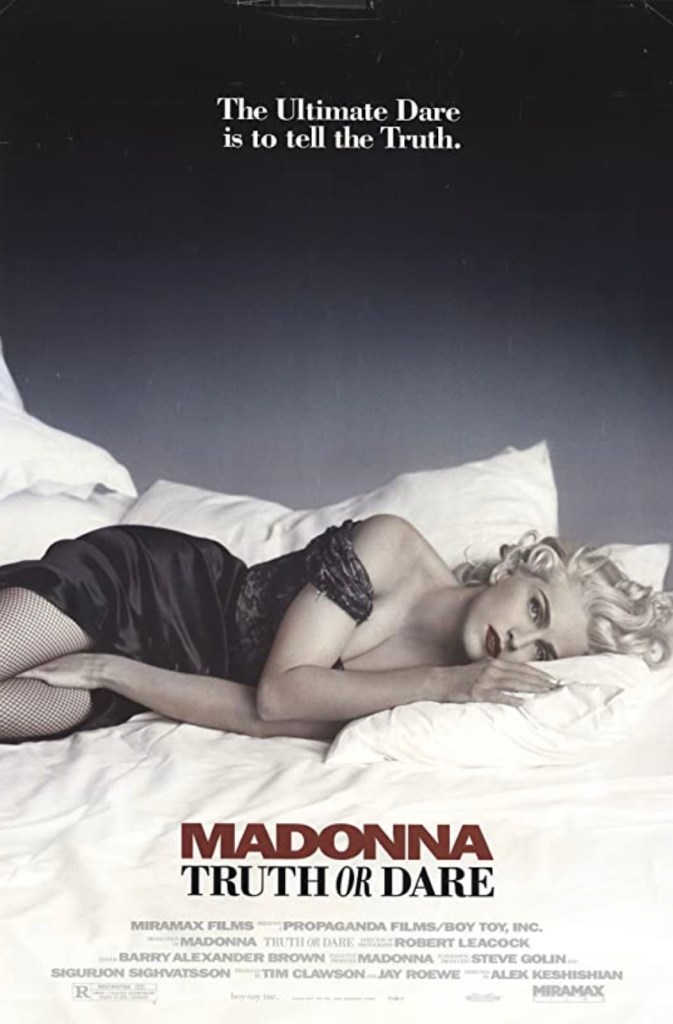
A critical analysis on the impact of McDonald’s and Madonna in our culture is not the point of this work. This is simply a reflection that comes after watching John Lee Hankock’s movie The Founder, Alec Keshishian’s documentary Madonna: truth or dare, a 1994 interview Madonna gave with David Letterman, and a 2015 one she did with Howard Stern. I also consulted the Billboard website so as to create Madonna’s musical footprint.
First course
The McDonald’s empire may be as powerful as ever, but by the time Hankock’s movie premiered in 2016, their kitchen had already been caught fuming some rank stenches.
On the one hand, they have long been considered one of the flagships of the globalinvation. That is, the taking over of the world by Corporations that crush local talent with astute, well-oiled marketing campaigns and considerable lobbying powers.
And the poor quality of their food, especially in the US, gave birth to an overtly anti-Mc documentary called Super Size Me in 2004.
Not that any of these fleas have ever tickled the beefy McElephant: Golden arches continue to adorn thousands of High streets and back alleys around the planet.
I remember being a child in Argentina in the mid 80s, when McDonald’s first hit our virgin shores. Their arrival was a true sensation. Some say, a form of cultural invasion. But mostly we were just catching up with the times.
I got the chance to go to the opening ceremony of a few of their restaurants. They gave every attendee a stack of McMoney you could exchange for food, and a bag full of brochures and booklets describing the McDonald’s story. The place even smelled great.
Years later I found out this scent didn’t come from the kitchen; it was sprayed by the employees.
A metal plaque commemorating Ray Kroc, founder of the McDonald’s Corporation, explained how he had progressed from milk-shake machine salesman to fast food emperor in just a few years.
So, along with the burgers came a set of values. McDonald’s meant family, community, a piece of the American Dream, quality food, low price, and a similar set of jingles it was impossible to be against.
Argentines were less sophisticated in the mid 80s, so we ate it all up. The burgers, the brochures and the b-s. McDonald’s made all the existing food chains look like pre-civilized fossils.
All things considered, the McTreat was indeed a tasty one. At least it was in Argentina, where the quality of raw materials is very good. It was even worth the strange storm that started in your stomach as it struggled to digest a McCombo.
But let’s explore McDonald’s history.
Some things are so ingrained in our culture that we tend to think they were always there. Alternating electrical currents, the light bulb or internal combustion engines, for example, changed the world when they appeared, but now are just part of the cultural landscape. Richard and Maurice McDonald can be held responsible for adding two things to this significant list: fast food and self-service.
But it wasn’t until Ray Krock saw the potential of the brand that McDonald’s became the phenomenon it is today. The incredible success of McDonald’s was the result of a ruthless “rat eat rat” business attitude put into practice by Krock, who became owner of the Corporation in 1961.
The most difficult scene in the movie, which is still disputed by many, is the one where Ray buys the McDonald brothers out of the Company, tired of their lack of vision. In this scene, Ray promises Richard and Maurice he will pay them 1% of the Company’s annual profits during the rest of their life, on top of the million dollars they are to receive up front. He tells them, however, that his investors don’t allow him to put the 1% part of the agreement in writing. So they shake hands to close the deal.
According to the movie, Ray never bothered paying the brothers that 1%. Rat eat rat, folks (A)
So, here’s a chance for a small mental debate:
- Ray was not so clever, because he had been right: The McDonald’s Church did end up converting the Earth. He could have paid the McBros their 1% (after all they invented the damn thing) and avoid the controversy.
- Ray was clever. He knew he was the sole possessor of the McVision. The bros didn’t deserve a dime more because even if they did invent the thing, they never acknowledged the power of the McDonald’s name.
The difficult part of the McStory is that they did transform our culture; Ray had a tremendously insightful understanding of the power of a brand. He also foresaw that applying a Fordian (B) approach to something as mundane as preparing and selling a hamburger could create a revolution.
All the food chains known to us today simply followed their example.
But after watching the movie I also understood why, in spite of admiring McDonald’s branding capacities and their radical transformation of the ancient art of cooking, I really don’t look forward to eating my next Big Mac.
This is due to the fact that the least important thing to the McDonald’s Corporation is the food they sell.
Let’s see. McDonad’s is a two-for-one offer: On the one hand, the McDonald’s Restaurants make money selling burgers and fries, and on the other hand, the McDonald’s Corporation makes money renting commercial space to the Restaurants.
Basically, the Corporation designs the assembly-line kitchen, the products, the marketing techniques, etc, and the Restaurants are in charge of dealing with the customers. Evidently, lots of information goes back and forth between the Restaurants and the Corporation, since they are basically partners.
Thanks to this clever business model set up by Krock, the McDonald’s Corporation has become one of the largest landowners in the world.
Imagine all that capital at the disposal of an entrepreneur who boasted a rat-eat-rat business ethic, if such a word can be used here.
A marketing specialist once said that 50% of all advertising money is thrown away. The problem Companies have is that they never know in advance which 50% they’ll have to dump.
This is an advantage all the McMonsters have over small businesses around the world: they can afford to scrap half their astronomical marketing expenditures.
Back to the globalinvasion problem.
So, as the Corporation expands its real estate empire, ensuring funds to lobby and invest in advertising, the Restaurants benefit from the presence of the McBarnd in the global mind. As they say in business circles, it’s a win-win situation, except maybe for our colons.
I guess I finally understood how it was that such bad food became so universally accepted. I should use this last adverb carefully, because populating the universe with brightly colored Ms would indeed be Ray’s dream.
In the movie, Ray’s wife asks him,
“When will you get enough?”
“Probably, never.”
Main dish
In the 2015 Howard Stern interview, Madonna complained that her Material Girl song was a misunderstood joke that somehow tarnished her artistic credibility. Was she a real artist or just a shocker?
A joke the song was, but I think we can peel some layers off it. The Marilyn-retro look of the video takes us back to a time when femme fatales, like Peggy Lee for example, might have said to their men ”get out of here…get me some money too…”
This type of diva had to use men to get what she wanted. And so does the one Madonna is playing in her video. Exept this time the femme fatale wasn’t a character in a black novel, but a living person.
Because everybody knew all the scandal money the Material Girl song was generating flowed straight to Lady M’s pockets. So yes, the song was a joke AND Madonna was a material girl.
This was a smack in the 80s New Romantic mug. Back then, mainstream culture was very materialistic, but tended to hide this behind a veneer of sugary aspirations. Madonna’s in-your-face attitude was fresh, and it worked.
By the 90s Madonna had mastered the primetime punk girl act so well that she was Vogueing her Gautier cone bras and grabbing her crotch all over the world.
The punk meets Vogue act is something Courtney Love would perform in the late 90s but by that time, it had already been done.
As the documentary shows, Madonna doesn’t mind showing her weak spots. She cashes in on this exhibitionist fetish, but pays the price by almost recklessly exposing herself and her tense relationships with other stars, with her boyfriend, with family members, and with people from her past.
I’ve got the feeling that if she’d been head of McDonald’s she would have renamed the brand RatDonald’s, and doubled Ray’s revenues.
The Madonna we see in the Letterman interview is a bit awkward, with a slightly overbearing attitude. But it was David’s turf, so he hung on and cleverly let Madonna make a fool of herself on TV.
She doesn’t give me the impression of being good at dealing with peers; she seems like the kind of person who is comfortable being the boss. At times she seems a bit lonely there at the top.
But she does connect with fans and with her work mates. Over the years, she has taken pride in her role as a mother, has started many charities and produced other artists, so she clearly has a strong nurturing instinct.
A step backwards
Madonna was born in a working class family who lived in a small town. She tragically lost her mother at a young age, just like John Lennon or Paul McCartney. And just as it happened with Quincy Jones (C) Madonna said this event turned her into a perpetual overachiever.
When she was a teenager she scored 140 in her IQ test, which means she’s among the 2% smartest people in the world. She wasn’t a popular kid, and understandably got bored a lot. Understandably too, she was a straight-A student.
College couldn’t hold Steve Jobs or Bill Gates or Mark Zuckerberg for much longer than a year. Madonna’s case was the same. As she told Howard Stern in his interview, she just couldn’t live in a close minded environment, and she went to New York in 1978 with the aspiration to becoming a dancer.
“Only when I’m dancing can I feel this free,” she would write later. Many of her hits are dance songs.
During those years, New York was the home of CBGBs, The Ramones, Blondie, Television and the Talking heads, alongside the Disco scene. And as Brooklyn burnt time and time again, hip hop slowly stewed.
New York was also where Andy Warhol lived, loved and worked, so it is difficult to imagine a more nutritious artistic scene.
By 1982 Madonna had switched from backup singer and dancer to songwriter and performer. She spent much of these initial NY years writing songs, starting bands, flirting with DJs to get her tapes played in discos, and surviving the dangerous New York streets.
Around that time she was dating Andy Warhol’s protegè Jean Michel Basquiat, and in 1983 she had her first hit.
The 2015 Howard Stern interview shows a mature Madonna, calmly going through the events in her life. Nowadays, she seems more interested in shocking people with her ideas than by showing her body, or saying four letter words on TV.
One thing is certain about Madonna: she hasn’t stopped working.

Here we can see a kind of Madonna cultural footprint. On the one hand, the orange bars represent the amount of weeks her Billboard top 40 singles stayed on the top 100. Basically, they measure the impact of her work as a songwriter.
Note that in years like 84 or 90 her songs charted for more than 52 weeks, and that there are 52 weeks in a year. This is due to the fact that many times she had more than one single in the Billboard chart.
Also, note that in 84, 85, 86, 87, 90 and 98 she had singles which broke the Billboard top 40, and stayed on the top 100, during the whole year.
The green lines represent how much money each of her 11 world tours have grossed. So they measure the impact of her work as a performer. What I find interesting is that even though Madonna has visited the Billboard top 40 less and less from 2000 onwards, this hasn’t stopped her world tours from gossing incredible amounts, at least until the mid teens.
Amazing right? She charted on Billboard almost every year between 1984 and 2002 (that’s almost 18 years in a row) and many of her post 2000 world tours grossed more than the ones she did in the 80s and 90s, when her music was at its peak of popularity.
It is said that the queen of pop met the king of pop (a.k.a MJ) and recommended him to throw his white socks away. He didn’t.
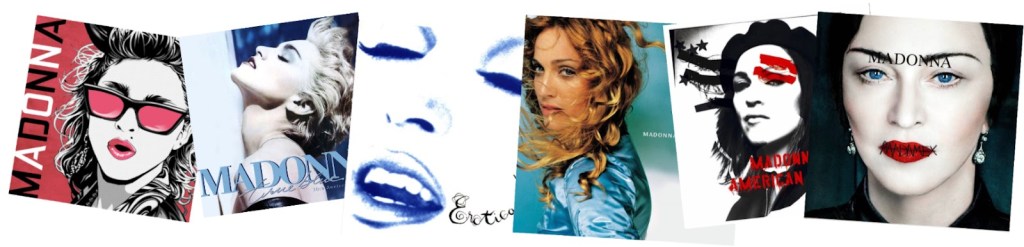
Madonna, on the other hand, never feared changing socks, hairstyles, musical styles, songwriting partners or producers. It’s always Madonna at the center. In sync with the times, a rebel with many causes, or perhaps a rebel for the sake of it. A creator, an organizer, and a leader.
Maybe change has been Madonna’s permanent thing.
(A) Certain evolutionary scientists believe that rats are so comfortable living in our sewers and pipelines, where they lack predators, that in the future they will be bigger and more powerful. Our anti-rat venoms even strengthen them, just as they do roaches, by eliminating the weaker members of their species, while the fittest ones live on to pass their DNA. In other words, we may not love rats, but rats surely love us. Could this explain Ray’s fixation with rats? Some street artists, such as Blek le Rat or Bansky, seem to share Ray’s infatuation. Strange coincidence, RAT is an anagram of ART.

(B) Relative to Henry Ford, an american industrialist who perfected mass production and standardization techniques.
(C) Quincy Jones’s mother was committed to a mental institution when he was a young boy.
Squeeze that brain
If people keep rewarding McDonald’s with millions of dollars, they deserve the bad consequences of it.
Is Madonna a true artist like The Beatles, for example, or is she a professional shocker like the Kardashians?
WHICH IS A BETTER ALBUM, THE DARK SIDE OR THE WALL?
Foreword | and a listening appreciation suggestion

It is a well known fact that in the past LPs were listened to at home, in silence, and paying comparatively more attention to the music. Nowadays music is mostly listened to on the go, in small headphones, and the audio signal has to compete against noises like that of traffic, amog other street bangs and twangs.
The two LPs we’ll discuss here have a much wider dynamic range than today’s hits, since compression in the 70s wasn’t as in-your-face as it is today. Moreover, both albums present an incredibly low density of hooks, compared again to today’s popular music. As a result, both are to today’s ears incredibly open in the horizontal (time spent between hooks) and in the vertical (difference between the high and low volumes).
This alone might make them worth a shot.
Introduction
The question that acts as a title of this digression is impossible to answer. But we can maneuver between these two masterpieces of Rock and Roll, as we share with the younger generations a pair of amazing works by the British band Pink Floyd.
The musical journey of this group started in the mid 60s and ended fifty years later, and can be divided into three chapters.
The first one is their underground / psychedelic era, led by Syd Barrett who, very much like Brian Wilson of The Beach Boys, worsened a pre-existing mental condition with the abuse of hallucinogenic drugs, until he wore himself out.
Wilson was able to get back on his feet, after a long and terrible ordeal. Sadly, this wasn’t the case of Barrett, who went on to become a kind of lingering presence in the band. He inspired some of Pink Floyds’ most well-known songs, but didn’t have any further involvement with the band after his departure.
The second chapter started when bassist and singer Roger Waters took the lead, writing lyrics and developing concepts for albums. The rest of the band contributed a lot to the records, too. Rick Wright’s synth layers, David Gilmour’s guitar solos and vocal arrangements and Nick Mason’s fluent drumming style are all integral members of the Floyd sound.
Both The Dark Side and The Wall were created during this time.
The last chapter could be called the “decaf” Floyd era. Led by guitarist Gilmore after Waters quit, Pink Floyd created a couple of lukewarm albums, and many massive live acts impregnated with nostalgia.
I don’t think it was Waters’ departure, though, that deflated the Pink Floyd airship. As is the case with many bands, The Floyd just couldn’t achieve separately what they could together.
Welcome to the dark side
It took the band some time to recover from the involuntary withdrawal of Syd Barret, but by the early 70s, when the Dark Side of the Moon was being road tested in front of live audiences prior to its release, Pink Floyd had a clear vision of how they wanted to do things.
Furthermore, by that time Roger Waters was coming of age as a writer and as an artistic strategist.
The first thing that comes to mind when referring to this album is that it became ingrained in popular culture. So much so that it spawned a number of urban myths, like the one that stated that there was always a factory somewhere in the world that was making a copy of it.
As an example of its cultural staying power I can mention one of my English students, who was born 30 years after the Dark side was released. He presented a passionate review on this album when asked to write about his favourite LP.
The Dark side of the moon was released in 1973, shortly after the Apollo space program missions ended. It was one of the many works issued during the Apollo missions period; Space Oddity by David Bowie was released in 1969, and Satellite of love by Lou Reed and Rocket man by Elton John were published in 1972.
Since The Dark Side was conceived and recorded during a period of time when a total of ten humans moonwalked our natural satellite, it is hard to resist the temptation linking these two events.
I picture Roger Waters, as he was writing this piece, looking out the window and imagining himself to be a spaceman standing in the middle of the Sea of Tranquility, wondering what mysteries and adventures lay out there, in the vast darkness of space, as the rest of the Floyd kept the lunar module orbiting and scouted the moon surface for Rock samples.
However, none of these poetic deviations were in Waters’ mind. He said in various interviews over the years that when he was scheming The Dark side he was coming to terms with the disillusions and challenges of becoming an adult.
Musically speaking, the album combines interesting sonic experiments with lush synth layers. It also presents a chilled form of rock and roll (trademark of the Floyd), some recurring musical ideas, lengthy guitar solos and extended, polished instrumental sections. The vocal arrangements are superb, and one of its chart hits, Money, has a section written in a 7/4 time signature.
The lyrics deal with grim topics such as death, greed, conflict, lunacy, the subconscious and the supernatural.
It is spiked by snippets of daft chatter by the band’s roadies, who answered a set of questions written on cue cards by Waters. These constitute a good counterpoint to all the deep philosophical topics floating around in the album, and makes the work more accessible.
In spite of its complexity, this is a musically cohesive piece. Apart from saxophonist Dick Parry and singer Claire Torry, who both made important contributions to three songs, the rest of the music was created by the band themselves, in endless sessions held at the Abbey Road Studios.
The record was produced by Alan Parsons, who had been an assistant engineer in the Beatles’ last two albums.
The dark side of the Moon was Pink Floyd’s first commercial hit, and it was also the first time the band members found themselves with any cash in their pockets. From this point onwards the Floyd would go on to become superstars.
On the other hand, each new post-Dark Side album would take the band longer and longer to finish, until they delivered the final masterpiece of the Waters era: The Wall.
Food for thought
Both albums are still played live by Roger Waters and by the remaining Pink Floyd members, almost as classical music pieces. The problem is that the complexity of the shows makes for astronomical entrance fees.
Does a rock concert need to be that expensive? Is it still pop music if it is unaffordable to the masses?
Pink Floyd are super production masters. But, does music (or art in general) need so much parafernalia to move a human heart?
Have the Floyds, as they travel beyond the moon into inter-generational stardom, managed to build an economic Wall around their shows?
Are high live-show entrance fees a natural consequence of the post-Napster (1) dilution of album sales revenues? Or are they simply a sign of greed on behalf of today’s rock stars?
- About Napster: (wikipedia dixit)
Napster is a set of three music-focused online services. It was founded in 1999 as a pioneering peer-to-peer (P2P) file sharing Internet software that emphasized sharing digital audio files, typically audio songs, encoded in MP3 format. As the software became popular, the company ran into legal difficulties over copyright infringement. It ceased operations and was eventually acquired by Roxio. Napster became an online music store until it was merged with Rhapsody from Best Buy on December 1, 2011.

Building up and tearing down the wall
The Wall finds the band at the other end of their classic period. The “theme” of the album was again set by Waters, and this time Waters seems to be talking mostly about, well, mostly about Waters himself.
Or is that not so? Let ‘s see.
The wall tells the story of a young eEnglish boy (a.k.a Pink) who grew up during the second world war, and who lost his father as a consequence of this conflict. This boy, abused by the school system, psychologically asphyxiated by his mother and haunted by the absence of his deceased father, grew up to become an alienated and unhappy rock star, who was exploited by the music business.
Yet, the main character in this story is not Pink but the Wall itself. Pink decides to build this enclosure both to protect and estrange himself from society.
This story doesn’t have a clear plot line; more like a collection of symbols and allegories, and although it doesn’t describe things a regular Joe might experience, it does touch a number of affairs we all know well: injustice, cruelty, lack of empathy, etc.
My literature teacher in high school told my friends and me that when the movie The Wall came out in Argentina (we were still in a military dDictatorship then, and she had seen saw it in an underground movie theatre) people would stand up mid projection and yell at Pink’s evil mother.
The wall is a deeply, painfully personal album for Waters, who lost both his father and grandfather in the first and second world wars. It is also a passionate complaint against any form of oppression and a crude testament against war.
I personally find it a difficult piece, perhaps a bit pretentious and definitely dark; and it presents the unsettling circumstance of being a howl against oppression sung by a Hitler-like Rock star, who is both a victim and an icon of totalitarianism.
Nevertheless, It became one of the 80s most awesome string of live shows, which were so technically complex they could only be performed a few times. And it generated the before mentioned film by director Alan Parker.
Growing up, I remember the older kids telling me how they pushed themselves to watch this film, just to see if they could understand it.
This is precisely the coolest thing about The Wall: it is truly a multi disciplinary work. Something the Beatles could only dream about when they were working on Let it Be. The album The Wall, at least in my mind, is incomplete without the movie and without the live show.
This is not a minus in my opinion, but an absolute plus.
We said above that the Wall is the main character. In the record it is an idea, in the movie it is a moving, living character, and in the live performances it is a projection screen and a silent presence which gradually swallows the band, separating it from the audience.
Even among all the huge inflatables, the famous round screen, the lights and the fireworks, the wall is still the most unsettling feature of the live act. And its tremendous size makes it perfectly fit for a stadium scale.
The Wall project, in all its ambition, stood at the breaking point of music as an expressive media, and it put the band itself under considerable pressure.
The music was still great, and it sounded like Pink Floyd. However, many extraneous hands and minds worked on it. The Floyd used session drummers, keyboardists and guitarists in several tracks, apart from the legions of backing vocalists and the New York Symphony Orchestra to finish this album.
If we add to this the input of Alan Parker as film Director, and the work of the animators, stage designers, etc, we understand that the Wall project was not a sole Pink Floyd production.
It is said that the concept for the album was born after Roger Waters got upset with a group of loud fans who made so much noise during a performance that he ended up spitting one of them in the face.
Nobody could imagine back then that this conceptual wall would end up burying the band itself.
Unity in diversity
The musical motif is a brief, easily identifiable melody which is utilized, albeit transformed, to confer unity to pieces of great extension. It has been used for centuries, and two famous cases are Beethoven’s 5th and practically all of Wagner’s oeuvre.
Pink Floyd used this musical motif in The Wall:

The motif plays a major role in the songs In the Flesh, Another Brick in the Wall (parts 1, 2 and 3), Goodbye Blue Sky, Empty Spaces, Hey You, Waiting for the Worms and The Trial. It is used in different ways in each song; in melody lines, riffs, arrangements, etc.
It is also incorporated in more subtle ways in almost all the rest of the songs.
As a young listener, I always found this interesting. I hadn’t heard too many pop songs or albums built like that and the idea of blowing up and transforming a small “musical atom” into long and complex pieces has stayed with me through the years.
However, I cannot help but think that it is super interesting that The Dark Side never needed motifs to achieve its well accepted conceptual unity.

Comparisons, conclusions and endings
Both The Wall and Dark side of the moon are among the best selling albums of all time, and their impact and influence span generations.
I think in this sense The Dark side is much better, because it achieved its accolades using only music and sound as expressive material.
The Wall on the other hand, kicks ass in the sense that it is probably the best exercise in rock opera ever made. It is truly a combined musical, visual and theatrical experience.
The Dark Side is about an extroverted darkness, a darkness of life, so to speak. The Wall talks about an introverted darkness. If the Dark Side looks out, up into the vast emptiness of space, The Wall looks inside, into the vast emptiness of a cold and empty soul.
The Wall is perhaps less interesting since it leaves less for interpretation. It is more dogmatic. The Dark Side can mean many things, it is more evocative.
Finally, The Wall is a bit more preachy, whereas the Dark Side is more approachable.
And the time has come for a major spoiler alert: The Wall ends with its demolition. Yes, the main character dies in the end. So it is, by definition, a tragedy.
Just like the messy break up of the band it anticipated.
Meanwhile and after finishing The Wall, the band initiated a series of feuds that are still going on. Four friends and colleagues who made it to the global zeitgeist after working very hard to create several collective masterpieces, have been fighting endlessly and often publicly over all kinds of issues for 40 years.
But they did give each other a break. In 2005 the band reunited for a 25 minute long slot at the Live 8 concerts, which were organized by actor and activist Bob Geldoff, who, serendipity or not, had played Pink in the The Wall movie.
Live 8 featured more than 1,000 top-of-the-line rock and pop musicians who performed in various locations around the world, which were broadcast on 182 television networks and 2,000 radio networks.
It was a historical event, and it was also the last time the four original Pink Floyd members shared a stage.
My friend Pato, who was in charge of making photocopies at a school I used to work in many years ago in Buenos Aires, was also a part-time bass player and music connoisseur. He said the Pink Floyd slot was the only good part of the whole damn thing.
I’m taking his word for it.
Food for thought – part 2
THE FLOYD AS CLASSICS:
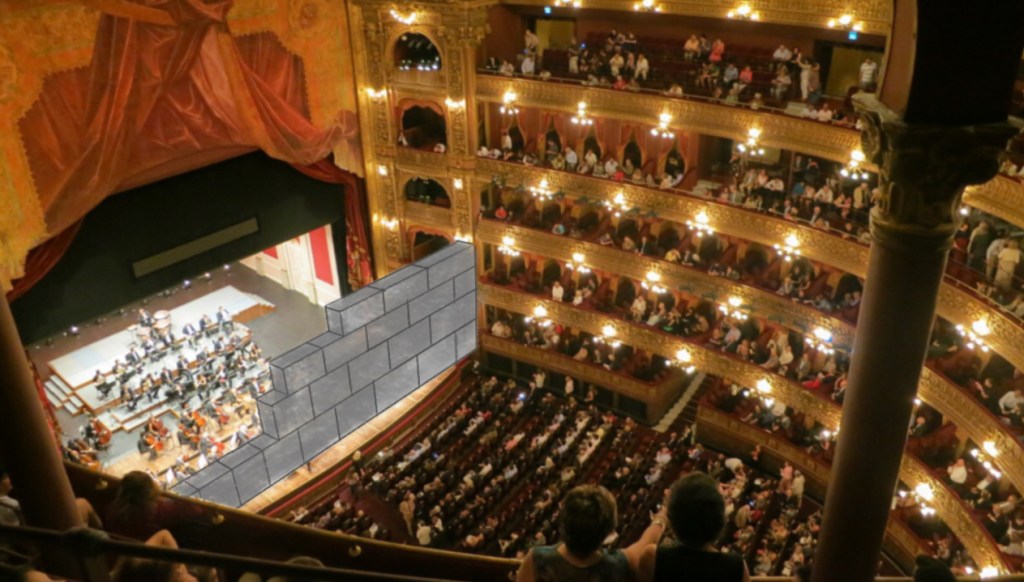
We mentioned before that The Wall and The Dark side are considered by the band to be like classical music pieces.
To some people, “classical” is almost a synonym of “anachronic”. Played in theatres where the audience sits in reverent silence, and in many cases is clad in as elegant clothes as the musicians themselves, songs written centuries ago by wild animals such as Amadeus now warm the hearts of semi-dormant audiences.
Is this inevitable or has something gone missing?
Shubert, for example, would organize chilled piano recital soirees for his close friends, and as the architect Le Corbusier said, even the Gothic Cathedrals were once white.
Are you a classical music fan?
Will music like that of the Dark Side or The Wall end up constituting the “safe” music repertoire of the well-to-do peoples of the future?
Or will it remain true to the rebellious spirit it emerges from?
And finally, the impossible question: which is, in your opinion, a better album, The Dark Side of the Moon or The Wall?

